Newsletter

Subscribe To Our Newsletter

Quick Links

  • About Us
  • Why Boundless Adventure
  • Company Documents
  • Banking Details
  • Customize Trip
  • Contact Us
  • Volunteering in Nepal

Top 5 Treks

  • Annapurna Base Camp Trek
  • Everest Base Camp Helicopter Tour
  • Everest Base Camp Trek
  • Manaslu Circuit Trek
  • Upper Mustang Jeep Tour
  • Langtang Valley Trekking
  • Upper Mustang Trek

Useful Links

  • Travel Blog
  • Trekking Routes Map
  • Testimonials
  • Privacy Policy
  • Terms of Conditions
  • Compare Itineraries

Nepal (Head Office)

Business: +977 14701884|+977 1 4701885
Mobile: +977 9851033819
info@boundlessadventure.com

Thamel Kathmandu, Nepal

P.O. Box No. 11670

Australia

+61 426 378 149 (WhatsApp)sales@boundlessadventure.com

Japan

+81 80 4107 0813 (WhatsApp)boundlesstrek@gmail.com
Nepal Tourism Board, TAAN, NMA, and KEEP certification marksAccepted payment methods: American Express, Mastercard, Visa, UnionPay, and Google Pay

© Boundless Adventure Pvt. Ltd. 2026 All content, including photos, is owned by Boundless Adventure. Unauthorized use is prohibited.

Nepal Govt. Regd. No: 88177/068/069 | Tourism Regd. No: 1509 | Since 1992

Contact
+977 9851033819Plan with us
HomeNepalMera Peak Climbing
OverviewItineraryIncludesExcludesCostMapGearKnow before you goReviewsFAQs

Mera Peak Climbing

0.00 reviews
9:13
Destination
Nepal
Duration
18 days
Difficulty
Challenging
Activity
Climbing
Max Altitude
6476
Accommodation
Hotel / Tent
Meals
Breakfast, Lunch & Dinner
Transport
Flight
Start & End Point
Kathmandu
Best Seasons
Mar-Jun, Sep-Dec

Trip Highlights

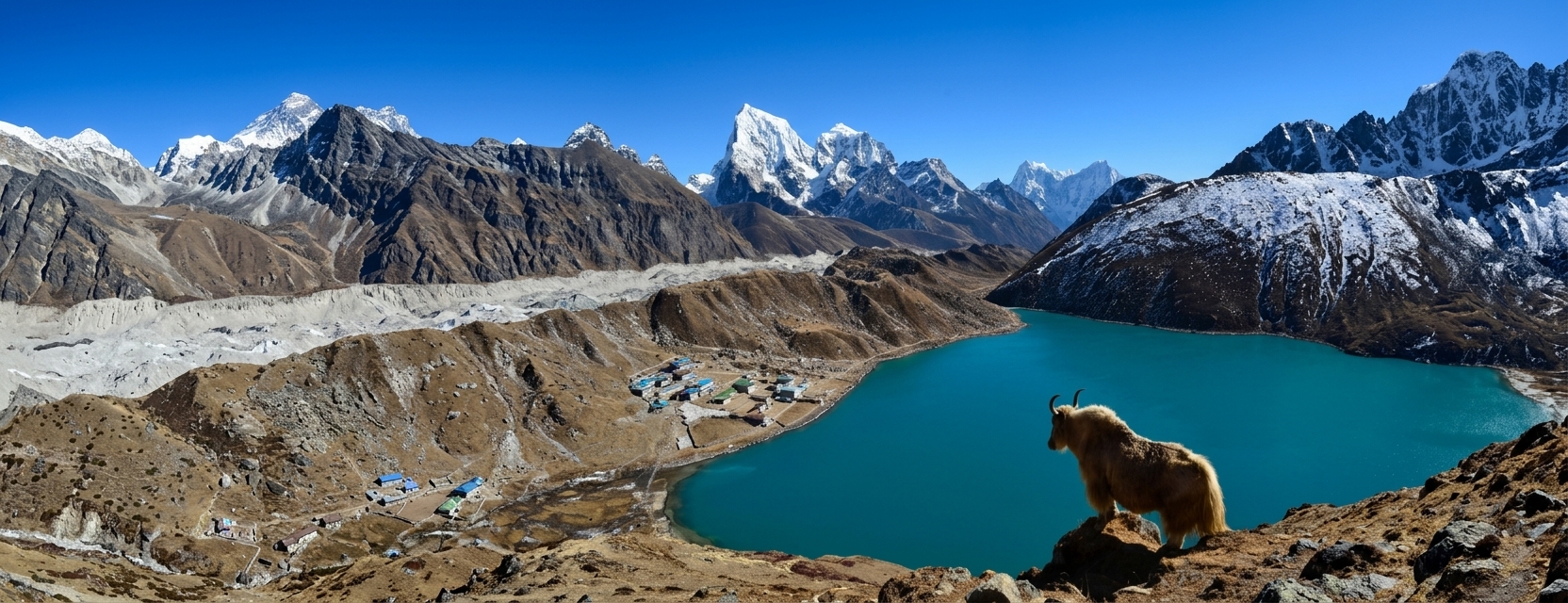
  • Breathtaking views of Mount Everest, Kanchenjunga, Makalu, Cho Oyu, and Lhotse.
  • Passing through tranquil environments via lush forests, traditional Sherpa villages, and meandering rivers.
  • Opportunity to immerse in the rich culture of the Sherpa people.
  • Visiting ancient monasteries, interacting with local villagers, and learning about their lifestyles and traditions.
  • Climbing through the diverse landscape of Barun National Park, from rhododendrons and pine forests to high-altitude terrain.

Mera Peak Climbing Overview

Mera Peak Climbing is one of the adventurous climbs in the Everest region.At an elevation of 6476m,it is known for being Nepal’s highest trekking Peak. Mera Peak lies within the Barun National Park. The expedition to Mera Peak is a challenging yet thrilling and straightforward ascent in the Khumbu Valley. In the Solukhumbu region of Nepal, the Peak lies south of the iconic Mount Everest.

The journey to Mera Peak traverses diverse terrain, ranging from lush green areas to rugged landscapes. The climbing route to Mera Peak is primarily non-technical, with a few stretches of the rise requiring fixed ropes. The space immediately below the summit of Mera Peak involves a steep ascent that traverses through the snow dome. This section requires an ascender/jumar on a fixed rope. Other climbing sections, however, are moderate. We’ll provide detailed information and the cost to book the trip.

Like other Peak climbers in the Everest region, this climb provides panoramic views of the Everest vista, the major highlight of the expedition. The vast range of summit views is visible from the top of Mera Peak, which is simply astounding. The extensive range includes three of the highest massifs above 8000 meters: Mt. Everest (8848.86 m), Mt. Cho Oyu (8201m), and Mt.Lhotse (8516m). Apart from these giants, minor mountains surround the Mera Peak.

Of Nepal’s 1310 mountains, 300 reside in the Everest region, and climbers can see many of them while climbing to Mera Peak. The towering peaks that stand tall and elegant border the Everest region. This area has been a mountaineering hub in Arcadia for over seven decades now. Climbers en route to Mera Peak can appreciate the region’s majesty.

At 6476 meters near Everest, Mera Peak has an alluring aura and has become one of Nepal’s most sought-after climbing activities. Indeed, its higher elevation makes it one of the adventurous climbing peaks in the Khumbu region, yet it is suitable for first-time climbers with reasonable fitness levels. The Nepal Mountaineering Association considers it a beginner-friendly climbing and trekking Peak.

Mera Peak has been renowned among climbers for decades. A French expedition team led by Jean Franco successfully summited this Peak for the first time on 20th May 1953. Henceforth, climbers have loved and cherished this Peak. There are three pinnacles of Mera Peak: Mera North (6476m), Mera Central (6461m), and Mera South (6064m). However, we’ll climb Mera North (6476m).

Boundless Adventure provides an 18-day itinerary for the Mera Peak Climbing. The Mera Peak Climbing expedition commences with a flight from Kathmandu’s domestic airport to Lukla Airport. Afterward, Lukla, the walking begins via Paiya and reaches the summit of Mera Peak in 11 days of walking. The itinerary includes the first day of arrival, the second day of sightseeing in Kathmandu Valley, the final day of departure, and the remaining days for the enjoyment of the expedition. However, we offer a customizable facility, allowing climbers to tailor their itinerary to their preferences.

Mera Climbing Training

Although climbing Mera Peak doesn’t involve a vast technical section, learning to use some standard climbing equipment is necessary. Boundless Adventure trains you to climb Mera Peak during your climbing expedition. On the tenth day, you will have an acclimatization day in Khare to adapt to the changed environment and surroundings. However, we’ll utilize your day by providing training for the ascent of Mera Peak.

During your rest day at Khaare, the climbing guide will train you to use your equipment during the climb. The climbing guide will lead you. During the session, we will provide information about the various equipment you should use when ascending to the summit of Mera. Additionally, the climbing guide will provide you with information about high-altitude risks and the dos and don’ts of climbing.

Climbing Route / Getting To Mera Peak

The Mera Peak Route takes the classic Lukla flight from Kathmandu. Your climb begins in Lukla and reaches the summit of Mera Peak. The flight from Kathmandu’s airport to Lukla airport takes approximately 35 minutes. As you land at Lukla airport, you will head steeply above your destination.

The Climb to Mera Base Camp heads southeast from Lukla, making a slight ascent towards Chutang at an elevation of 3020 meters. From Chutang, the trail ascends through the dense alpine forest and sharply turns towards the south. Afterward, you’ll head for the Zartwa La Pass, 4610 meters from sea level.

This pass acts as a border forMakalu Barun National Park.It’s a steep descent from the pass that takes 2 hours to reach Thuli Kharka, a shepherd’s hamlet with very few houses.

The stretch from Thuli Kharka traverses rocky terrain. Afterward, you’ll ascend towards Tashing Dingma at 4010, covered with a rock enclosure. The trail then meets the Inkhu River at Tashing Ognma. The Inkhu River originates from Mera Peak and later joins the Dudh Koshi River.

Following through, you’ll make your way to Mosom Kharka, Gondhishung, to reach Kote at 4182 meters. During this traverse, you will have an occasional glimpse of Mera Peak. Your climb journey follows along the river, passing through villages. The final stretch to Mera Peak is a gradual incline on a glacier. As the journey approaches the summit of Mera Peak, the slope steepens, and steep snow slopes are traversed.

Before reaching Mera Peak, the stopover points are Paiya, Pangkoma, Nigmsa, Chetrakhola, Kothe, Tangnang, Khare, Mera Base Camp, and Mera High Camp.

Distance covered in the Climb to Mera.

The round-trip distance of Mera Peak is 127 kilometers/79 miles. The trail begins from Lukla and passes through the highlands of the Everest region to reach the summit of Mera Peak. It then descends to Lukla via the classic Everest Base Camp Trek. The journey traverses the challenging terrain of the Everest region and spans 18 days.

The Mera Peak traverse is tricky, considering the trail’s distance and terrain. The path leading to Mera Peak is a higher section of remote terrain with uneven pathways. There are several rocky sections that you will have to traverse. Additionally, the upper section of the traverse involves trekking over several glacial moraines, rocky paths, and snow pathways, making the climb even more strenuous.

The temperature in Mera Peak

Mera Peak in the Everest region experiences four distinct seasons, with varying temperatures throughout the year. The area experiences pleasant temperatures during spring and Autumn—temperatures in Mera Peak during spring range from 5°C to 10°C during the day. Night-time temperatures drop below zero. At lower altitudes, autumn temperatures in Mera Peak can range from -5°C to 15°C (41°F to 59°F). Night temperatures in autumn months mostly drop to negative.

In contrast, Summers and Winters are harsh on Mera Peak. The temperature in Mera Peak during Summer ranges from 5°C to 17°C during the day and is relatively colder at night. Likewise, the temperature in Mera Peak during winter drops to -20 °C, which is even more freezing.

Mera Peak Climbing Average Temperature

Location Average Temperature Range (°C)
Kathmandu 5°C to 32°C
Lukla Two °C to -3°C
Chutanga (Camp 1) 0°C to 10°C
Kothe (Camp 2) -5°C to 5°C
Thagnag (Camp 3) -10°C to 0°C
Khare (Base Camp) -15°C to -5°C
High Camp -20°C to -10°C
Mera Peak Summit -25°C to -20°C

Online Booking and Payment

For the convenience of our clients, we have provided an online booking facility for the Mera Peak climbing. Using the online booking system, climbers can secure their package by pre-booking. However, climbers must pay 50% of their expedition cost during the online booking.

Boundless Adventures strives to deliver the utmost user satisfaction through its automated web platform. Our website is equipped with the latest security features, including payment integration, an SSL certificate, Online Booking, and a Secure Payment system.

Our end-to-end encryption keeps your data safe and reliable, minimizing the riskof a breach. Furthermore, our website enables you to create custom itineraries and plan trips tailored to your tastes and preferences. Moreover, you may contact us by email or WhatsApp at +977 9851033819 to book.


Day-to-Day Short Itinerary

Day 01Picks up from Kathmandu airport (1345meters). drops off to the Hotel.0m~0.33 hrs
Day 02Kathmandu Valley Sightseeing (option)0m~4 hrs
Day 03Fly to Lukla, Trek to Paiya (2730m)0m~0.75 hrs

What is included in this trek package?

What's Included

  • Airport pick-up and drop-off by car/van/bus.
  • Highly experienced, helpful, and friendly trekking and climbing guide.
  • Porters (1 porter for 2 pax), and their food, accommodation, salary, insurance, and equipment.
  • Sagarmatha National Park Entry Permit.
  • Peak Climbing Permit.
  • TIMS Permit.
  • All Government taxes

Cost

Group Price Breakdown

Group SizePrice Per Person
1 person$3,216
2 - 4 people$2,910
5 - 7 people$2,890
8 - 10 people$2,860
11 - 14 people$2,740
15 - 30 people$2,640

Know Before You Go

The Nepalese Himalayan Mountains are most favorable for climbing during the Spring (March to May) and Autumn (September to November), which provide a highly favorable weather window for climbing in Nepal. Unlike trekking, climbing requires the mountain ice to become concrete and rigid, which is in the Spring and Autumn, making it the best time for Mera Peak Climbing.

Spring begins in March and ends in May. Due to clear weather and optimal climbing conditions, spring is the most popular time for climbers to ascend Mera Peak. Another good time for Mera Peak Climbing is Autumn, from early September to late December. Like Spring, Autumn’s favorable weather conditions, clear sky, and dry climbing routes make it the best time for Mera Peak. Additionally, the stable weather in Autumn draws numerous climbers each year.

Due to its difficulty, we strictly prohibit climbers from attempting to climb Mera Peak during the Summer and Winter Months. From June to August, summer is a monsoon season that brings heavy rainfall, making the climbing route slippery and increasing the risk of landslides, which makes it unfavorable for climbing. Similarly, Winter is not preferable due to the cold it brings. The temperature in the Everest region drops below zero degrees during Winter, making it difficult to climb. Heavy snowfall also obstructs the climb to Mera Peak during Winter. Also, the soft Ice creates a slippery surface and a strenuous climbing environment during the season.

Climbing Mera Peak is an adventurous endeavor in Nepal and is one of the most sought-after activities. The peak climbing is rugged, especially if it’s your first climb of the Himalayan Mountains. Here, we will discuss the various difficulties of climbing Mera Peak.

Physical Fitness

An optimal level of fitness is paramount for climbing to Mera Peak. Climbing the Peak requires technical knowledge, and you must be in the perfect physical and mental state for successful climbing. The trek to the Peak of Mera consists of trekking for 5-7 hours daily for approximately 16 days through rugged terrain.

The trekking days to reach Mera’s base demand endurance and perfect physical conditions. We suggest incorporating cardio exercises and endurance training into your routine before your climbing days. To climb Mera Peak successfully, you need to undertake a challenging hike and engage in regular strength training.

Boundless Adventures will provide all the technical equipment for Peak Climbing to Mera. If you had informed us earlier regarding the Mera Peak climbing equipment, we have an equipment store at Khaare, where you can pick it up. Of course, it is payable for 3/4 days. The guides will brief you about the basics of using such equipment before your climbing begins. However, climbers must bring essential clothing, including jackets, caps, waterproof shoes, gloves, and glasses.

Boundless Adventure boasts a team of highly experienced mountain guides and staff for Mera Peak Climbing. We have been operating climbing trips in the Himalayas for over two decades, and our widespread network of professional teams sets us apart from other companies.

Additionally, Boundless Adventures prioritizes client safety, which we adhere to in our itinerary planning and execution. Our ground crew is equipped with medical supplies and trained efficiently in first aid. We also have a reliable helicopter rescue operation in place, if necessary, during evacuations and emergencies.

Boundless Adventures is the perfect partner for Mera Peak climbing in Nepal. We organize small group climbing to avoid creating bottleneck situations at the Peak. Our group consists of a maximum of 15 climbers. This results in an efficient guide-to-client ratio, ensuring proper attention is given to everyone involved. We adhere to the principles of responsible tourism. Our guides practice the Leave No Trace principle in the Mountains and contribute to the local economy as much as possible.

Boundless Adventure has the best experienced climbing guides for Peak Climbing to Mera. Our package covers trekking and a climbing guide. Our guide has climbed several times on Mera and other peaks of the Himalayas, so they are highly experienced in the field. Our guide has in-depth knowledge of the climbing route, knows how to use climbing equipment, and can train climbers. Additionally, the guide we provide has a thorough understanding of local geography and possesses strong leadership skills to guide and motivate the climbers.

The accommodation in Mera Peak Climbing varies depending on the location. On the first eight days of walking, climbers stay in a local tea house. From Lukla to Khare, climbers spend their nights at the tea house, the standard accommodation in the area. Afterward, in Khare, there are no human settlements or tea houses; thus, climbers must stay in tents for two nights. Climbers stay in tents at Mera Base Camp and High Camp.

Generally, climbers should bring camping equipment with them. However, Boundless Adventure wants to prevent our clients from getting worried, so we provide climbers with a climbing crew, camping equipment, and a cook.

A permit is mandatory for climbing Mera Peak. Having all necessary permits means no obstruction during the climbing time regarding paperwork. Makalu Barun National Park permits and Mera Peak Climbing permits are mandatory for climbing Mera Peak. As Mera Peak lies within Barun National Park, the permit of Barun National Park is necessary. Moreover, every peak climbing requires a special permit; therefore, a Mera Peak climbing permit is necessary.

Mera Peak Climbing Trip Reviews

100+ Happy Trekkers

Explorations that last a lifetime.

Tripadvisor5.0

Start Booking

1

$3,216

Per pax

Total$3,216

Quick help?

Expert Advice

Most Asked Questions by Travellers

FAQs For Mera Peak Climbing

Most Asked Questions by Travellers

Professional registered mountain guides are mandatory for any mountain climbing activities in Nepal. As mandated by the Government of Nepal, you are only allowed to climb mountains or peaks of Nepal if accompanied by a registered Travel company and a licensed mountain guide. Thus, you can only climb Mera Peak with a guide.

Mera Peak is over 6000 meters climbing peak in Everest region. The climbing cost is depend on size of your team.. The price is start from US$ 2640 to 3200. Direct contact us at the WnatsApp +977 9851033819 or email for more details.

Mera Peak is a moderately difficult yet attainable peak. Although it is known for being the highest trekking peak in the Everest region, it is also suitable for first-time climbers. However, the peak’s highest elevation makes it adventurous to navigate. Likewise, the unpredictable change in weather and diverse terrain make the climb quite challenging. Altitude-related issues constitute a significant concern during the expedition, so acclimatization is crucial. Climbers should also be in good physical condition and capable of walking 6-7 hours daily for 16 days.

Mera Peak is in the Solukhumbu district of the Koshi province. It lies south of Mount Everest, the world’s highest peak. At 6476m above sea level, Mera Peak is within the Barun National Park. In the Hinku Valley of Nepal, Mera Peak is a stunning mountain located in the Mahalangur section. The peak contains three main summits, including Mera North (6,476 m), Mera Central (6,461 m), and Mera South (6,065 m), and is becoming increasingly popular to climb in Nepal’s Himalayas.

Yes, Mera Peak Climbing can be perfect for beginners. The climb to the summit of Mera Peak is moderately challenging and requires excellent physical fitness. There is no need for technical skills. However, trekkers must physically and mentally prepare for a few months beforehand.

The climb from the base camp to the Mera Peak summit typically takes 5-6 hours, depending on the weather conditions. Meanwhile, the descent from the panel to the base camp takes about 3 hours. Usually, climbers begin their ascent by 2 a.m. and turn around by 10 a.m.

Yes, Mera Peak is one of the most accessible trekking peaks in Nepal. It is also one of the most popular trekking peaks. The routes are well-established, easy to navigate, and straightforward. Additionally, no technical climbing skills are required.

Yes, on a clear day, Mt.Everest is distinctly visible from the summit of Mera Peak. Additionally, you can see a stunning vista of Cho-Oyu (8201m), Lhotse (8516m), Makalu (8463m), Kanchenjunga (8586m), Nuptse (7855m), and Chamlang (7319m).

Nepal Mountaineering Association has 27 secluded peaks in Nepal as trekking peaks, including Mera Peak. The peak has an elevation of 6476m above sea level. Despite its high altitude, it is easily accessible and requires little technical skill to climb.

As of 2022, the success rate of the Mera Peak Climbing is around 80%. It has well-established trails and requires little mountaineering and technical skills. However, the high altitude exposes trekkers to altitude sickness. Proper preparation and acclimatization are crucial for the climb.

There are teahouses, lodges, and guesthouses available along the Mera Peak route. Until you reach the Mera Peak Base Camp, you can stay in any of these lodgings. But you must stay in a tent camp at the base camp until you descend.

Yes, you need to obtain a climbing permit to climb any peaks in Nepal. You will need a Sagarmatha National Park entry permit and the Khumbu Pasang Lhamu Rural Municipality Permit. You can obtain the permits from a registered trekking agency in Kathmandu.

The short answer is no. Mera Peak is a small mountain at 6476 meters, while Mt. Everest is the world’s highest mountain, at 8,849 meters. An Everest climbing expedition takes over two months to reach the summit and requires extreme mountaineering skills.

Let's Plan Your Trip Together

Tell us what you're looking for, and we'll help you shape a journey around it.

Plan with us
  • The sight of numerous flora and fauna in the Barun National Park.
  • Sense of accomplishment and personal satisfaction after getting to the summit of Mera Peak.
  • Day 04
    Trek to Pangkoma (2850m).
    0m
    ~5 hrs
    Day 05Trek to Nigmsa (2745m).0m~6 hrs
    Day 06Trek to Chetrakhola (3150m).0m~6 hrs
    Day 07Trek to Kothe (3600m).0m~5 hrs
    Day 08Trek to Tangnang (4350m).0m~5 hrs
    Day 09Trek to Khare (5045m)0m~4 hrs
    Day 10Acclimatization at Khare0m~5 hrs
    Day 11Khare to Mera Base Camp (5350m)0m~4 hrs
    Day 12Mera Base Camp to High Camp (5780m)0m~4 hrs
    Day 13High Camp to Mera Peak (6476m), Back to Khare0m~10 hrs
    Day 14Trek to Kothe.0m~6 hrs
    Day 15Kothe to Thuli Kharka.0m~6 hrs
    Day 16Thuli Kharka to Lukla.0m~6 hrs
    Day 17Fly to Kathmandu.0m~0.75 hrs
    Day 18International Departure0m~0.33 hrs

    Lukla Flight Information

    During peak trekking months (March, April, May, October, and November), flights to Lukla often depart from Ramechhap (Manthali) instead of Kathmandu because of airport traffic. In this case, you'll need to leave Kathmandu around 12:30 a.m. for a five-hour drive to catch your flight from Ramechhap on the trek departure date. Outside of peak seasons, flights usually operate directly from Kathmandu. Flights between Kathmandu and Lukla can be delayed due to weather, so adding at least two extra days to your trip is a good idea to avoid missing your international flight home.

    Note

    We recommend you arrive at Kathmandu by three pm at least one day before the trek departure date for last-minute preparations.

    Detailed Itinerary

    Another pre-requisite for selecting a professional company for Mera Peak Mountaineering is itinerary analysis. Your scheduled itinerary determines whether proper rest days are allocated for the journey.

    It would be best to acclimate adequately before reaching the top of the mountain. Additionally, your trekking days determine your physical condition before the climbing session begins. Please review our detailed itinerary, which has been professionally crafted. Boundless Adventure has crafted an 18-day Climbing Mera Peak Itinerary.

    The climbing trip fact is below.

    • Trip duration: 18 days in total
    • Climbing duration: 1 day
    • Difficulty: Challenging
    • Food: Breakfast, Lunch and Dinner
    • Nature of Trip: Ice Climbing
    • Transportation: Car and Plane
    • Best Climbing seasons: March to June and Sept to December
    • Accommodation: Hotel and Tent.
    • Starting place: Kathmandu
    • Trip end up: Kathmandu
    Day 01

    Picks up from Kathmandu airport (1345meters). drops off to the Hotel.

    Max Altitude

    0m

    Duration

    0.33 hrs

    Transport

    Private vehicle

    Meals

    null

    We will need your flight schedule in advance, and our representative will be at the airport’s arrival gate. You will then be escorted to your Hotel in Kathmandu. Depending on the time of day, you can wander around or rest at your Hotel until the evening. Night stay at a Hotel in Kathmandu.

    Accommodation

    Hotel

    Day 02

    Kathmandu Valley Sightseeing (option)

    Max Altitude

    0m

    Duration

    4 hrs

    Transport

    Private vehicle

    Meals

    Breakfast Included

    There are seven UNESCO heritage sites in Kathmandu. On the second day of your trip, you can visit any 4 of these sites. Kathmandu Durbar Square, Bhaktapur Durbar Square, Changunarayan, Swayambhunath, Pashupatinath, Boudhanath, and Patan Durbar Square are all located within the vicinity of Kathmandu. The Valley is an optional tour. In the evening, you will be briefed about the climb and trek to Mera Peak. Our mountain guides will introduce themselves and inform you about factors that must be considered.

    Day 03

    Fly to Lukla, Trek to Paiya (2730m)

    Max Altitude

    0m

    Duration

    0.75 hrs

    Transport

    Flight

    Meals

    Dinner Included

    Your day begins with an early morning drive to Tribhuwan International Airport, a domestic terminal. From there, we board the flight to Lukla. The flight takes you through the eastern highlands of Nepal, flying over the narrow gorges of the hilly areas. You will gaze at rural villages and dense forests of eastern Nepal. After landing in Lukla, we met with our porters and segregated the baggage. Our trek begins from Lukla. First, we descend from Lukla towards Surke. Then, we take the southern route that elevates to Paiya at 2730 meters. After 3-4 hours of traverse from Lukla, we reach Paiya, our overnight stop.

    Day 04

    Trek to Pangkoma (2850m).

    Max Altitude

    0m

    Duration

    5 hrs

    Transport

    On foot

    Meals

    Breakfast, Lunch, and Dinner Included

    The trail begins from Paiya and takes an easy-going tropical route toward Pagkoma. You will traverse through the rural hamlets of the Sherpa people. We pass through several subtropical dense forests alongside terraced farms. After 5 hours of traversing, we reached Pangkoma and settled in the teahouse. Edmund Hillary established a paper factory and school in Pangkoma. You will spend the night at a teahouse.

    Day 05

    Trek to Nigmsa (2745m).

    Max Altitude

    0m

    Duration

    6 hrs

    Transport

    On foot

    Meals

    Breakfast, Lunch, and Dinner Included

    It’s an easy-going, smooth trail that, for the most part, today takes on flat roads. Most of our journey will pass through dense forests of Rhododendrons, Juniper, Fir, Pine, and Birch. We passed the village of Sibuje and reached Nigmsa in the evening. Nigmsa is a small Sherpa village with basic amenities.

    Day 06

    Trek to Chetrakhola (3150m).

    Max Altitude

    0m

    Duration

    6 hrs

    Transport

    On foot

    Meals

    Breakfast, Lunch, and Dinner Included

    From Nigmsa, as you cross the Hinku River, you enter Makalu Barun National Park. You must show your national park permit and other identification at the entry gate. For most of the traverse, you will follow along the Hinku River. After six hours of traversing, we reached Chetra Khola village, situated at the confluence of Maj Khola and Hinku Khola. Overnight at Chetra Khola.

    Day 07

    Trek to Kothe (3600m).

    Max Altitude

    0m

    Duration

    5 hrs

    Transport

    On foot

    Meals

    Breakfast, Lunch, and Dinner Included

    On this traverse day, you will first glimpse Mera Peak. The vegetation now turns to sub-alpine from tropical dense. You will follow the Hinku River all day. Today’s traverse passes through several small hamlets. We first reached Tashing Ongma at 3580 meters and then Mosom Kharka at 3691 meters. Most of these settlements are seasonal, with habitats descending to lower areas during the winter. We reached Kote in the evening for a stay.

    Day 08

    Trek to Tangnang (4350m).

    Max Altitude

    0m

    Duration

    5 hrs

    Transport

    On foot

    Meals

    Breakfast, Lunch, and Dinner Included

    From Kote onwards, you will have a view of the western face of Mera Peak. Today, all four pinnacles are visible on Mera Peak’s trail. The shimmering white peak of Mera will allure you throughout the journey. The traverse from Kote to Tangnag is short, with a maximum of 4-5 hours of trekking. Since the altitude gain begins from here, it is advised to take it slow.

    Day 09

    Trek to Khare (5045m)

    Max Altitude

    0m

    Duration

    4 hrs

    Transport

    On foot

    Meals

    Breakfast, Lunch, and Dinner Included

    Today’s traverse involves small glacial moraines, rocky sections, switchback ascents, and the dry, arid lands of Mera base. The trail from Tangnang ascends steeply to High Camp at 5780 meters. We descend for a bit and then reach Dig Kharka. It is a shepherd’s shed during pasture season. From Dig Kharka, the trail ascends gradually, ending at Khare. Khare is an astounding valley village surrounded by mountains.

    Day 10

    Acclimatization at Khare

    Max Altitude

    0m

    Duration

    5 hrs

    Transport

    On foot

    Meals

    Breakfast, Lunch, and Dinner Included

    Acclimatization is paramount since the 5000-meter mark is crossed at Khare. We take a rest day at Khare to adapt to the elevating altitude. During the rest day, you will be led to a nearby glacier for the climbing training session. Your mountain guide will lead your team and explain all the technicalities. You will be trained to use your equipment and tools properly during the climb. They will have a demo session at Khare to mentally prepare you for the climb. Overnight at Khare.

    Day 11

    Khare to Mera Base Camp (5350m)

    Max Altitude

    0m

    Duration

    4 hrs

    Transport

    On foot

    Meals

    Breakfast, Lunch, and Dinner Included

    The stretch from Khare to Mera Base Camp is a tricky traverse. It is filled with glacial ice, and the trail is not definite. Your mountain guide will lead the way. You will traverse through the rocky boulders of Mera Glacier and ascend. The glacier is filled with deep crevasses and sections of stiff, icy terrain. We reach the base camp after 4 hours of trek. Your camp will be set up in the base camp. Overnight stay at the camp.

    Day 12

    Mera Base Camp to High Camp (5780m)

    Max Altitude

    0m

    Duration

    4 hrs

    Transport

    On foot

    Meals

    Breakfast, Lunch, and Dinner Included

    We start our day off early after a hearty breakfast. The trail from the base camp to the high camp is strenuous yet worthwhile. You will gaze at the neighboring mountains up close. The route to High Camp is via Mera Glacier, which is challenging to traverse on foot. It takes 4-5 hours to climb the flat-topped icy section of the glacier. We reached high camp and set up our tent for the night. You can gaze at the constellations and celestial bodies from high camp up close. It is a worthy sight to behold.

    Day 13

    High Camp to Mera Peak (6476m), Back to Khare

    Max Altitude

    0m

    Duration

    10 hrs

    Transport

    On foot

    Meals

    Breakfast, Lunch, and Dinner Included

    This is the last ascent stretch of Mera Peak climbing. We started our climb early, at midnight, at 1 a.m. Our promotion begins after ensuring our gear is worn correctly. Our staff will prepare a light breakfast before the traverse. The initial climb inclines at an angle of about 30°, and after 2 hours of climbing, it levels off with an incline of 40°. The journey from High Camp to the summit is a 5-hour trek. The final stretch to the summit, right below the peak, is strenuous. It requires fixed rope and technical know-how. After reaching the forum, you will have panoramic views of Mt. Cho Oyu, Mt. Lhotse, Mt. Everest, Mt. Lhotse Shar, Mt. Baruntse, and Mt. Makalu. We descend after creating memories at the summit of Mera Peak. It takes approximately 4 hours to descend from the summit to the base camp. From the base camp, we descend further via Mera Glacier to reach Khare for the night.

    Day 14

    Trek to Kothe.

    Max Altitude

    0m

    Duration

    6 hrs

    Transport

    On foot

    Meals

    Breakfast, Lunch, and Dinner Included

    We retrace the same trail back towards Kothe from Khare. This return stretch takes 6 hours. We follow the Hinku River basin to reach Kothe in the evening.

    Day 15

    Kothe to Thuli Kharka.

    Max Altitude

    0m

    Duration

    6 hrs

    Transport

    On foot

    Meals

    Breakfast, Lunch, and Dinner Included

    Our journey continues descending through the river valley. It reaches Thuli Kharka in the evening for a stopover. Usually, it takes six hours to hike to Thuli Kharka.

    Day 16

    Thuli Kharka to Lukla.

    Max Altitude

    0m

    Duration

    6 hrs

    Transport

    Private vehicle

    Meals

    Breakfast, Lunch, and Dinner Included

    From Thuli Kharka, a slight ascent takes you to Zatrwa La pass at 4610 meters. From here on, it is an easy trail via the dense forest of Kalo Himal. We reach Lukla in the evening to celebrate the end of our climb.

    Day 17

    Fly to Kathmandu.

    Max Altitude

    0m

    Duration

    0.75 hrs

    Transport

    Flight

    Meals

    Breakfast Included

    An early morning flight from Lukla will take you to Kathmandu. Upon reaching Kathmandu, our representative will escort you to your Hotel. Overnight in Kathmandu.

    Day 18

    International Departure

    Max Altitude

    0m

    Duration

    0.33 hrs

    Transport

    Private vehicle

    Meals

    Breakfast Included

    When you schedule your departure from the Hotel, our representatives will drive you to the international airport. You need to check out of the Hotel at noon. If you have an evening or late-night flight, you can leave your belongings at the Hotel.

  • All ground transportation.
  • Per person, one trekking /climbing map.
  • Kathmandu-Lukla-Kathmandu flight tickets.
  • Three meals a day during the trip only. (Breakfast, Lunch and Dinner)
  • What is excluded in this trek package?

    What's Excluded

    • Hotel in Kathmandu
    • Travel insurance.
    • Tips & donation
    • All sightseeing entry fees.
    • All climbing gear and equipment
    • Extra porters.
    Facebook4.9
    Google5.0
    Trustpilot5.0

    0.0

    0 reviews

    Accommodation

    Hotel

    Accommodation

    Hotel

    Accommodation

    Luxury Lodge

    Accommodation

    Luxury Lodge

    Accommodation

    Hotel

    Accommodation

    Luxury Lodge

    Accommodation

    Hotel

    Accommodation

    Luxury Lodge

    Accommodation

    Hotel

    Accommodation

    Hotel

    Accommodation

    Hotel

    Accommodation

    Hotel

    Accommodation

    Luxury Lodge

    Accommodation

    Hotel

    Accommodation

    Hotel

    Accommodation

    Hotel

    Accommodation

    null