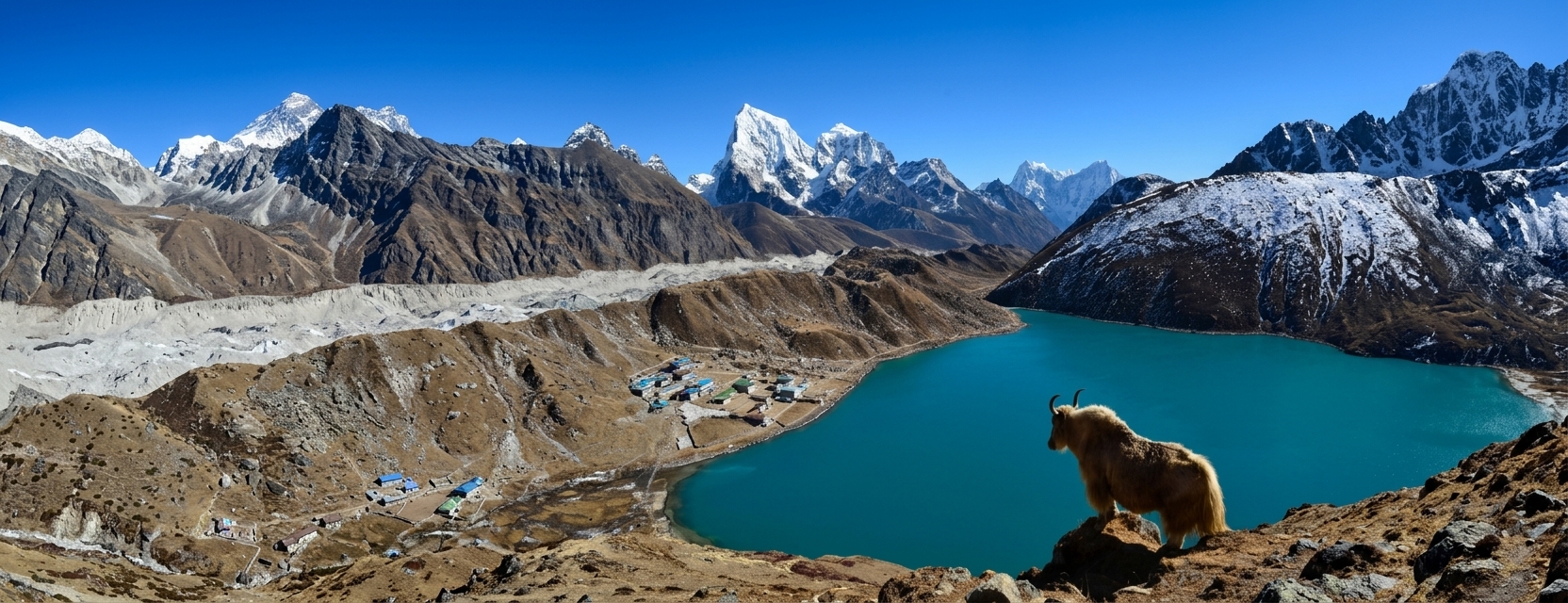
The Annapurna Base Camp trek is the most iconic in the Annapurna Conservation Area. Offering breathtaking views of Mount Annapurna I, II, III, IV, Himchuli, and the Holy Mountain Fishtail Himalayas. Similarly, the trip is a 10- to 14-day itinerary, including a 2-day travel journey. However, check it out via email or WhatsApp at +977 9851033819 for details on the trip's difficulty level and cost.
Destination
Nepal
Duration
11 days
Difficulty
Easy
Activity
Trekking
Max Altitude
4130
Accommodation
Hotel and Lodge
Meals
Breakfast, Lunch & Dinner
Transport
Bus
Starting & Ending Point
Kathmandu
Best Seasons
Mar-Jun, Sep-Dec
Trip Highlights
Explore Kathmandu: A bustling city with old-century temples, vibrant markets, warm Nepalese hospitality, and delicious cuisine.
Beautiful Pokhara: Pokhara, a city by a Lake, offers you stunning views of the Annapurna and Machhapuchhre. Enjoy boating on Fewa Lake, stroll along the lakeside, and explore the vibrant market.
Magnificent Views of the Himalayas: Views of Annapurna, Machhapuchhre, Manaslu, and other surrounding peaks enhance the ABC trek experience.
Charming Tea Houses: Stop in a lovely teahouse for a meal and an overnight stay. These family-run places allow trekkers to experience the local culture and hospitality.
Annapurna Base Camp Trek Overview
The Annapurna Base Camp Trek in Nepal is one of the most popular trekking destinations and a dream for every trekker to experience at least once in their lifetime. Situated at an altitude of 4,130 meters, Annapurna Base Camp serves as a gateway to the breathtaking majesty of Mount Annapurna, the 10th-highest peak in the world, rising to 8,091 meters. The ABC trek offers outstanding landscapes, the charm of Nepal, and, not to mention, a trekking experience, with the majestic Himalayas as your constant backdrop.
This trek offers trekkers spectacular vistas of the Himalayas from every angle, including Annapurna I (8,091 m), Annapurna South (7,219 m), Machapuchhre (6,993 m), Hiunchuli (6,441 m), and many other peaks in the area. The trek offers not only fantastic views of the Himalayas but also diverse landscapes, from terraced farm fields to the rugged highlands, with beautiful views of the green high hills and a smooth, quiet walking path.
The trek is ideal for adventure lovers and for those who view the world through camera lenses. A few local hamlets along the path welcome visitors with hospitality. You can talk to the villagers and explore their distinct way of life and culture. As the trek passes through diverse terrain, it adds more fun and adventure. The combination of natural beauty, cultural richness, and the thrill of adventure makes the Annapurna Base Camp Trek a truly remarkable journey that leaves a lasting impression on all who undertake it.
Whether it's adventure, spectacular photo opportunities, or connection with nature and culture, this trek can give you it all, an absolute must-do for a trekker.
Why Choose Annapurna Base Camp Trek?
The trekking trail is best for beginners and students as well. You can easily scramble in the Annapurna Himalayan range, Experience Local culture, and watch the sunrise over the Himalayas.
Majestic Himalayas
The Annapurna Base Camp trek offers majestic Himalayan views. The snowcapped Annapurna Massif, Machhapuchhre, Hiunchuli, and many other surrounding peaks make this trek worthwhile. This trek passes through dense forest, wide meadow, and towering peaks, providing a visual feast for nature lovers.
Cultural Experiences
As you pass through several small local villages, you can interact with the locals and learn about their unique culture and traditions. The unique traditions of the local Gurung and Tamang communities amaze you and add more fun and adventure to this trek.
Sunrise at Poon Hill
Early morning hike to one of the most popular viewpoints, Poon Hill, which offers a stunning golden sunrise view over the snow-capped Himalayas. This segment of the ABC trek is the highlight. The sunrise views are breathtaking and create a beautiful memory of your trek.
Adventure and Challenge
The Annapurna Base Camp trek is one of Nepal's most adventurous and challenging treks. Suitable for both experienced and beginner trekkers, this trek offers an opportunity to push your limits while enjoying the great outdoors.
Stunning Landscapes
From trekking through terraced farmland to walking through lush green forests and back to base camp, the ABC trek offers a range of stunning landscapes. You can walk through diverse landscapes to connect more closely with nature.
Memorable Experience
At ABC Trekking, you'll experience warm hospitality, walk through diverse landscapes, and, upon reaching ABC, make your trek memorable. These experiences stay with you for a lifetime.
Day-to-Day Short Itinerary
Day 01Arrive at Kathmandu and transfer to the hotel. Overnight.1,400m~0.25 hrs
Day 02Tourist Bus drive to Pokhara, Overnight.850m~5 hrs
Day 03Drive to Nayapul, Hike to Tikhedhunga, Overnight.1,070m~1.5 hrs
What is included in this trek package?
What's Included
Pickup from international airports by private vehicle.
Three times meals during the Annapurna Base Camp Trek (Breakfast, Lunch, and Dinner)
Necessary trekking permits (TIMS card and ACAP entry permits)
Trekking in the Annapurna region presents a range of challenges that vary with the specific trail, altitude, and weather conditions. One of the primary concerns is altitude, as the trek reaches elevations above 4,130 meters at Annapurna Base Camp, increasing the risk of altitude sickness.
The routes may not just be arduous but also filled with ups and downs, rocky areas where one could slip or fall, and wet, sloppy sections, especially during the rainy season, which trekkers will have to cope with. To account for the severity, physical fitness and good stamina are required, as the daily trek would be about 4-8 hours of continuous hiking. Moreover, one should be prepared for rain, snow, and temperature changes, as mountain weather can change quickly.
Therefore, a good level of physical fitness is necessary; regular exercise, such as hiking or walking, can help you prepare for the trek. Overall, while the views are tremendous and the experiences rewarding, respect for the trek's challenges and the preparation required is needed.
To ensure a safe and enjoyable trekking experience, consider the following safety tips:
Acclimatization: Allow time for your body to adjust to higher altitudes. Ascend gradually and take rest days if necessary.
Stay Hydrated: Drink plenty of water, especially at higher altitudes. Carry a water purification method (tablets or filter) to ensure safe drinking water.
Know Your Limits: Listen to your body and don't push yourself too hard. If you feel unwell, take a break or descend to a lower altitude.
Travel witha Guide: Hiring an experienced guide can enhance safety, provide local knowledge, and assist with navigation.
Stay Informed: Check weather forecasts and trail conditions before setting out each day. Be aware of any potential hazards, such as landslides or flooding.
Emergency Contacts: Keep a list of emergency contacts, including local authorities and your country's embassy. Familiarize yourself with the nearest medical facilities.
Spring (March-May) and Autumn (September-November) are the best seasons for trekking in the Annapurna Base Camp. These two seasons are the peak season for hiking and exploring Nepal. Most travellers around the world choose this season to travel.
Spring (March-May)
Spring is the best season for trekking and mountaineering in Nepal. Spring is considered the best time of year for trekking in the ABC. The time ensures clear views of the Himalayas and surrounding peaks, and offers warm, crisp temperatures. This season brings pleasant, bright weather, with daytime highs of 10 to 20 degrees Celsius.
Rhododendrons and other wildflowers make the trail colourful, and the atmosphere is perfect for day walking in the high-altitude region. For nature lovers, this is a photo opportunity, as the vibrant colours of the flowers contrast nicely with snow-capped peaks. The dry trail has fewer crowds than in autumn, is comfortable for trekking, and is perfect for nature lovers.
Autumn (September-November)
Autumn is the most popular season in ABC and other routes such as EBC, the Langtang region, and many other high-altitude trekking destinations. The Himalayas and the surrounding peaks will be crystal clear this season. After the monsoon season, the weather gets clear and crisp; the greenery of the Hills and the views of the Himalayas are so clear that you can see them from a far distance.
Autumn weather is pleasurable and bright, with daytime highs of 10 to 20 degrees Celsius. The trail is dry and safe. You will see a crowd on the trail during peak season, so make sure to book in advance, as most accommodations fill up. Also, during this season, Nepal's great festival takes place, so you have a full opportunity to participate in it and enjoy Nepal's unique culture.
Other Seasons
Monsoon Season (June to August):
The monsoon season is not considered ideal for trekking in the ABC or other high-altitude areas. During this season, heavy rainfall occurs, most trails are steeper, and there is a high risk of landslides in the hilly area. So plan your trek wisely.
Winter Season (December to February)
The winter season is not ideal for trekking to Annapurna Base Camp. The Annapurna regularly freezes when the temperature goes below freezing. The trails are fully covered by snow, and visibility in the surrounding area and the surrounding Mountains is abysmal.
Most teahouses remain closed; very few are open, and they may fill up early, leaving fewer dining and lodging options.
To trek during the monsoon or winter, you need to hire a guide or be an experienced trekker.
While trekking in the Annapurna Base Camp, you'll have the best accommodation and food. During your trekking days, you'll stay in a local teahouse and have warm food. There are no five-star restaurants, but there is a variety of food options and modern facilities, and the locals' hospitality makes it worthwhile.
Food
For food, there are very limited options available. Most of the food is locally grown and cooked over firewood. You’ll taste authentic flavours of food on the ABC trek.
For Breakfast itam
Gurung bread with jam or honey
Tibetan Bread
Tea made of yak milk
Boiled Egg
Tea and hot water
Seasonal fruits (if available)
Hot Soup
Omelette with onion, tomato, and chilli
Vegetable Soup
Hot porridge with milk
Potatoes
For Lunch and Dinner items
Varieties of soup (garlic soup, veg, and non-veg soup)
Dal Bhat and veg ( Nepali traditional food)
Fry rice
Momo
Chow mein
Rice pudding (if available)
Spaghetti
Green Vegetable
Pasta
Noodles
Most teahouses serve vegetarian/veganfoods. Alcohol and meat are not allowed during trekking in a high-altitude region. These are not considered suitable for trekking days.
The water in the teahouses during the ABC trek is usually spring water. Always carry a water bottle and a water purification tablet.
Accommodation
During your trekking days in the ABC, you'll stay at a local teahouse that offers fundamental yet comfortable, warm accommodation. They provide you with a small cozy bedroom with a wooden bed, a blanket, a mattress, and a pillow. The rooms are clean and well-organised. The blanket may not be enough on cold days, so always carry a sleeping bag.
Generally, teahouse bedrooms are shared, and there are no private bathrooms, hot showers, Wi-Fi, or electricity as you trek into higher regions. If you want a private room, electricity for charging your electronic devices, Wi-Fi, and hot water for a shower, you must pay extra. But in a lower elevation or in a city area, you'll get a private room with all modern facilities.
On the Annapurna Base Camp Trek, your day typically begins early, around 7 AM, with a hearty breakfast to fuel your adventure. By 8 AM, you're ready to hit the trail, excited to explore the stunning landscapes that await you. The trekking will consist of strolling through Adventureoods, and sometimes even getting your sneakers dirty on rocky paths. Still, all this is delightfully done, with the view of nature's most incredible and mightiest mountains, their extreme heights made even more visible by the waterfalls cascading between them.
The little villages on your way will be an experience in themselves, and you may even get to talk to some of the villagers, sharing the little that you might know of their rich culture and perhaps even gaining insights into it. The warmth and hospitality of the Nepalese community will conquer you, and you will feel that you also belong to them for that moment.
After a few strenuous hours, you will have your lunch break, which you will see as a reward for your efforts. It will be a time when you are going to taste some of the local specialities, and at the same time, converse, if not debate, with your fellow trekkers about the fascinating things that probably happened on the trail during the day. You will then continue trekking in the afternoon until you reach your shelter for the night, extending your adventure by several more hours.
Upon reaching your destination, you will be able to breathe out, relax, have dinner, and listen to people around you telling adventure stories about the day during the course of making the conversation with other trekkers lively. Just before bed, your guide will let you know about the next day's hike, which you might find exciting or even challenging, ensuring you are ready for the great opportunities of the Himalayas ahead. That is a day full of satisfaction, adventure, culture, and good fun in the middle of the mountains.
Permit
You will need the Trekker's Information Management System (Adventure) and the Annapurna Conservation Area Permit (ACAP). TIMS costs approximately $20 per person, and ACAP costs roughly $30 per person. Both can be obtained from the National Tourism Board office in Kathmandu, or you can pick up ACAP at the entrance office on the way to ABC. TreAdventure will handle all your permits and other documents if you allow.
Travel Insurance
Travel insurance is mandatory for trekking in ABC or any other adventure trekking area. Your insurance policy should cover the cost of emergency helicopter evacuation, medical treatment, trip cancellation, trip interruption, and loss or damage of luggage or personal belongings. You must read the document carefully before purchasing travel insurance to see whether it covers all these things.
When planning a trek in the Annapurna region, one crucial consideration is whether to go solo or join a group, as both options have advantages and disadvantages.
Solo trekking gives you the flexibility to go at your own pace and schedule, which can be more personal and introspective. It may also be cheaper because you get to stay and eat wherever you feel best fits your budget. However, solo trekking can also be dangerous due to safety concerns, as help may not always be within reach in an emergency. Moreover, without a guide, there will be times when one encounters navigation difficulties and misses out on the social interactions that come with trekking in groups.
On the other hand, group trekking offers safety in numbers, camaraderie with fellow trekkers, and shared experience. It also often comes with guides who can provide special insights and assistance. However, group treks usually have fixed itineraries that you are more or less bound to follow, and they do not allow much personal exploration. Different physical conditions and personalities within a group may lead to conflicts.
Ultimately, the choice between solo and group trekking depends on your personal preferences and experience level; both can offer rewarding adventures if approached with proper preparation and awareness of the challenges involved.
Yes, last-minute reservations are accepted for the magnificent Annapurna Base Camp (ABC) trek. Once you arrive in Nepal, you can inquire about the ABC trekking package, which is an 11-day expedition to the base camp. Our package includes breakfast, lunch, and dinner, allowing you to fully enjoy the local cuisine and experience all the unique aspects of the trek. If you have specific dietary preferences, we can also provide additional meals for an extra fee.
Usually, the ABC trek is booked three months in advance, like other treks. However, with Boundless Adventures, you are not required to make a last-minute reservation for an ABC trek because we will cover everything.
Online Booking
You can be sure that Boundless Adventures is a local trekking company, fully government-authorized, with many years of experience dating back to 1992.
We are recognized members of the Nepal Mountaineering Association, the Trekking Agency Association of Nepal, the Nepal Tourism Board, and other official government tourism organizations, ensuring you can book your trekking packages with complete confidence and peace of mind.
We pride ourselves on maintaining open communication with our clients and guests, ensuring that their satisfaction is never compromised. If you are ready for Adventuret adventure, please do not hesitate to contact us via WhatsApp at +977 9851033819 now!
Packing the right gear is the most essential item iAdventureg while trekking the Annapurna Base Camp Trek. Here is the crucial list of items to carry in your trekking bag.
The Annapurna Base Camp Trek is a popular trekking route in Nepal that leads to the Annapurna Base Camp, offering stunning Himalayan views and diverse cultural experiences.
The trek typically takes around 11 to 12 days, depending on the itinerary and your pace.
The best times to treks are spring (March to May) and autumn (September to November).
The highest point of the trek is Annapurna Base Camp at an altitude of 4,130 meters (13,550 feet).
Yes, you need a TIMS (Trekkers' Information Management System) card and an ACAP (Annapurna Conservation Area Permit).
The Annapurna Base Camp Trek is famous for its scenic routes, charming villages, picturesque terrace farms, mountain panoramas, and rich cultural experience. From the base camp, you can witness spectacular views of the massive mountains and landscapes.
Trekking Difficulty FAQs
Yes, the Annapurna Base Camp Trek is suitable for beginners with a reasonable level of fitness, but prior trekking experience is beneficial.
The trek can be moderate to challenging, depending on the trail conditions and altitude.
Trekkers usually spend 4 to 8 hours on the trail each day.
If you experience symptoms of altitude sickness, it's essential to descend to a lower altitude and seek medical attention if necessary.
Accommodation and Food FAQs
Accommodation is typically in local teahouses, which provide basic but comfortable lodging.
You can expect a variety of local dishes, including dal bhat, momos, and soups, as well as international options.
Yes, most teahouses offer vegetarian and vegan meals.
Electricity is available in many teahouses, but an additional charge may apply for device charging.
Packing and Preparation FAQs
Essential items include trekking boots, warm clothing, a sleeping bag, a water purification system, and a first aid kit.
Yes, it is recommended to bring a sleeping bag for added comfort, especially during colder nights.
Good-quality trekking boots, trekking poles, warm layers, a waterproof jacket, and a hat are essential.
Safety and Health FAQs
Stay hydrated, acclimatize properly, listen to your body, and always trek with a guide or in a group.
Yes, travel insurance is highly recommended and should cover emergency evacuation and medical expenses.
Always have a list of emergency contacts, including your trekking agency and local authorities, and know the nearest medical facilities.
Trekking Experience FAQs
Yes, but it is recommended to trek with a guide or in a group for safety and navigation assistance.
A typical day includes waking up early, trekking for several hours, enjoying meals at teahouses, and resting in the evenings.
Yes, the trek passes through several villages, allowing you to meet local people and learn about their culture.
Booking and Costs FAQs
You can book the trek through a trekking agency like Boundless Adventure, either online or upon arrival in Nepal.
Costs vary by package, but you can expect to pay for permits, accommodation, food, and guide services.
Yes, last-minute reservations are accepted, but it's advisable to book in advance during peak seasons.
Visa FAQs
Yes, most travellers require a visa to enter Nepal. You can obtain a visa on arrival at Kathmandu's airport or apply for an e-visa online before your trip.
To apply for a visa to Nepal: On Arrival: Fill out the visa application form at the airport, provide a passport-sized photo, and pay the visa fee in cash. E-Visa: Visit the official Nepalese government website to apply for an e-visa. You will need to upload a passport-sized photo and pay the visa fee online.
Yes, your passport should be valid for at least six months beyond your intended date of entry into Nepal.
Yes, you can extend your visa at the Department of Immigration in Kathmandu or Pokhara. Extensions are subject to approval and may incur additional fees.
Additional Information FAQs
Yes, you can relax in natural hot springs at Jhinu Danda after a long day of trekking.
You may spot wildlife along the trail, including monkeys, deer, and numerous bird species.
Mobile network coverage is available in some areas, but it may be limited in remote sections.
Check the cancellation policy with your trekking agency, as it may vary based on your booking terms.
Yes, you can extend your trek to nearby areas, such as the Annapurna Circuit or the Ghorepani Poon Hill trek. If you have any questions about the Annapurna Base Camp Trekking package, please get in touch with us.
Let's Plan Your Trip Together
Tell us what you're looking for, and we'll help you shape a journey around it.
Diverse Flora and fauna: Explore the flora and fauna of the ABC trek. Walk through lush rhododendron forest, terraced farm fields, and spot diverse wildlife on the trail.
Ghandruk Village: Visit a traditional village for a glimpse into local life. Enjoy stunning views of the Annapurna range, interact with friendly villagers, and learn about their customs and traditions.
Diverse landscapes: Explore the Annapurna region's varied terrain, from lush green valleys and terraced fields to rugged mountain trails.
Sunrise at Poon Hill: Witness the breathtaking golden sunrise view over the Annapurna range. This is the highlight of this trek.
Warm Hospitality: Experience Nepalese hospitality along the trail. Their warm and welcoming nature makes you feel at home.
Natural Hot Spring: Relax in a natural hot spring in Jhinu Dada, providing a refreshing respite after a long day of trekking on the ABC trek.
Day 04
Trek to Ghorepani, Overnight.
2,860m
~6 hrs
Day 05Trek to Tadapani, Overnight.2,630m~6 hrs
Day 06Trek to Chhomrong, Overnight.2,170m~4 hrs
Day 07Trek to Himalaya hotel, Overnight.2,920m~6 hrs
Day 08Trek to Annapurna Base Camp, Overnight.4,130m~5 hrs
Day 09Trek to Bamboo, Overnight.2,300m~6 hrs
Day 10Trek to Jhinu (Hot Spring), Overnight.1,760m~5 hrs
Day 11Trek to Nayapul and drive to Pokhara. Overnight.1,070m~1 hrs
Note
We recommend you arrive at Kathmandu by three pm at least one day before the trek departure date for last-minute preparations.
Detailed Itinerary
Our 11-day Annapurna Base Camp Trek cost and itinerary includes a trip from the International Airport to Annapurna Base Camp and back to Pokhara (we are not counting Day 1).
We can also take you on a seven-day trek to Annapurna Base Camp. Don’t hesitate to contact us during your holidays.
Day 01
Arrive at Kathmandu and transfer to the hotel. Overnight.
Kathmandu
Max Altitude
1,400m
Duration
0.25 hrs
Transport
Private vehicle
Meals
Meals Not Included
Welcome to Nepal. A representative of Boundless Adventure will greet you at the international airport and transfer you to the Hotel. In a short time, we had a brief interaction, completed the payment, and discussed the remaining activities. Overnight at the Hotel. (Let us know what categories of hotels you somewhat like) Note: Local SIM cards and currency exchange services are available at Nepal's international airport.
Accommodation
null
Day 02
Tourist Bus drive to Pokhara, Overnight.
Pokhara
Max Altitude
850m
Duration
5 hrs
Distance
200 km
Transport
Private vehicle
Day 03
Drive to Nayapul, Hike to Tikhedhunga, Overnight.
Nayapul
Max Altitude
1,070m
Duration
1.5 hrs
Transport
Private vehicle
Meals
Breakfast, Lunch, and Dinner Included
Day 04
Trek to Ghorepani, Overnight.
Ghorepani
Max Altitude
2,860m
Duration
6 hrs
Transport
On foot
Meals
Breakfast, Lunch, and Dinner Included
Day 05
Trek to Tadapani, Overnight.
Tadapani
Max Altitude
2,630m
Duration
6 hrs
Transport
On foot
Meals
Breakfast, Lunch, and Dinner Included
Day 06
Trek to Chhomrong, Overnight.
Chhomrong
Max Altitude
2,170m
Duration
4 hrs
Transport
On foot
Meals
Breakfast, Lunch, and Dinner Included
Day 07
Trek to Himalaya hotel, Overnight.
Himalaya Hotel
Max Altitude
2,920m
Duration
6 hrs
Transport
On foot
Meals
Breakfast, Lunch, and Dinner Included
Day 08
Trek to Annapurna Base Camp, Overnight.
Annapurna Base Camp
Max Altitude
4,130m
Duration
5 hrs
Transport
On foot
Meals
Breakfast, Lunch, and Dinner Included
Day 09
Trek to Bamboo, Overnight.
Bamboo
Max Altitude
2,300m
Duration
6 hrs
Transport
On foot
Meals
Breakfast, Lunch, and Dinner Included
Day 10
Trek to Jhinu (Hot Spring), Overnight.
Jhinu Danda
Max Altitude
1,760m
Duration
5 hrs
Transport
On foot
Meals
Breakfast, Lunch, and Dinner Included
Day 11
Trek to Nayapul and drive to Pokhara. Overnight.
Nayapul
Max Altitude
1,070m
Duration
1 hrs
Transport
On foot
Meals
Breakfast, Lunch, and Dinner Included
From Nayapool to Pokhara by private vehicle (at the end of the trip)
A professional and experienced trekking guide
Salary for the guide, their insurance, food, accommodation, and transportation
Trekking map for every client.
An iodine / Caroline purifies drinking water during trekking.
If required, a Sleeping Bag (Refundable)
Down Jacket (Refundable)
Government tax
Duffel Bags
First Add kids
What is excluded in this trek package?
What's Excluded
Hotel in Kathmandu
Lunch & dinner in Kathmandu.
Hot and cold drinks
hard and soft drinks
Tips for trekking staff (expected)
Donation.
Flight tickets from Kathmandu to Pokhara and a car (if you would like, let us know)
Tourist Buses drive along the Prithvi Highway, a scenic route that showcases the terraced hillside settlements along the River valley. The route often includes a few backtracking segments, but several restaurant stops offer enough time to freshen up and relax. It takes about five hours to reach Pokhara, transfer to the Hotel, and check in. Alternatively, you can fly to Pokhara, about a half-hour from Kathmandu. Overnight at the Hotel.
Accommodation
Hotel
After a delicious breakfast at the Lakeside of Pokhara, take a 1.5-hour drive to Nayapul to enjoy the varied landscape and the Himalayas. Even the hillside territories around Pokhara are popular tourist destinations. Once you reach Nayapul, begin the trek and submit the trekking document at the Annapurna Conservation Area checkpoint at Birethanti. Catching the left-side trail, the trek smoothly leads us to Tikhedhunga via Hile. We can rest in Tikhedhunga or extend the trek to Ulleri and overnight at the lodge.
Accommodation
Hotel
Good morning in the countryside. Having breakfast, we packed our stuff and began the excursion. From Tikhedhunga, we first cross a steel bridge and are energized to climb for almost an hour along a steep trail. Ulleri is a village with beautiful lodges on a terraced hillside. Heading ahead, we reach Banthanti. If the belly demands it, it's the best place for lunch, with a beautiful glimpse of Mt. Annapurna and Fishtail. The trail then gradually climbs uphill through the rhododendron forest, which becomes exceptionally alluring in autumn. The waterfalls, meadows, and isolated routes provide the way where the wanderers love to roam around. Overnight at the Hotel in Ghorepani.
Accommodation
Hotel
Getting the first kiss of the sun's rays over the gigantic peaks of Mount Annapurna and the Dhaulagiri range can be mind-blowing for you. We get up early in the morning (around 4.30 am) and begin our hike to Poon Hill, climbing steep steps for about 40 minutes. Placing the best spot, we witness the magnificent Himalayan scenery of Mount Annapurna, Dhaulagiri, Nilgiri, Fishtail, Manaslu, Himchuli, and the surrounding peaks in a panoramic shot. One of the most remarkable moments along the Annapurna base camp trek via Poon Hill. Then we climbed to Ghorepani, had breakfast, and set out on the tour. The trail is steep, both uphill and downhill; we head to Deurali and then farther to Banthanti for lunch. Then we walked through the plain terrain, and after a couple of steps, we reached our target overnight point at Tadapani, where we stayed at the lodge.
Accommodation
Hotel
The view of Annapurna from Tadapani is stunning in the morning, too. So, a delightful view accompanies us for breakfast. Packing the stuff, we march downhill through the rhododendron woods to Kimrong. Crossing the stream, we follow the trail to Chhomrong, a renowned village home to the Gurung people. The excellent location and magnificent hospitality of Chhomrong do not allow our excited feet to move any further, so we enjoy the breathtaking view of the Annapurna range and Fishtail overnight at the lodge.
Accommodation
Hotel
Heading from Chhomrong after breakfast, we are drawn back and forth by the picturesque scenery of the rugged countryside. We crawl towards the Chhomrong Khola, cross it, and ascend to the Modi River valley via Sinuwa and Bamboo, our lunch stop today. Now, the trail follows the River, frequently playing hide-and-seek in the rhododendron woods and a dense forest of bamboo and oaks. Passing a trailside canyon, we jump toward our destination today, which welcomes us with steaming meals and warm dining at Himalaya, and an overnight at the lodge.
Accommodation
Hotel
It is a massive day following the magnificent Himalayan route, listed in guidebooks worldwide. Today, we commence our trek from the Himalayas to our ultimate destination. The soaring peaks stand on the horizon, and the cool breeze surrounds us with a freshening touch. We pass through the narrow gorge and woods and cross the Hinku Cave, which leads us directly to Deurali. We cross the Machhapuchhre Base Camp to ABC (Annapurna Sanctuary), 3712m / 12178 feet. We have lunch over here and continue towards ABC. The adventure experience hits us as giant rocky boulders surround us. As we head forward, we rest and catch our breath, making the journey more manageable. The sanctuary welcomes us with lodges and warm dining halls. Besides, the beautiful sceneries of Fishtail, the Annapurna Massifs, and several towering peaks greet us with salutation. Overnight at lodge/tea house in Annapurna Base Camp.
Accommodation
Hotel
All we leave at the Annapurna Base Camp is the memory of our footprints once we explore the breathtaking sunrise view over the snowy pinnacles. Hundreds of trekkers take pictures of the majestic Himalayas every day. Annapurna Base Camp is aptly called the Annapurna Sanctuary, and we leave today after breakfast. The downhill trek is easy as you descend, but your trembling legs challenge you, so you need to rest several times. We will have lunch at the Deurali. However, we will reach Bamboo for the final overnight rest at the lodge today.
Accommodation
Hotel
After breakfast at Bamboo, the downhill excursion continues. Some sections are straightforward, and others are tolerable. The trail is the same as we head to ABC to Chhomrung and have lunch there. Then, we descend to JhinuDanda (Hill), an excellent location for an overnight stay. Without delay, we will head to the natural hot spring, where it will soothe your tired muscles and leave you feeling relaxed and comfortable. Trekkers often spend a couple of hours bathing in water that is 32 degrees Celsius. Therefore, it is essential to bring sandals, towels, shampoo, and undergarments so you can change. Then we returned to Jhinu Danda for the night at the Hotel.
Accommodation
Hotel
Today is the final day of our trek to Annapurna Base Camp via Poon Hill. After breakfast, trek down from Jhinu Danda (Hill), crossing one of the longest suspension bridges in the Annapurna region. Walk along the right bank of the Modi Khola River; we don't hurry, as this is the final stretch, and reach the base point of Ghandruk, Siwa. We continue trekking to Nayapul, exploring the forest's greenery and hilly landscape. We check out from the ACAP checkpoint and drive to Pokhara for 1.5 hours. Overnight at the Hotel. Your trip ends in Pokhara. The Crew will then drive to Kathmandu. Let us know if you are going somewhere else or to Kathmandu.