Newsletter

Subscribe To Our Newsletter

Quick Links

  • About Us
  • Why Boundless Adventure
  • Company Documents
  • Banking Details
  • Customize Trip
  • Contact Us
  • Volunteering in Nepal

Top 5 Treks

  • Annapurna Base Camp Trek
  • Everest Base Camp Helicopter Tour
  • Everest Base Camp Trek
  • Manaslu Circuit Trek
  • Upper Mustang Jeep Tour
  • Langtang Valley Trekking
  • Upper Mustang Trek

Useful Links

  • Travel Blog
  • Trekking Routes Map
  • Testimonials
  • Privacy Policy
  • Terms of Conditions
  • Compare Itineraries

Nepal (Head Office)

Business: +977 14701884|+977 1 4701885
Mobile: +977 9851033819
info@boundlessadventure.com

Thamel Kathmandu, Nepal

P.O. Box No. 11670

Australia

+61 426 378 149 (WhatsApp)sales@boundlessadventure.com

Japan

+81 80 4107 0813 (WhatsApp)boundlesstrek@gmail.com
Nepal Tourism Board, TAAN, NMA, and KEEP certification marksAccepted payment methods: American Express, Mastercard, Visa, UnionPay, and Google Pay

© Boundless Adventure Pvt. Ltd. 2026 All content, including photos, is owned by Boundless Adventure. Unauthorized use is prohibited.

Nepal Govt. Regd. No: 88177/068/069 | Tourism Regd. No: 1509 | Since 1992

Contact
+977 9851033819Plan with us
HomeNepalEverest Base Camp Trekking
OverviewItineraryIncludesExcludesCostMapGearKnow before you goReviewsFAQs

Everest Base Camp Trekking

0.00 reviews
6:26
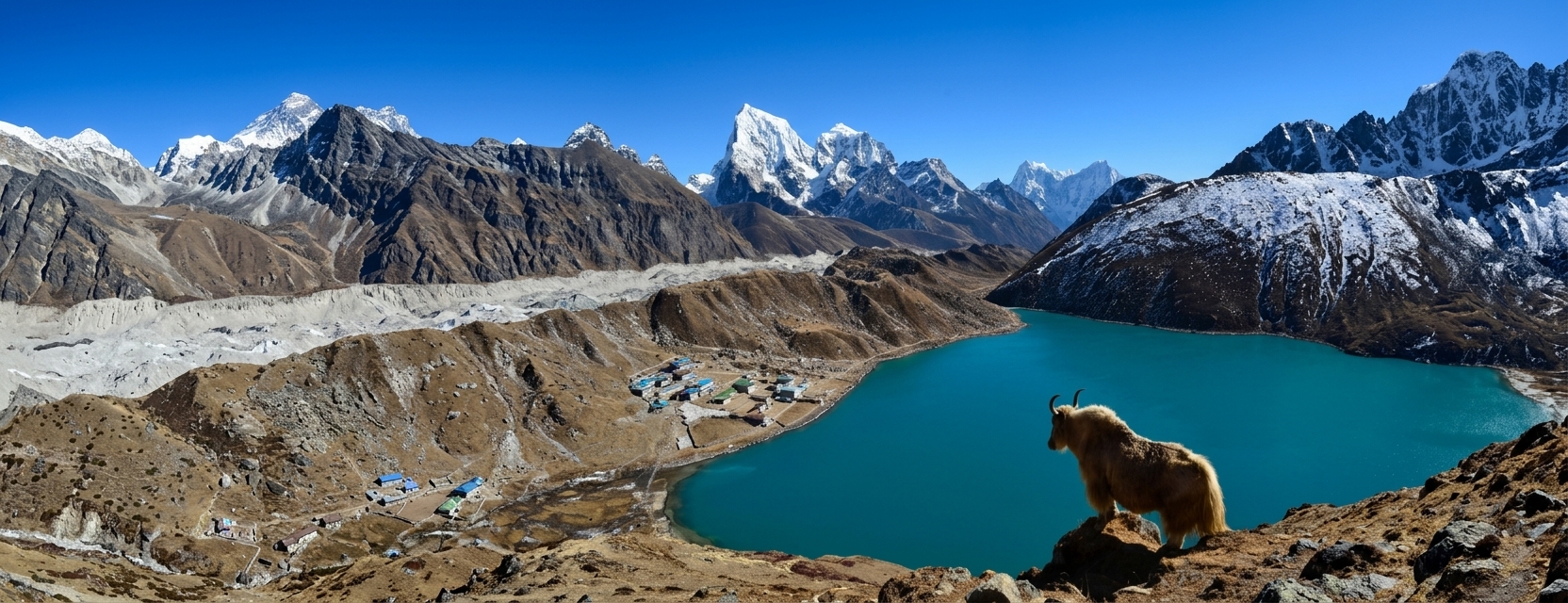
The Everest Base Camp Trek is the most adventurous trek, offering great views of the world's tallest peak. From Kalapatthar, witness panoramic views of peaks such as Everest, Ama Dablam, Lhotse, and many others. Walk through rugged mountain terrain, experience locals' warm hospitality, and visit local monasteries. Perfect for experienced trekkers. What if your next adventure took you to the foot of the world's highest mountain, through an iconic trail? The Everest Base Camp is an ultimate Himalayan adventure in Nepal, a once-in-a-lifetime experience for trekkers around the globe. It is Nepal's perfect trekking destination for adventure-seeking trekkers. The journey takes you through the heart of the Khumbu region, rugged mountain terrain, ancient monasteries, fluttering prayer flags, and lush alpine forests and meadows. Passing through several Sherpa settlements, perfect for exploring the nature and unique culture of the locals. Witness breathtaking panoramic views of the Himalayas, including Everest, Ama Dablam, Lhotse, and other towering peaks. Although it's a challenging trek in Nepal, the scenic views of the Himalayas, lush green forests, charming villages, and century-old monasteries on the way make the journey worth it.
Destination
Nepal
Duration
14 days
Difficulty
Moderate
Activity
Trekking
Max Altitude
5555
Group Size
1
Accommodation
Hotel
Meals
Breakfast, Lunch & Dinner
Transport
Flight
Start & End Point
Kathmandu
Best Seasons
Mar-June, Sep-Dec

Trip Highlights

  • Thrilling flight to Lukla: Take a flight to Lukla, which is so thrilling that you will have no other choice but to admire the awesome views of the giant Himalayan ranges, terraced fields, and isolated valleys.
  • Explore Sagarmatha National Park: a UNESCO-listed heritage site where you can observe its unique flora and fauna. It's not just a protected area—it's a living landscape of towering peaks, glaciers, Sherpa villages, and sacred monasteries.
  • The Capital of Sherpa, Namche Bazaar: It is an ideal acclimatization spot, alive with energizing interaction with the Sherpa people and their mountain culture.
  • Share in the Great Hospitality of the Sherpas: The EBC treks take you past several small Sherpa villages where you'll sleep every night and have the pleasure of being warm and cozy with the Sherpas, who are recognized as the best high-altitude climbers on Earth.
  • Aerial view of the peaks of the Himalaya: You will see each day the white-topped Himalayas, i.e., Everest, Ama Dablam, Lhotse, and many other peaks surrounding them.
  • Visit Tengboche Monastery: The most famous Buddhist monastery in the Everest region, surrounded by peaks like Ama Dablam, Everest, and Thamserku.
  • Everest Base Camp: The last stop of the hike, EBC, where one can feast on the mesmerizing sights of the Earth's highest mountain, Everest. Moreover, one can access the Khumbu Icefall, the starting point for Everest summit expeditions.
  • Hike to Kalapathar: Kalapathar offers great panoramic views of the mountain region. Sunrise over the snow-capped Himalayas makes the trek even more memorable.
  • Explore Kathmandu: Visit vibrant markets, narrow streets, and UNESCO World Heritage Sites. Enjoy local Nepali cuisine and cultural performances.

Everest Base Camp Trekking Overview

The 14-day Everest Base Camp Trek is one of the World's most iconic treks, leading you into the Everest region, where the earth and the sky are at their closest, and the wind at every point tells the story of the Himalayas.

The greatest reward of this popular trek is Mount Everest and other towering Himalayan peaks, including Ama Dablam, Nuptse, and Lhotse, as well as the surrounding peaks and glacial lakes, all of which are unforgettable. Witness the golden sunrise over the snow-capped Himalayas and the Khumbu Icefall from Kalapatthar, the best viewpoint on the Everest trek. 

As you trek in the Khumbu region, you will come across several Sherpa settlements. The trail's vibrant, peaceful surroundings amaze you. Fluttering prayer flags, mani walls, chortens, and several centuries-old monasteries showcase the region's unique culture and religious significance. 

Additionally, you'll enter Sagarmatha National Park and walk along the Dudh Koshi River throughout the day. Explore the diverse flora and fauna of the Himalayan region. Spot indigenous animals such as the red panda, Himalayan thar, and many rare birds. The calming sounds of flowing rivers, cascading waterfalls, and birds chirping add to the beauty of the trek. 

The trek is well-planned and offers a rewarding balance of challenge and luxury, making it the best option for anyone seeking to experience the Himalayan spirit, especially for trekkers in good physical condition. The changing landscapes and scenic beauty of the Himalayas in the Everest region are ideal for photography enthusiasts. 

Take a step towards the EBC and witness the majestic Himalayan ranges! 

Why the EBC Trek Stands Out Among Nepal's Treks

  • Witness the World's highest peak

Take pleasure in the view of Mt. Everest, which is the highest mountain on planet earth, and will be just in front of you. You will witness the panoramic beauty of Lhotse, Ama Dablam, Nuptse, and the rest of the over 8,000-meter peaks nearby. Hike up to Kala Patthar for the panoramic sunrise over the white snowcapped Himalayas.  

  • Dramatic Landscapes

The trek takes you through varied terrain, including terraced farms and lush green hills, crosses high mountains, passes over suspension bridges across the Dudh Koshi River, and offers views of the majestic Himalayas and cascading waterfalls. Each movement along the path offers a remarkable view and the sense of being in one of the World's most-visited spots. 

  • Experience Unique Sherpa Culture

Visit Sherpa villages and spend nights at local Sherpa homestays or lodges in Namche Bazaar, Tengboche, and several other places where you can immerse yourself in their unique culture, daily life, and learn about the climbing experience. Also, explore ancient monasteries such as Tengboche Monastery on the way to EBC.

  • UNESCO World Heritage Experience

The trek takes one through Sagarmatha National Park, a unique habitat for flora and fauna and home to glacial landscapes. You get to experience nature, wildlife, and culture.

  • Acclimatization in Local Homestays/Lodges

It is imperative that proper acclimatization be completed during high-altitude trekking. This practice significantly helps prevent and manage altitude sickness in mountainous terrain. 

  • A Life-Changing Experience

The EBC trek is not only about reaching the foot of Everest; it is the journey of self-discovery. The trek offers a once-in-a-lifetime experience, combining iconic trail walking, interactions with Sherpas, cultural immersion, and stunning Himalayan vistas.


Day-to-Day Short Itinerary

Day 01Pick up from International Airport and drive to the Hotel [1,400 meters]1,400m~0.25 hrs
Day 02Fly to Lukla and trek to Phakding, [2,610 meters]2,860m~0.75 hrs
Day 03Trek From Phakding to Namche Bazar,[3,440 meters]3,440m~5 hrs
Day 04Acclimatization Day in Namche Bazaar [3,440 Meters ]3,440m~5 hrs
Day 05Trek from Namche Bazaar to Tengboche, [3,860 Meters]3,860m~5 hrs
Day 06Trek to Dingboche, [4,410 Meters]4,410m~4 hrs
Day 07Acclimatization at Dingboche [4,410 Meters]4,410m~5 hrs
Day 08Trek to Lobuche [4,940 Meters ]4,940m~5 hrs
Day 09Trek to Gorakshep, hike to Everest Base Camp, then return to Gorakshep (5,364 Meters).5,364m~5 hrs
Day 10Trek to Kalapatthar and Pheriche, [5,545 Meters]5,555m~5 hrs
Day 11Trek to Manjo [3,440 Meters]2,835m~6 hrs
Day 12Descend to Lukla [2,610 meters]2,860m~4 hrs
Day 13Fly back to Kathmandu [1,400 Meters]1,400m~0.75 hrs
Day 14Departure to the international Airport of Nepal by car/van/Jeep/Bus1,400m~0.25 hrs

Lukla Flight Information

During peak trekking months (March, April, May, October, and November), flights to Lukla often depart from Ramechhap (Manthali) instead of Kathmandu because of airport traffic. In this case, you'll need to leave Kathmandu around 12:30 a.m. for a five-hour drive to catch your flight from Ramechhap on the trek departure date. Outside of peak seasons, flights usually operate directly from Kathmandu. Flights between Kathmandu and Lukla can be delayed due to weather, so adding at least two extra days to your trip is a good idea to avoid missing your international flight home.

Note

We recommend you arrive at Kathmandu by three pm at least one day before the trek departure date for last-minute preparations.

Detailed Itinerary

Boundless Adventure arranges three-star hotels in Kathmandu, but if you feel comfortable, you may book the hotels on your own. You can choose among Kathmandu's three-, four-, and five-star hotels. If you feel comfortable, we can pick you up at Nepal's International Airport in a car, van, Hiace, or bus.

Please provide the name of your Hotel when you book it. However, we can operate teahouse accommodation along the Everest Base Camp trekking routes.

The 13-day Everest Base Camp Trek begins with a twin-otter fixed-wing plane from Kathmandu to Lukla and ends in Kathmandu. Trek continues to Phakding, Namche Bazaar, Tengboche Monastery, Gorak Shep, Kala Patthar, and Everest Base Camp. Similarly, you will trek back to Lukla the same way, then take a fixed-wing plane to Kathmandu.

Note: If you experience any discomfort with Prive and the Itinerary, please don't hesitate to let us know.

Day 01

Pick up from International Airport and drive to the Hotel [1,400 meters]

Kathmandu

Max Altitude

1,400m

Duration

0.25 hrs

Transport

Private vehicle

Meals

Meals Not Included

Welcome to Nepal. Our representative will pick you up at the international airport and transfer you to the Hotel. Overnight. After a brief break, the activities according to the trip schedule are briefed. Overnight at your Hotel. (We book the Hotel on request only.) Note: If you want a local SIM card, you can get one at the nearby international airport. Get number one.

Accommodation

Hotel

Day 02

Fly to Lukla and trek to Phakding, [2,610 meters]

Lukla

Max Altitude

2,860m

Duration

0.75 hrs

Transport

Flight

Meals

Lunch and Dinner

Good morning, Kathmandu. After an early-morning breakfast (or, if you prefer, a packed breakfast), we will transfer you to the domestic airport. After check-in, wait for the scenic Himalayan flight. The flight is about 40 minutes long and offers delightful Himalayan scenery, including the diverse beauty of terraced hillsides and gorges. The thrilling landing at Lukla airport and the opening of the Everest gateway will test your thirst for adventure. Often, the groups meet their porters at Lukla Tenzing Hillary Airport. You are packing and tightening the backpack; head down the easy, comprehensive route. The scenery of the fields, terraces, and the hillside awakens your enthusiasm. The trail gradually runs along the right bank of the Dudh Koshi River; enjoy views of Mt. Kusum Kanguru along the way, cross the steel bridge, and rest at Phakding. Overnight at the lodge.

Accommodation

Hotel

Day 03

Trek From Phakding to Namche Bazar,[3,440 meters]

Namche Bazaar

Max Altitude

3,440m

Duration

5 hrs

Transport

On foot

Meals

Breakfast, Lunch, and Dinner

On the third day, you will trek from Phakding to Namche Bazaar, popularly called the gateway to Everest. While this trek has steep ascents, it rewards you with breathtaking views of Thamserku and Kongde peaks. You will reach Namche, an energetic Sherpa town with shops and lodges. After lunch, begin ascending on a straightforward uphill route for about an hour, crossing the River dotted with pine woods. Walking further, the winding route escorts you to the Himalayan hub of Namche Bazaar with the tingling bells of yaks. (Be aware of the yaks and mules on the trail.) The hike gives you an impression of Erik Valley's “Himalayan Caravan.” Check in at the lodge and rest, awaiting a warm dinner. Overnight at the lodge.

Accommodation

Hotel

Day 04

Acclimatization Day in Namche Bazaar [3,440 Meters ]

Namche Bazaar

Max Altitude

3,440m

Duration

5 hrs

Transport

On foot

Meals

Breakfast, Lunch, and Dinner

Good morning. The horseshoe-shaped Sherpa hub in the Khumbu is Namche Bazaar. It is essential to spend a day walking around and exploring the diversity. This day is reserved for acclimatization at higher altitudes. You can hike to the Everest View Hotel for breathtaking views of Mount Everest or explore the local culture. A rest day is necessary for your body to acclimate to the high altitude. Do not miss out on observing the "Yeti Skull" in Khumjung Monastery , which is still a mystery. Hiking to the Everest View Hotel is another fantastic experience that offers astonishing scenery of the Everest Himalayas. Then we go back to the lodge and take a rest. The hike, after all, adapts to the altitude, which avoids the risk of acute mountain sickness overnight at the lodge.

Accommodation

Hotel

Day 05

Trek from Namche Bazaar to Tengboche, [3,860 Meters]

Tengboche

Max Altitude

3,860m

Duration

5 hrs

Transport

On foot

Meals

Breakfast, Lunch, and Dinner

The trek starts from Namche and continues to Tengboche, a village home to the famous Tengboche Monastery. This day's walk offers spectacular views of Everest, Lhotse, and Ama Dablam. Soak in the serene atmosphere and, if you are lucky, attend a prayer ceremony. Enjoying the breathtaking views of the snowy peaks, we crawl unhurriedly towards the town's hilly ridge, which marks the start of the wide route of the Everest trek. Of course, the enticing Amadablam peak stands in all its rigidity. Exploring the sanctuary, interacting with the young monks, and participating in the evening prayers are greatly rewarding. The cultural vibe at the Tengboche monastery is unique. Mount Everest, Nupshe, and Lhotse are in front of you overnight at the lodge.

Accommodation

Hotel

Day 06

Trek to Dingboche, [4,410 Meters]

Dingboche

Max Altitude

4,410m

Duration

4 hrs

Transport

On foot

Meals

Breakfast, Lunch, and Dinner

You will start your day trekking from Tengboche to Dingboche through rhododendron forests at the beginning and along rivers. You will begin to have breathtaking views of the mountains as you start to reach Dingboche, nestled between Nuptse and Lhotse peaks. Then we moved to Pangbouche and Somare. However, we stop for lunch. Heading forward, we climb through the confluence of the mountain rivers and reach the Dingbouche via a stone-walled town. Dingboche is waiting for us. Overnight at the lodge.

Accommodation

Hotel

Day 07

Acclimatization at Dingboche [4,410 Meters]

Dingboche

Max Altitude

4,410m

Duration

5 hrs

Transport

On foot

Meals

Breakfast, Lunch, and Dinner

Another acclimatization day is necessary to adjust to the high altitude. Hike to Nangkartshang Peak for amazing views. After returning, take a rest day around the village. Today, your body will recover and be ready for further ascent. We can move on to climb Nangkar Hill , which offers impressive views of Mt. Makalu (8485 m), Cho Oyu (8201 m), and Ama Dablam (6812 m), as well as the Lake beneath the peak. Then we'll come back and rest at Dingboche. Overnight at the Hotel.

Accommodation

Hotel

Day 08

Trek to Lobuche [4,940 Meters ]

Lobuche

Max Altitude

4,940m

Duration

5 hrs

Transport

On foot

Meals

Breakfast, Lunch, and Dinner

After a full day of acclimatization in Dingboche, walking was easy. After breakfast, the excursion began through the grazing meadow, with an excellent view of Gokyo Peak, Lobuche Peak, and Tabuche Peak. Gradual climb on the rocky trail to Lobuche: Great views of Mount Pumori en route, and cross the Khumbu Glacier. Overnight at a small village in Lobuche, and getting ready to camp overnight the next day. There are beautiful views of Mount Nuptse, Lhotse, and Pumori along the way.

Accommodation

Hotel

Day 09

Trek to Gorakshep, hike to Everest Base Camp, then return to Gorakshep (5,364 Meters).

Gorak Shep

Max Altitude

5,364m

Duration

5 hrs

Transport

On foot

Meals

Breakfast, Lunch, and Dinner

This is the highlight of the trek! From Gorak Shep, the trail leads to Everest Base Camp, right at the foot of the highest peak in the world. The feeling is overwhelming, and the gorgeous of mountain views. Today's trek starts quite early, as the trail is long and challenging. It's also one of the most-awaited days of the trek and our destination. Then, we hike through the rocky and winding trail to the base camp of the world's tallest peak, Mt. Everest (8848.86 meters) . It's about 7 kilometers round trip. Of course, the trip is demanding, but the Everest views make you forget the pain and trouble throughout the journey. Return to Gorakshep and overnight.

Accommodation

Hotel

Day 10

Trek to Kalapatthar and Pheriche, [5,545 Meters]

Kala Patthar

Max Altitude

5,555m

Duration

5 hrs

Transport

On foot

Meals

Breakfast, Lunch, and Dinner

Another big day of trekking to Everest Base Camp completes a mission to explore the dream peaks that were once only in pictures. Start your hike up Kala Patthar early in the morning for spectacular panoramic sunrise views of Mt. Everest and descend to Gorak Shep. Have breakfast, then trek down to Pheriche, where you will spend the night. Kalapatthar is the ultimate point where helicopters land to explore, and travelers take magnificent pictures.

Accommodation

Hotel

Day 11

Trek to Manjo [3,440 Meters]

Monjo

Max Altitude

2,835m

Duration

6 hrs

Transport

On foot

Meals

Breakfast, Lunch, and Dinner

We resume our trek after breakfast, which is a great relief for the muscles. The rest of the trail is an easy downhill walk. Following the Dudh Koshi River, we gradually walked to Somare, ahead of the ancient village of Pangboche. Heading on, we cross a steel bridge, follow the riverbank to Debuche, and climb Tengboche. Continuing our trek, we climb to Kyangjuma and then ascend to Namche Bazaar. If you want to stay somewhere new, why don't we continue to Monjo and rest? After all, it shortens the distance for the next day. Overnight at the lodge.

Accommodation

Hotel

Day 12

Descend to Lukla [2,610 meters]

Lukla

Max Altitude

2,860m

Duration

4 hrs

Transport

On foot

Meals

Breakfast, Lunch, and Dinner

With great energy to complete the adventurous trekking, we begin walking from Manjo after breakfast. We also conduct our formalities by showing our permits. Then we continue hiking to Bengkar and Phakding. After enjoying the potato fields, we reach Cheplung and Lukla. This is where we celebrate the final day of trekking with the team. Overnight at the Hotel. Note: The flight tickets must be reconfirmed in Lukla. The Company will handle this, and you can relax at the Hotel.

Accommodation

Hotel

Day 13

Fly back to Kathmandu [1,400 Meters]

Kathmandu

Max Altitude

1,400m

Duration

0.75 hrs

Transport

Flight

Meals

Breakfast

Have an early morning breakfast, then walk to the airport for a safe return flight to Kathmandu. It is just 10 minutes away from Hotel to the airport in Lukla. Enjoy a glimpse of the Everest, Langtang, and Manaslu mountains, and arrive in Kathmandu after a 45-minute flight. We'll transfer you to the Hotel in Kathmandu by car. Enjoy the day with your independent activities, rest, and shower. Overnight at the Hotel in Kathmandu.

Accommodation

Hotel

Day 14

Departure to the international Airport of Nepal by car/van/Jeep/Bus

Kathmandu

Max Altitude

1,400m

Duration

0.25 hrs

Transport

Private vehicle

Meals

Breakfast

The last day will be your farewell from Nepal. Depending on your flight schedule, you'll have free time to wander around for some last-minute sightseeing or shopping. Get transferred to the airport. If you have further activities with us, we will arrange a Chitwan Jungle Safari, a Lumbini-Pokhara tour, and paragliding, among other activities. Thank you for letting us serve you during your Everest Base Camp trek. Please note: The check-out time at the Hotel is noon. We look forward to your feedback on the Everest Base Camp trip.

Accommodation

null

What is included in this trek package?

What's Included

  • Accommodations during the trek
  • We are providing a standard tea house during the Trek. Accommodation will be from Day 2 to Day 12, as per the itinerary.
  • Comfortable accommodation on the last day of the trip in Lukla.
  • Meals during the Trek (choose from the Menu) 12 days 11 nights.
  • Breakfast, Lunch, and Dinner
  • Breakfast: 12 Breakfast
  • Lunch: 12 Lunch
  • Dinner: 11 Dinner.
  • Ground transportation
  • Boundless Adventure will pick you up from the International Airport and drop you off at the Hotel on the first day.
  • We'll pick you up from your Hotel and drop you off at the domestic Airport an hour before your flight by Car/Jeep/van or bus.
  • From Kathmandu to Lukla by plane.
  • From Lukla to Kathmandu by plane at the end of the trip.
  • You will depart for the International Airport by car, Jeep, or bus on the last day of your stay in Nepal.
  • Trekking guide
  • We'll provide you with an English-speaking guide during the Trek.
  • In fact, if you require, we have a guide who speaks another language as well. (Options on extra cost)
  • Salary, insurance, and airfare for an English-speaking guide.
  • Our guides are Knowledgeable and experienced.
  • Necessary trekking Permits.
  • Sagarmatha National Park. (The company will take care of it)
  • Khumbu Pasang Lhamu Rural Municipality Entry Permit. (The company will take care of it)
  • Equipment for the Trek
  • Per person, one duffel bag
  • Per person, one Trekking Map
  • The company logo is printed on a t-shirt.
  • Domestic Airport tax.
  • Kathmandu Airport tax.
  • Lukla Airport tax.
  • Note: Support from the Company
  • 24/7 Emergency support.
  • Pri-trip consultations.
  • Acclimatization day suggests.

What is excluded in this trek package?

What's Excluded

  • Personal trekking gear
  • Hiking equipments
  • Down Jackets and Sleeping bag (Required)
  • Hot and Cold Drinks
  • Had and Soft drinks
  • Hot Shower during the trek.
  • Porter service (available at extra cost)
  • Accommodations in Kathmandu
  • Hotels in Kathmandu
  • Meals in Kathmandu
  • Extra activities in Kathmandu.
  • Extra days and accommodation in the trek.
  • Travel to Everest
  • International plane tickets (we'll arrange on request only)
  • Nepal Visa
  • Travel insurance.
  • Private and Social
  • Tips for trekking crew
  • Donation for the school, Monastery, and the beggar
  • Wi-Fi and device-charging fees during the trek.
  • Note: No one can control natural disasters; we need to face them, whatever comes.

Cost

Group Price Breakdown

Group SizePrice Per Person
1 person$1,650
2 - 8 people$1,482
9 - 15 people$1,500
View Map
STARTKathmandu1,400m
DAY 2Lukla2,860m
DAY 3Namche Bazaar3,440m
DAY 4Namche Bazaar3,440m
DAY 5Tengboche3,860m
DAY 6Dingboche4,410m
DAY 7Dingboche4,410m
DAY 8Lobuche4,940m
DAY 9Gorak Shep5,364m
DAY 10Kala Patthar5,555m
DAY 11Monjo2,835m
DAY 12Lukla2,860m
DAY 13Kathmandu1,400m
DAY 14Kathmandu1,400m

Altitude Profile

Altitude in: |
Kathmandu1,400mLukla2,860mNamche Bazaar3,440mNamche Bazaar3,440mTengboche3,860mDingboche4,410mDingboche4,410mLobuche4,940mGorak Shep5,364mKala Patthar5,555mMonjo2,835mLukla2,860mKathmandu1,400mKathmandu1,400mPhakding2,610mEverest Base Camp5,364mPheriche4,240mGorak Shep5,164m
Day 1Day 2Day 3Day 4Day 5Day 6Day 7Day 8Day 9Day 10Day 11Day 12Day 13Day 14Day 2Day 9Day 10Day 9

Know Before You Go

Spring (March-May) and autumn (September-November) are the best seasons for trekking at Everest Base Camp (EBC). Here's a more in-depth presentation of the seasons:

Spring (March to May)

Spring, from March to May, is among the best seasons to trek to Everest Base Camp (EBC). The receding winter gives way to sunny weather that will eventually ease trekkers' choices.

Trails turn into vibrant wildflower displays, topped by rhododendrons in flower, all of which make what would already be an excellent trek feel virtually otherworldly. Crisp blue skies and spectacular visibility also characterized the season, allowing view after view of majestic peaks that encircle the Khumbu.

The season also sees hordes of trekkers clogging the hills. Although the environment is lively, it adds significant spice to the activity, allowing participants to share the experience with an adventure companion or groups worldwide. Be prepared for temperature fluctuations, especially at higher elevations.

But the walk really can be one of the most valuable trekking experiences, thanks to proper gear and acclimatization. The spring trekking experience at EBC stretches for miles.

Autumn (September to November)

From September to November, autumn is also a good time for trekking to Everest Base Camp. Once the monsoon-induced humidity subsides, the air becomes cool and crisp, with humidity dropping to historic lows. At this time, the lovely, clear skies are well-suited for viewing the breathtakingly rising Himalayas, including the monumental Everest.

Since the trails are less soggy than during the monsoon, hiking is a great idea. As altitude increases, temperature gradually declines; therefore, tourists should prepare for freezing nights and possibly cold days.

Autumn offers favorable weather and fine scenery, making it a perfect time to enjoy the Everest region's sunshine and scenery.

More Aspects

Monsoon Session: June to August. Not considered good for the trek because of excessive rainfall and landslides that happen, and visibility is zero. 

Winter Season: December to February. These months are generally excluded due to harsh weather, including cold and snowfall. Trekkers would be few on the trail, and some teahouses may be closed.

Everest Base Camp offers stunning natural beauty and the warm hospitality of the local Sherpa people. 

  • Mount Everest and Surrounding Peaks

The hike led to the most impressive place on Earth: Mount Everest, whose peak is the highest. It is possible to witness the stunning views of this snow-covered top right before your eyes. The other giant peaks, such as Lhotse, Nuptse, and Ama Dablam, will also be visible during the hike.

  • Kalapathar

Kalapatthar is the greatest attraction of the EBC trek. The morning hike to the top of Kalapatthar is the best way to see the golden sunrise over the EBC and the surrounding snow-covered peaks. The stunning views of the sunrise illuminating the snow-capped mountain tops are so striking that your EBC trek shines through this adventure. The Kalapatthar gives you the chance to see not only Mount Everest but also Makalu, Cho Oyu, Lhotse, Ama Dablam, and an army of many unrecognized peaks.

  • Sagarmatha National Park

Sagarmatha National Park features diverse flora and fauna in Nepal's high-altitude region. You walk through Sagarmatha National Park on your trek, which covers an area of 1,148 square kilometers. This UNESCO World Heritage Site has breathtaking natural beauty, including glaciers, rivers, and alpine forests. It's home to rare wildlife like Himalayan tahr, snow leopards, and red pandas, making the trek a nature-lover's paradise.

  • Tengboche Monastery

The Tengboche Monastery, also known as Dawa Choling Gompa, is situated in the village of Tengboche in the Khumbu region. This is the most important religious site in the region surrounding Everest and holds significant cultural and spiritual importance. For most tourists visiting this area, the monastery visit and viewing are the main reasons after the main attraction. The monastery, built in the typical Tibetan architectural style, is a spiritual center and a highly visually appealing site, making it a global attraction.

  • Namche Bazaar

Namche Bazaar is the primary trading center and the cultural heart of the Khumbu area, located at 3,440 m. Known as the "Gateway to Everest," it is a bustling town where trekkers stock up on supplies, explore local markets, and experience Sherpa culture. The town offers stunning views of Everest, Lhotse, and Ama Dablam, making it a favorite stop for acclimatization and photography.

  • Khumbu Glacier and Icefall

The Khumbu Glacier, the world's longest glacier, is a major draw of the Everest Base Camp trek and stretches from Gorak Shep to Mount Everest Base Camp. The glacier's enormous ice field provides a striking backdrop for the beautiful mountain peaks that surround it. On the upper side, the glacier features the famous Khumbu Icefall at 5,486 meters, marking the arrival at the Western CWM of Everest. It is both thrilling and picturesque, which helps attract many people. This section offers one of the most mesmerizing high-altitude landscapes on the trek.

The Everest Base Camp (EBC) Trek is moderately difficult, though not easy. Good physical fitness and preparation are required from trekkers. 

The trek reaches the highest possible altitude, above Everest Base Camp at 5,364 meters (17,598 feet), where altitude sickness can occur. The trekkers will undergo an acclimatization period and proceed gradually to allow their physiology to adapt to altitude changes. 

A series of mixed conditions along the trail: steep with rocky terrain and uneven ground. Others involve more strenuous physical challenges, such as Kalapathar, which offers excellent views of Mt. Everest and requires significant effort. 

Trekkers will usually trek for 5-8 hours a day and cover 10-15 kilometers (6-9 miles) over the course of the day. The daily schedule may be backbreaking work, particularly at high elevations. 

The weather across the region appears highly unstable, with conditions changing suddenly. That is, trekkers will need to prepare for cold fronts, snow, and rain, which are likely to occur during the shoulder season. A decent amount of fitness is all it needs. 

Almost all trekkers, for instance, do daily exercise and cardio sessions in the weeks leading up to the trek. Walking is more than "practice" because it helps the body adapt to long walks.

Trekking to EBC prioritizes safety because the terrain is rugged and quite steep. High-altitude treks are not a minor concern; therefore, acclimatization should take precedence over all other considerations.

Altitude sickness, including headache and nausea, should also be recognized. High-altitude trekking: travel health insurance and emergency air evacuation are essential. The use of local, experienced porters and guides enhances safety and support during hikes. 

Individual preparation, including physical fitness and the ability to handle changing weather conditions with appropriate equipment, is also required. To conserve energy, trekkers need to stay well hydrated and eat healthy food. 

A basic first-aid kit and knowledge of local customs also help ensure a safe and respectful trekking experience amid stunning Himalayan scenery.

Before setting out on the Everest Base Camp (EBC) trek, it's important to be aware of the high-altitude conditions you will encounter. The trek culminates at Everest Base Camp at 5,364 meters (17,598 feet), with the highest point along the route being Kala Patthar at 5,545 meters (18,192 feet), offering unmatched views of the surrounding Himalayan peaks.

The journey begins in Lukla (2,860 meters), from where the trail gradually ascends through the Khumbu region. On Day 2, the trek involves the steepest single-day gain, climbing nearly 800 meters from Phakding (2,650 m) to Namche Bazaar (3,440 m).

An accretion of 300 m per day has been proposed for adventurers above 3,000 m to avoid acute mountain sickness. The route from Namche is generally encouraging, with 200–350 m of elevation gain per day, allowing the organism to acclimate safely to the unfamiliar conditions and enjoy the marvelous high-altitude scenery.

The foremost concerns for visitors on the Everest Base Camp (EBC) trek are food, shelter, and water. Then, the very basic, surprisingly decent teahouse accommodation is preferred by most people, especially along the trekking routes. 

Accommodation: Most teahouses have common rooms, and a few offer hot showers for a small additional charge, along with bathroom amenities. In city areas like Kathmandu and Namche Bazaar, you'll find private rooms with most of the modern facilities. But as you trek higher, the facilities become very basic yet comforting. You'll experience the best services in a limited space. 

Food is available at the same teahouses and mostly includes Nepali dishes such as dal bhat (rice and lentil soup), along with pasta, soups, and a few other Western dishes. The menu may vary by location, but a vegetarian option is guaranteed. 

Dining hall: Most teahouses have a dining hall that serves both Nepali dishes, such as dal bhat (rice and lentil soup), and Western options, including pasta and soups. Menus vary slightly between lodges, but vegetarian options are generally available at every stop.

Drinking Water: However, it should be consumed in large quantities, as it is the only remedy for altitude sickness. The trekkers either buy bottled water during the trek or drink boiled water at the teahouses. Some bring purification tablets or filters to treat tap water during overnight stays, making it safe to drink. 

In general, these not-so-advanced hospitality facilities, supported by local people and a variety of foods, pave the way for a successful trek in the grand Himalayas.

Trekking Information Management System (TIMS) Card 

A TIMS card is necessary for every trekker in Nepal. It not only helps authorities monitor trekkers but also helps ensure they reach safety in hazardous situations. TIMS cards can be obtained from a licensed trekking agency or the Nepal Tourism Board office in Kathmandu.

Sagarmatha National Park Permit 

It is an entrance ticket that permits trekkers to enter Sagarmatha National Park, which includes the entire Everest area. Permits can be obtained either at Monj, the park's entry point, or at the Nepal Tourism Board office in Kathmandu.

Khumbu Rural Municipality Entry Permit

The Khumbu Rural Municipality Entry Permit is required for trekking in the Khumbu region; it helps regulate trekking and maintain safety. 

For a 14-day EBC Regular Trek, participants need essential trekking gear to ensure comfort, safety, and enjoyment. Below is the entire collection of accessories you will need while trekking:

  • Moisture-wicking long-sleeved shirt, thermal top, and pants

  • Fleece jacket

  • Water- and windproof jacket and trousers

  • Extremely lightweight trekking trousers

  • Moisture-wicking underwear

  • Pairs of thick trekking socks

  • Warm hats and sun hats

  • Thermal gloves or mittens

  • Buff or Neck Gaiter

  • Trekking boots

  • Camp shoes

  • 10 to 15 liters for essentials for day hikes

  • 50-70 liters: 

  • Sleeping Bag

  • Trekking Poles

  • Water Bottle

  • Water Purification

  • First Aid Kits

  • Snacks

  • Sunscreen

  • Lip Balm

  • Toiletries

  • Headlamp

  • Camera

  • Power Bank

  • Documents

Everest Base Camp Trekking Trip Reviews

100+ Happy Trekkers

Explorations that last a lifetime.

Tripadvisor5.0Facebook4.9Google5.0Trustpilot5.0

0.0

0 reviews

Start Booking

1

$1,650

Per pax

Total$1,650

Quick help?

Expert Advice

General Information FAQsPermits and Regulations FAQsBest Time to Go FAQsTravel and Logistics FAQsDaily Trekking Details FAQsAccommodation and Facilities FAQsFood and MealsCultural ConsiderationPacking Essentials FAQs

FAQs For Everest Base Camp Trekking

General Information FAQs

The Altitude of EBC is 5,364 meters (17,598 feet). The highest point along the trek is Kala Patthar at 5,545 meters (18,192 feet).

Lukla Airport (Tenzing-Hillary Airport) is located in the Solukhumbu district of Nepal at an elevation of 2,860 meters (9,383 feet).

The entire EBC trekking trip is a 12- to 14-day affair, with acclimatization days included in the total duration. All trekking routes start and end in Lukla, but they vary widely in terrain.

The EBC trek is of moderate difficulty, with altitude as the primary factor. Altitude varies significantly across different sections. It is presumed that the tourists will be in good medical condition, well acclimatized to the destination, and have the patience for long, strenuous walking days.

Lukla flights are frequently affected by adverse weather, leading to cancellations. Nonetheless, the best approach is to book a flexible ticket and keep a few extra days on your itinerary in case of a delay in Kathmandu or Ramechhap.

Yes, it is very likely to be serious on EBC. To prevent this, trekkers should acclimatize, take their time whenever they feel like it, and listen to their bodies; signs include a slight headache, nausea, or fatigue.

Older children aged 12+ can attempt it, but younger children face barriers posed by altitude and the days of long walks. Always consult with the doctor before attempting.

Permits and Regulations FAQs

TIMS card, or Trekking Information Management System Sagarmatha National Park permit These are normally obtained in Kathmandu, though sometimes at the park entrance.

Best Time to Go FAQs

This trek can be done in two seasons: Spring (March to May) and autumn (September to November). Autumn is perfect for trekking. These months have more stable weather, with clearer skies and even temperatures—conditions most suitable for trekking.

Winter is not the best season for trekking to EBC. The trail is completely covered in snow; therefore, walking is difficult, and most teahouses are closed during this season.

Travel and Logistics FAQs

Porters can be hired in Lukla or Kathmandu through local trekking agencies.

A porter typically carries 25–30 kg per person, depending on the arrangement.

10–15 kg per passenger (varies by airline and season; excess baggage may incur additional charges).

Flights are often canceled due to weather. It's recommended to allow extra days in Kathmandu or Ramechhap to account for potential delays.

Costs vary by itinerary, guide/porter services, and agency, typically ranging from $1,000 to $2,000 for a standard 12–14-day trek, including accommodations, meals, and permits.

Daily Trekking Details FAQs

Typically hike 10 to 15 kilometers per day, approximately 6 to 9 miles. Trekking would require 5 to 8 hours, depending on the itinerary and terrain.

Solo trekking is allowed, but it's generally better to have a friend accompany you or hire a guide. It gets tough sometimes, but two heads are sometimes better than one when the issues of the trek become too overwhelming.

Solo travel is possible, but it is preferable to have a locally employed guide or porter for safety, guidance, and support. Most trekkers prefer a guide because it adds significant value to the venture, providing cultural and geographical insights.

Accommodation and Facilities FAQs

Accommodations along the route are primarily teahouses offering basic room service; bathroom facilities are shared. A few charge extra for hot showers, and a few even have Wi-Fi access.

Most tea houses along the trek route have Wi-Fi, at least in larger villages like Namche Bazaar. But perhaps it may not be great, may not be as fast as one would like, and will certainly cost. Just make sure that you use it sparingly to save your battery.

Food and Meals

Meals served in teahouses include dal bhat, other typical Nepali dishes, and Western options such as pasta and soups. Most of these vegetarian meals would have been available, so please eat well.

No, you can expect basic food on the trek. But in cities like Kathmandu, you can find a wide range of continental food options. Namche Bazaar also offers them, but in a limited range.

Yes, you can find vegan options while trekking, but they will be very limited. You need to provide advance notice to secure better food options.

Cultural Consideration

There are; then it is important to respect and observe their local customs. Dress in a way that is not provocative at all, especially when going into monasteries and other places of worship. Get permission before taking pictures of people or things that they consider sacred. Also, be mindful of the Sherpa people's many customs and traditions, and maintain good relations with the local community.

Yes, festivals such as Mani Rimdu (October/November) at Tengboche Monastery are celebrated and offer cultural insights. You can also witness Dashain, a major festival in Nepal , if you travel from September to November.

Packing Essentials FAQs

Clothing layered for the weather and climate; good-quality walking boots, a high-quality sleeping bag; a first-aid kit; a water purifier; a head torch; and a food pack packed lightly, as flight regulations limit baggage weight for Lukla.

Let's Plan Your Trip Together

Tell us what you're looking for, and we'll help you shape a journey around it.

Plan with us

Weather near Kala Patthar

-1°C

Updated 3 hr ago

Today

-1° -1°

0 mm

Tomorrow

2° -4°

0.5 mm

Sun

1° -8°

0 mm

Mon

1° -5°

0.8 mm

Tue

2° -5°

0.9 mm

Wed

1° -2°

2.4 mm

Thu

0° -3°

3.6 mm

Fri

1° -3°

0.1 mm

Sat

2° -6°

3.1 mm
95% humidity 5 km/hWeather data from MET Norway

Mountain weather can change quickly. Follow your guide and local safety advice.