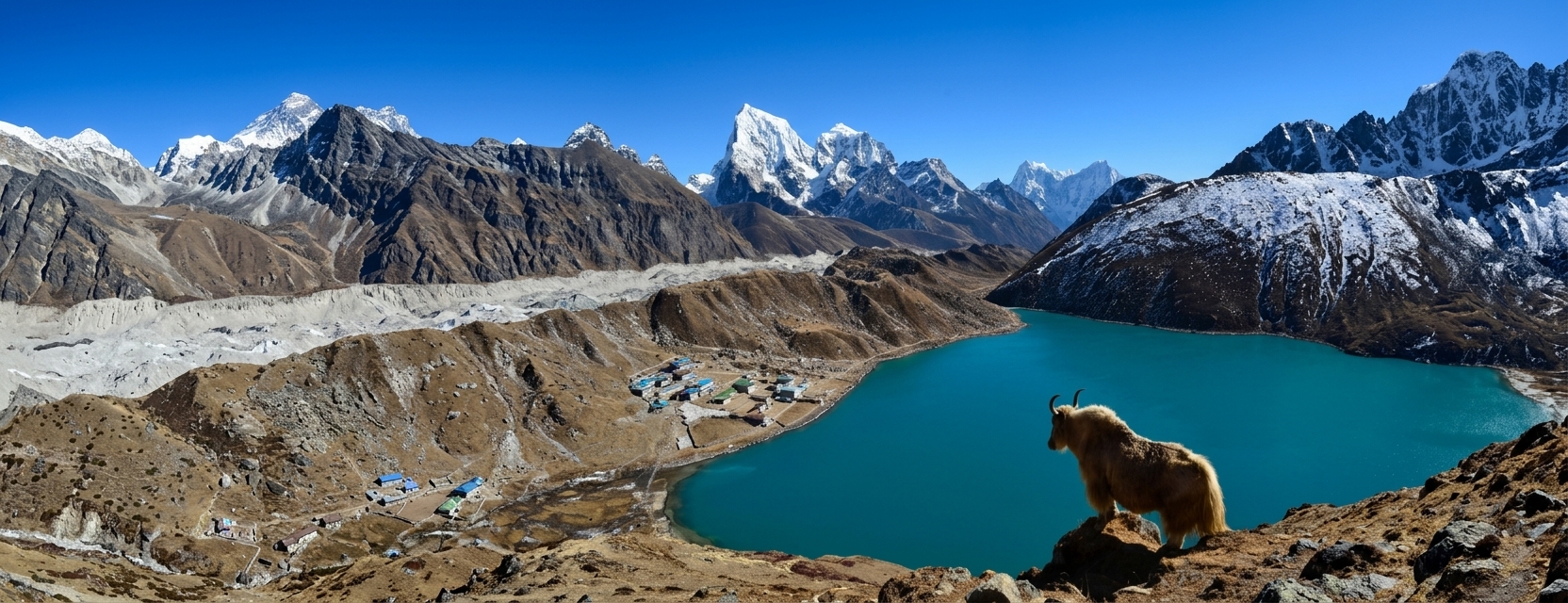
The Mount Manaslu circuit trek is located in the Manashri Himalayan range of Gorkha District, Nepal. Mount Manaslu is the eighth-highest mountain in the world (8163 meters). This mountain was first summited in 1956 A.D. with a Japanese and Nepalese team.
Destination
Nepal
Duration
12 days
Difficulty
Adventurous
Activity
Trekking
Max Altitude
5106
Group Size
2
Accommodation
Hotel
Meals
Breakfast, Lunch & Dinner
Transport
Jeep
Start & End Point
Kathmandu
Best Seasons
Mar-June & Sep-Nov
Trip Highlights
Larkya-La pas: The pas is one of the highest passes of the Manaslu Circuit trek. It is 5106 meters above sea level. You need to start early in the morning from Dharamshala to cross the pass and reach Bhimthang. If you are unable to start early, there will be strong winds at the top of the Larkya-La pass.
Less crowded: The trekking trail is located in a restricted area of Nepal because of the border with Tibet. It is why very few trekkers trek in the area every year.
Flora and fauna: You can see many different types of plants along the trekking trail, including the wok, pine forest, and Rhododendrons. However, if you are lucky enough, the snow leopard and red panda are also able to find out along the trail. Common animals and birds include monkeys, Yaks, Himalayan Thar, Blue sheep, the Himalayan monal pheasant, Monal, eagles, and vultures.
Manaslu Circuit Trek: Complete Guide Overview
The Mount Manaslu circuit trek lies in the western part of the Gorkha district and Gandaki province of Nepal. However, the trekking trail is on the border of Tibet( China). Similarly, it is 177 km from the starting point (Arughat) to the ending point in Beshishahar. However, the trekking trail is getting shorter due to the gravel road at the start and end. It is an 11- to 14-day trek from the anticlockwise direction.
The elevation of the Mountain is 8163 meters above sea level. But the trekking pass is 5106 meters high above sea level. You may have the beautiful Himalayan ranges above 3000 meters and the greenery, monasteries, and farmers' rice fields below 3000 meters. This scenery is on both sides of the trekking trail.
Similarly, the first climbers of Mount Manaslu were Japanese and Nepali. They had summited Mount Manaslu in 1956 A.D. The name of the Japanese leader was TOSHIO IMANISHI, and GYALZNE NORBU was Nepali.
Manaslu Trekking and Scenery
Manaslu Circuit is one of the most attractive trekking trails in Nepal. Everyone can easily explore the Manasri Himalayan Range in the Highlands and lowlands, local culture, local villages, Glaciers, Rivers, lakes, and waterfalls. You can have a natural hot Spring bath along the trekking trail as an option.
How difficulty level
The Manaslu Circuit is a high-pass trek without technical difficulties in the Manaslu Conservation Area of Nepal. It is less crowded and moderated to a difficult level. It is easy-going in the first and last parts, but the middle part is a bit harder. However, we do not suggest it for younger children, disabled persons, people with back pain, or pregnant women.
Local culture and People
The majority of the people are Gurung at high altitudes. Those people came from Tibet a while ago with their herd and flock. They didn't have enough sheds/barns for their animals. They need a lot of land to graze the meadow. Similarly, people are left to graze on the Mountain. This is why these people are accustomed to living at elevations between 3,000 and 4,800 meters. None of them lives over 4800 meters in the Manaslu region. However, those people still follow Tibetan Buddhism culture even though they are Nepalese these days. In fact, many ethnic groups are accustomed to living below 3000 meters, maintaining their communities and cultures.
About the cost of the Manaslu Hiking
The Cost of the Manaslu Hiking is a few different facts. Depending on the hiking season, the size of the group, the level of luxury in ground transportation you are willing to have, and the accommodation along the trekking trail. We are offering three options to suit your budget. You may choose based on your travel budget. (1) Budget, (2) Standard, and (3) Luxury. Usually, the trek price ranges from US$1,200 to US$1,880 per person.
Conservation and Trek permits
Mount Manaslu is listed in the Manaslu Conservation Area. As you know, it is also in the restricted area. However, you will enter via Manaslu Conservation, explore the restricted area, and exit through the Annapurna Conservation Area. Similarly, every client requires three different permits.
3) Restrickets area permitscost US$ 70/- to US$100/- for first week. Still, if you would like to explore the local culture and spend an additional day, it will cost US$ 15 per person per day.
Note: Our company handles all permits in Kathmandu.
Day-to-Day Short Itinerary
Day 01Pick up from International airport and drive to the Hotel1,400m~0.25 hrs
Day 02Private Jeep drive to Jagat1,410m~7 hrs
Day 03Trek to Dyang, 1860 Meters1,860m~5 hrs
Day 04
What is included in this trek package?
What's Included
International Airport pickup and drop-off by private vehicles.
From Kathmandu to Machha Khola by public bus, and from Machha Khola to Jagat by public jeep.
From Dharapani to Beshishahar by Public Jeep and Beshishahar to Kathmandu by Public Bus. ( at the end of the trip)
On your own.
You need to let us know about your Hotel.
The trip lasts 2 days, traveling by public Jeeps and buses
Restricted Area Permit (RAP): $100 (Peak: Sept–Nov) or $75 (Off-peak: Dec–Aug) for the first 7 days, plus $15 or $10 for each extra day.
Solo trek: You may use such permits for a single person and trek to Birendra Lake or Manaslu Base Camp.
Conservation Permits: Both the MCAP (Manaslu) and ACAP (Annapurna) cost NPR 3,000 (approx. $23) each, and TIMS cards are NOT required.
Local Municipality Fee: A mandatory NPR 1,000-2,000 (approx. $8–$15) fee is collected by the Chumnubri Rural Municipality at the Jagat checkpoint.
Road Connectivity: Most trekkers now save time by taking a 4x4 jeep from Kathmandu directly to Machha Khola, skipping the dusty walk from Soti Khola.
Mandatory Guide: The government recently announced that trekkers can now trek solo, but a licensed guide is still required.
Teahouse Tech: Improved solar and satellite infrastructure now provides Wi-Fi and charging in small towns like Samdo and Lho (fees apply).
Pass Conditions: Micro-spikes are now standard gear for the Larke La descent, which remains icy well into Spring and late autumn.
Larkya La Pass (5,160 m) is one of the major highlights of this trek. It is the high mountain pass, the most demanding but most rewarding section of the Manaslu Circuit Trek.
Larkya La Pass offers awe-inspiring sights and 360-degree panoramic views of the great snowcapped Himalayas, including Manaslu (8,163 m), Himlung Himal (7,126 m), Cheo Himal (6,820 m), Kang Guru (6,981 m), and Annapurna II (7,937 m).
This section of the Manaslu Circuit Trek requires good physical strength. Proper acclimatization is essential to avoid altitude sickness.
The best seasons for trekking on the Manaslu Circuit are autumn (September–November) and spring (March–May). These months offer clear skies and gorgeous green surroundings, making them ideal for high-altitude trekking in Nepal.
Autumn (September–November)
Autumn is considered the perfect season in Nepal's Himalayas. During this season, the air is cool and crisp, with green surroundings and scenic horizons, with visibility of the Manaslu range and other surrounding Himalayan peaks.
Daytime temperatures are mild, around 15-20°C in lower elevations; as you trek higher, the weather gradually cools. You'll experience the best time in the Nepal Himalayas.
Crossing Larkya La Pass is relatively easy during this season. Also, during this season, Nepal observes major festivals such as Dashain, Tihar, and Chhat. Trekkers can enjoy the festival with local people.
Spring (March–May)
Spring is also an ideal time to trek in Nepal. Trails are alive with rhododendron blooms, alpine flowers, and wildlife activity. The temperature is warm and pleasant at lower elevations, but near the pass, it remains cold.
The views are generally clear in the mornings, though there are often afternoon clouds. This season is also ideal for photography; the contrast between snow-capped peaks and the blooming hillsides is simply striking.
Other Season
Winter (December–February): This is a freezing season, and Larkya La Pass is usually blocked by snow. It is considered dangerous to cross. The lower sections of the trek may be accessible, but the entire circuit is not recommended.
Monsoon (June–August): Heavy rain brings muddy trails, leeches, and landslides. Clouds often keep the views hidden. However, if you don't mind complete solitude and lush greenery everywhere, the Tsum Valley can be visited as a side trek off the Manaslu circuit.
Trekkers must hold the Manaslu Conservation Area Permit, the Manaslu Restricted Area Permit, and the Annapurna Conservation Area Permit.
For the Manaslu Conservation Area Permit and the Annapurna Conservation Area Permit, you'll need to pay NRS 3000 per person.
All these permits can be obtained from the Nepal Tourism Board, or your travel company can arrange them for you.
Food
The food options on the Manaslu Circuit Trek are basic and limited, but you'll have an excellent opportunity to sample local, authentic cuisine. They use local ingredients and add their own flavor. Your heart will be so happy.
In the city area, you'll get a variety of food options, like traditional Nepali food, street food, or continental cuisine.
Standard Food Options are:
Dal Bhat (Nepali meals)
Curry
Momo
Noodles
Hot Thukpa
Tibetan Bread
Bread and Omelet
Pasta
Fried Rice
Chow mein
Garlic Soup
Tea, Coffee, and hot chocolate options
Note: Do not drink alcohol or smoke cigarettes. It is prohibited for high-altitude trekking.
Accommodation
You'll get simple, cozy, and warm rooms to sleep in. During your trek on the Manaslu Circuit, you'll stay at a local teahouse that provides a wooden bed, a mattress, a pillow, and a warm blanket.
During peak season, you might need to share your room with other fellow trekkers.
Bathrooms are shared, and hot showers will be available as you gain altitude. You'll need to adjust to the limited facilities, but you'll enjoy each day.
Electricity may not be available as you gain altitude. Most people use solar energy at high altitudes, so if you need to charge your accessories, you may incur additional costs.
Wi-Fi will be available in a few teahouses (Samagaon, Samdo, Lho), but connectivity is limited.
The Manaslu Circuit Trek is a moderately to strenuously difficult trekking trail in Nepal. This trek requires good physical and mental strength.
It does not require a technical climb, but the altitude, length, and rugged terrain require good physical and mental strength.
However, the rewards you will receive from your challenging trek make the journey worthwhile.
Proper acclimatization is essential when trekking in Nepal's high-altitude regions. Proper acclimatization helps to avoid altitude sickness, as trekkers will reach elevations above 5,000 meters.
Spending extra days for gradual ascent, staying hydrated, and listening to your body are essential for a safe and enjoyable experience.
We already mentioned that this area is restricted; therefore, solo trekking on the Manaslu Circuit is not recommended. You can connect with fellow trekkers and trek the Manaslu Circuit with your experienced guide.
Group Trekking can be incredible. Joining other trekkers or planning your trek with your group will make your Manaslu Circuit trek more enjoyable.
Groups usually range from 4 to 10 trekkers. Group treks are often more affordable, as costs for guides, permits, and logistics are shared. The only trade-off is less flexibility in pace and schedule.
Note: If you are a solo trekker and wish to trek the Manaslu Circuit, your travel agency will arrange a group permit, and you can trek in this area with your guide.
Acclimatize properly – Give your body enough time to adjust to high altitudes to avoid altitude sickness.
Carry sufficient cash – ATMs are scarce along the trek, so bring Nepalese rupees for meals, permits, and services.
Hire a licensed guide – Solo trekking is prohibited; a registered guide ensures safety, permits, and a smooth experience.
Start early for Larkya La Pass – begin the day early to safely cross the highest pass and enjoy clear views.
Use micro-spikes or crampons – essential for icy sections on the Larkya La descent, especially in Spring and autumn.
Stay hydrated – drink plenty of water to maintain energy and help with altitude adjustment.
Avoid alcohol at high altitudes – alcohol can worsen dehydration and increase the risk of altitude sickness.
Good packing is essential while trekking the Manaslu Circuit. Here is the crucial list of items to carry in your trekking bag.
Clothing
Moisture-wicking t-shirts and thermal underwear.
Fleece jackets or down sweaters for warmth.
Waterproof and windproof jacket and pants.
Trekking pants and shorts
Warm gloves and a hat
Buff or scarf
Wool or synthetic trekking socks
Trekking boots, camp shoes, and sandals
Gear
Backpack: 40–50 liters for trekking essentials.
Daypack: For short excursions and essentials during the day.
Sleeping bag: Rated for -10°C to -15°C for high-altitude nights.
The highest point is Larkya La Pass at 5,160 meters (16,929 ft). Proper acclimatization is required to cross this high-altitude pass safely.
The highlights of the Manaslu Circuit Trek include Larkya La Pass, stunning Himalayan ranges, diverse landscapes, authentic homestays, local cuisine, immersion in Tibetan-influenced culture, and the Manaslu Conservation Area.
Yes, most visitors can obtain a visa on arrival in Nepal at the airport or at select land borders. Fees: 15 days – USD 30, 30 days – USD 50, 90 days – USD 125 Passport: Must be valid for at least 6 months Some nationalities must apply in advance. Note: Some citizens of certain countries were denied visas on arrival. So, check before applying for an on-arrival visa.
Yes, booking your trek in advance is recommended. Especially during peak season, it's very tough to get flights, guides, and accommodation.
When you arrive at the airport, a team member will meet you, take you to your Hotel in a private car, and ensure a safe arrival.
Daily Trekking Details FAQs
This typically takes 14-16 days, depending on your itinerary and acclimatization days.
We trek for 5-7 hours each day. It depends on the location's terrain and altitude.
A mixture of riverside trails, field terraces, forests, high mountain passes, and villages in remote areas.
Yes, acclimatization day is listed in the itinerary. Proper acclimatization is essential during high-altitude trekking in Nepal.
Yes, the itinerary can be adjusted if the weather hampers the journey. If rainfall, snow, or landslides occur during your trek, the itinerary may need to be extended.
Most trails are unpaved, with rocky paths, suspension bridges, and occasionally dirt roads.
Permits and Cost FAQs
The following permits are required for the Manaslu Circuit Trek: Manaslu Conservation Area Permit (MCAP) Manaslu Restricted Area Permit (MRAP) Annapurna Conservation Area Permit (ACAP)
MCAP & ACAP: NRS 3,000 per person; MRAP: varies. Travel agencies can arrange all permits.
Travel Insurance FAQs
Yes, travel insurance is a must for high-altitude trekking in Nepal. Your travel insurance must cover medical emergencies, high-altitude trekking, and helicopter evacuation.
Insurance must consist of the following elements: Medical emergencies Hospitalization High-altitude trekking up to 6,000 m+, Emergency evacuation (helicopter rescue) Trip cancellation or delays Guide for Manaslu Circuit Trek
Guide for Manaslu Circuit Trek FAQs
Yes, a guide is required for trekking on the Manaslu Circuit. The Manaslu area is restricted, so you must come with a registered guide.
No, trekking solo is not recommended. Your trekking agency will pair you with fellow trekkers for your Manaslu trek.
A registered experience guide ensures safety and proper acclimatization, handles permits and local regulations, provides cultural and historical insights, and assists in emergencies.
Guides should be certified, experienced in high-altitude trekking, and knowledgeable about local culture, terrain, and weather conditions.
Foods FAQs
Local and straightforward food includes: Dal Bhat: rice and lentils, served with vegetables or meat Curry Momo (Nepalese/Tibetan dumplings, steamed or fried) Noodles and Thukpa, Tibetan-style noodle soup Tibetan bread and tea Bread, omelet, pasta, fried rice Garlic soup
Yes, most teahouses offer vegetarian options on the trek. But the options are minimal.
Yes, teahouses do sell snacks such as biscuits, chocolates, and chips. If you want to bring a snack, you can.
Tap water is not safe. Boiled or filtered water is recommended. Many trekkers use water purification tablets or carry refillable bottles.
No, alcohol is not permitted during trekking. You are also not allowed to smoke.
Usually, teahouses include breakfast. For lunch and dinner, one must pay an additional fee at most tea houses.
Accommodation FAQs
The accommodation is simple. You'll be staying at a local teahouse that offers basic yet comfortable, warm accommodations. You'll have a wooden bed, a mattress, a pillow, and a warm blanket.
No, you will share a bathroom on the remote trail. Also, mainly a squat-based bathroom is used.
During peak season, there is very little chance of getting a private room. If you want a separate space, you'll need to pay a small additional fee.
Some teahouses offer hot showers, but you have to pay extra. As you move higher, availability is minimal.
Facilities are basic but clean and safe. The experience is more about the trekking adventure than luxury.
Bring a sleeping bag on the trek. Although teahouses provide blankets, carrying a lightweight sleeping bag adds warmth and comfort.
Connectivity FAQs
At lower elevations, you can use Wi-Fi, but as you trek higher, Wi-Fi service may be unavailable. If there is availability, they might be slow.
This is because, as one treks higher, teahouses use solar energy to light the bulbs.
You can charge your phone and camera in your room in the lower elevation, but it may cost you extra as you trek higher.
Cultural Consideration FAQs
Tibetan Culture highly influences the Manaslu Region. The trekkers will experience: Traditional Buddhist monasteries Mani walls—stone walls with inscribed Buddhist prayers Prayer flags fluttering along trails and villages Local customs and ancient traditions are still preserved in daily life.
Yes. Trekking in autumn (September–November) allows you to experience major Nepali festivals: Dashain, Tihar, and Chhath. You can participate in these festivals and enjoy unique insight into the local culture.
Yes, you can taste the local cuisine. You will experience the authentic flavors of Gurung cuisine and Tibetan dishes, along with locally prepared dishes.
The people are so warm and welcoming; trekking through the Manaslu Region for trekkers: Invitations to local tea houses for traditional refreshments Friendly greetings and smiles along trails Opportunities to learn about local customs and Buddhist rituals
Yes, to respect local culture: Dress modestly, particularly near monasteries. Ask for permission before photographing people or religious sites. Avoid any noisy complaints or boisterous behavior. Always follow local rules and guidelines in the Manaslu Conservation Area.
Let's Plan Your Trip Together
Tell us what you're looking for, and we'll help you shape a journey around it.
Monastery : The Buddhist monasteries are very famous along the trekking trail. There are in Namrung, Namla, Shyala Monastery, and Ribung Gompa. However, every monastery belongs to the Kauqepa Buddhist.
Local people and village: Most of the Gurung village is along the trekking trail. You may have a great chance to look around and join their families. It will be a nice opportunity to learn about their culture and living standards.
Birendra Lake: The Birendra Lake is one of the beautiful lakes along the Manaslu Circuit hiking trail. The Lake is 3 hours away from Samagaon. It's listed at 3450 meters. However, the Lake is as famous as Birendra Tal in Nepal. Most hikers go to the Lake for a day of hiking to acclimate.
Manaslu Base Camp: The Base camp is also very famous for adventure and a day trip from Samagaon. It takes 8 hours for a round-trip from Samagaon. It is a long day, but the scenery along the way is beautiful too. The height of the Manaslu Base Camp is 4400 meters, but the high camp is 5980 meters.
Accommodation: Manasu is another restricted trekking trail of Nepal. It does not have very fancy accommodations along the way; in fact, you may have an attached bathroom and a hot shower in the room. Usually, the teahouse does not have an attached bathroom. But the bathroom is by the same flower. The dining area will be warm.
Trek to Namrung, 2630 Meters
2,630m
~6 hrs
Day 05Trek to Samagaon, 3530 Meters3,530m~6 hrs
Day 06Acclimatization day3,530m~6 hrs
Day 07Trek to Samdo, 3875 Meters3,875m~4 hrs
Day 08Trek to Dharmashala, 4460 Meters1,457m~4 hrs
Day 09Larkya-La pass and Bhimthang5,106m~4 hrs
Day 10Trek to Tilje, 2300 Meters2,300m~6 hrs
Day 11Trek to Dharapani and drive to Kathmandu.1,860m~6 hrs
Day 12Departure to the International Airport by car1,400m~0.25 hrs
Note
We recommend you arrive at Kathmandu by three pm at least one day before the trek departure date for last-minute preparations.
Detailed Itinerary
We're offering a 12-day itinerary for the Manaslu Circuit Trek, with pickup from the International Airport and return to Kathmandu Airport at the end. However, the trek will start on day two and end on day 10, for a total of 09 nights and 10 days.
We can create a shorter itinerary if you have less time for trekking and would like to cross the Larkya La Pass (5,135 meters). Please let us know your travel dates so we can accommodate your request.
Similarly, at the end of the trip, if you would like to have a private Jeep, we can provide you with Manaslu Circuit Lodge Trekking (A maximum of seven people can travel together at once by Jeep)
However, we can provide a Jeep to the starting point of the Manaslu Circuit Lodge Trekking; you may share the cost. Please let us know if you are planning to trek to Manaslu as a small group. We are happy to discuss the cost and itinerary for the Manaslu Circuit Trek.
Note: We offer a Jeep service from Kathmandu to Jagat, which is also the driving endpoint. But you may still contact us for a Comfortable journey by helicopter or Jeep. Similarly, Day 11, Everest Explore Day by Helicopter, is an option.
Day 01
Pick up from International airport and drive to the Hotel
Kathmandu
Max Altitude
1,400m
Duration
0.25 hrs
Transport
On foot
Meals
Meals Not Included
Welcome to Nepal, one of our airport representatives will pick you up from the international airport and transfer you to the Hotel in Thamel by a private, air-conditioned vehicle. We'll arrange a three-star Hotel, including breakfast. After a brief refreshment at the Hotel, we will meet again to discuss the various schedules and provide an overview of the following days. Overnight at the Hotel. Note: You can obtain a local SIM card and exchange it near Gate No. 1 of the International airport.
Accommodation
Hotel
Day 02
Private Jeep drive to Jagat
Jagat
Max Altitude
1,410m
Duration
7 hrs
Transport
Private vehicle
Meals
Breakfast, Lunch, and Dinner Included
Day 03
Trek to Dyang, 1860 Meters
Deng
Max Altitude
1,860m
Duration
5 hrs
Transport
On foot
Meals
Breakfast, Lunch, and Dinner Included
Day 04
Trek to Namrung, 2630 Meters
Namrung
Max Altitude
2,630m
Duration
6 hrs
Transport
On foot
Meals
Breakfast, Lunch, and Dinner Included
Day 05
Trek to Samagaon, 3530 Meters
Samagaon
Max Altitude
3,530m
Duration
6 hrs
Transport
On foot
Meals
Breakfast, Lunch, and Dinner Included
Day 06
Acclimatization day
Samagaon
Max Altitude
3,530m
Duration
6 hrs
Transport
On foot
Meals
Breakfast, Lunch, and Dinner Included
Day 07
Trek to Samdo, 3875 Meters
Samdo
Max Altitude
3,875m
Duration
4 hrs
Transport
On foot
Meals
Breakfast, Lunch, and Dinner Included
Day 08
Trek to Dharmashala, 4460 Meters
Dharamshala
Max Altitude
1,457m
Duration
4 hrs
Transport
On foot
Meals
Breakfast, Lunch, and Dinner Included
Day 09
Larkya-La pass and Bhimthang
Larkya La, Bhimthang
Max Altitude
5,106m
Duration
4 hrs
Transport
On foot
Meals
Breakfast, Lunch, and Dinner Included
Day 10
Trek to Tilje, 2300 Meters
Tilche
Max Altitude
2,300m
Duration
6 hrs
Transport
On foot
Meals
Breakfast, Lunch, and Dinner Included
Day 11
Trek to Dharapani and drive to Kathmandu.
Dharapani
Max Altitude
1,860m
Duration
6 hrs
Transport
On foot
Meals
Breakfast Included
Day 12
Departure to the International Airport by car
Kathmandu
Max Altitude
1,400m
Duration
0.25 hrs
Transport
Private vehicle
Meals
Breakfast Included
Day 1) drives to Jagat at the beginning of the trip.
Day 2) Last day of the trip by Jeep and Bus.
We are counting from the International Airport to Trek and the departure from the International Airport for the trip.
It is an 11-night and 12-day trip.
Breakfast including in Kathmandu.
Breakfast, Lunch, and Dinner (Three meals A day)
Twin sharing beds every night (During the trek) with neat and clean lodges.
seasonal fruits.
Manaslu restricted area permits
Manaslu Conservation Permits
Annapurna Conservation permits
Duffel bag.
Per person, a trekking map
Purifier drinkable water.
A professional, experienced trekking guide and a strong porter.
Every two clients share a porter.
Salary, insurance, food, accommodation, and transportation for the guide and the porter.
Trip Note: Nepal government taxes are included
What is excluded in this trek package?
What's Excluded
Breakfast and Dinner in Kathmandu
Hot and Cold drinks
Hard and soft drinks
Hot Shower
Chocolates and energy bars
dessert after the meals
Any type of donation
Tips for Crew
Personal Porter
The list above does not include any additional items (e.g., extra accommodations, services, or drinks).
Per Boundless Adventure's itinerary, your journey towards the Manaslu Circuit begins with a short drive to Jagat. Early in the morning, you'll drive west from Kathmandu, taking the Prithvi Highway. After a 2-hour drive from your Hotel, you will reach Galchhi. The Jeep continues driving until Malekhu turns right and heads toward Arughat. Passing through breathtaking scenery, hills, and local areas, including Dhading Benshi, Salntaar, Arkhet Bazar , Keurinipani, Soti Khola, and Lapubesi, you'll reach Maccha Khola at an elevation of 930m after moving from Arughat Bazar. Similarly, it will take another two hours to continue driving from Machha Khola to Jagat for the night. Breakfast: Breakfast will be in Your Hotel in Kathmandu. Lunch: Lunch will be provided along the way while you are driving. Nearby the Ankhu Khola at Tari Benshi. Dinner: Dinner will be at the Jagat.
Accommodation
Hotel
Following breakfast at Jagat's tea house, you'll walk towards Dyang via Stony Ridge. By leaving Jagat, you'll get to Salleri after crossing the suspension bridge twice. You'll be accompanied by the view of Shringi Himal from Salleri. Walking through a path of Budhi Gandaki and Mani walls, you'll cross another suspension bridge to get to Philim. Visiting monasteries of the Philim, you'll continue your walk towards Ekle Bhatti, where you'll have lunch. After lunch, you'll continue your trek towards Nyak; afterward, you'll walk through pathways of Pewa Khola and get to your day's destination, Dyang, at an elevation of 1800m. Before getting to Deng, you'll pass through breathtaking waterfalls, rhododendrons, and bamboo forests. The distance between Jagat and Dyang is approximately 20 km, which can be covered in 5 hours of walking. You'll have dinner and sleep soundly at the tea house and Dyang.
Accommodation
Hotel
With a view of panoramic vistas of snow-capped mountains, you'll extend your trekking journey towards Namrung after having breakfast at Dyang. Following the riverside of the Budhi Gandaki River, you'll move northward from Dyang. Over the Budhi Gandaki River, you'll cross the suspension bridge from Dyang and get to Ranagaon, Bihi, and Prok. Passing through several chortens and mani walls from Prok, you’ll get to Ghap. You'll reach your day's destination, Namrung, at an elevation of 2660m, after passing through three suspension bridges from Ghap and the rhododendron forest. Gapsya and Nedung are the small settlements between the Namrung and Ghap mountain settlements. Upon reaching Namrung from Dyang, you'll cover a 19 km distance. However, the trekking time depends on your pace. Your lunch will be at Ghap, and dinner and overnight stay will be at the same tea house in Namrung.
Accommodation
Hotel
You'll have breakfast at Namrung's tea house, which offers a view of the Manaslu Mountain range. Then set foot in Samagaon, at an elevation of 3,530 m, via a forested route. The journey from Namrung to Samagaon is picturesque, passing through monasteries and chortens that showcase the region's cultural significance. Ligaon, Syogaon, Lhogaon, and Shyalagaon are the magnificent settlements you'll see and visit during the trek to Samagoan from Namrung. The trek to Samagaon involves passing several suspension bridges. The distance between Nmarung and Samagaon is 17.7 km and takes approximately 5-6 hours. At Samagaon, you'll have lunch, a night stay, and dinner at Samagaon's tea house.
Accommodation
Hotel
As you reach Samagaon, you have gained some altitude; you're above 3,500 Meters, so you must give your body time to rest and adjust to the changed temperature. Samagaon is an ideal point for acclimatization. As day five is your acclimatization day, you can use it to rest. On acclimatization day, you can visit the nearby areas of Samagaon and interact with local people. Trekkers can trek up to Birendra Tal (3,450 m) or Manaslu Base Camp (4,400 m); however, we suggest trekking to Birendra Lake, as it offers better views than Manaslu Base Camp. After exploring your preferred area, you'll be at the tea house in Samagaon. Use the remaining time to interact with locals and learn about their culture, enjoy an overnight stay, and dinner at Samagaon.
Accommodation
Hotel
After relaxing on Samagaon on the seventh day, you'll continue your journey towards Samdo on the sixth day with breakfast at the tea house of Samagaon. Reaching Samdo from Samagaon is adventurous, as you have to walk through an isolated trail and ascend steeply. The trek from Samagoan to Samdo includes walking through the forest with pine, Juniper, and Birch. As you get closer to the Samdo mountain community, you'll be welcomed by Mount Manaslu, Ngadi Chuli, Simnang Himal, Manaslu icefall and glacier, and other surrounding mountains. To get to Samdo from Samagaon, you must pass a wooden suspension bridge twice, once at Lela Kharka and again at Kyonggma Kharka. You’ll also pass by the Mani walls before reaching Samdo at an elevation of 3690m. The distance you’ll cover upon reaching Samdo is 9 km, taking into account 4 hours for lunch, dinner, and an overnight stay at Samdo.
Accommodation
Hotel
Daharmashala, also known as the Larke Phedi, is a seven-day destination from Kathmandu. At an elevation of 1,457 m, it is also known as the Larke Phedi. Right after breakfast, you'll head towards Larke Bazar from Samdo. The journey to Dharmashala is short, so you can trek to your destination, allowing your body to acclimate to changing temperatures. Although the journey is short, you'll gain some altitude. Samdo is at a high altitude, but Dharamshala is even higher, so it is essential to take care of your body throughout the journey. The spectacular views of Manaslu and Syacha Glacier will cheer you on to Dharmashala. The distance between Samdo and Dharmashala is 8 km, and the trek takes 3-4 hours. As you get to the Dharmashala, views of Jarkya Himal, Nysing Himal, and Lamjung Himal, along with Fukang Glaciers, Larkya Glacier, Syacha Glacier, Yamnang Glacier, and Manaslu Glacier, will be smiling at you—lunch, dinner, and overnight at the teahouse of Dharmashala.
Accommodation
Hotel
The Restricted area will end at the top of the Larkya-La pass. Day eight is the awaited day on the Manaslu Circuit trek, as you'll pass the highest pass on that day. After having breakfast at Dharamshala and having a packed lunch, you'll move towards Larkya La Pass. To get to the top of Larkya La Pass, you'll first climb Cho Chanda, then gradually climb up the high snow-covered pass. Reaching the top of Larkya La Pass, at an elevation of 5106m, you'll be surrounded by towering mountain peaks. Some peaks, including Manaslu, Himlung, Annapurna, Kang Koru, Ganesh Himal, Cheo, Gyagi Kung, and Annapurna II, offer a spectacular view of the surrounding landscape. After appreciating the views from the Larkya La Pass and feeling a sense of accomplishment, you'll descend to Bhimthang Phedi at an elevation of 3720m. The day will be adventurous and exciting, providing you with a sound sleep, dinner, and an overnight stay in Bhimthang.
Accommodation
Hotel
From the 9th day, you'll descend and begin the return journey after getting to the highest point on the trek. You'll be pleased with the majestic landscapes and sunrise view over the Lamjung Himal, including Mount Manaslu, Phungi, Himlung, and Cheo Himal, early in the morning. With a tasty breakfast at Bhimthang, you'll start packing your stuff to descend to Tilje at an elevation of 2300m. The trail from Bhimthang to Tilje involves both ascending and descending sections and passes through various forests, including rhododendron and pine. As you walk from a higher to a lower elevation, your knees may experience discomfort, so it is recommended that you descend slowly. Hampuk, Puktu Kharka, Karche, and Gho are well-known traditional settlements you'll explore before getting to Tilje. You'll pass several suspension bridges along with Kharche Pass to reach Tilje. The distance from Bhimthang to Tilje is approximately 20 km, and it generally takes 6 hours, including lunch at Karche, dinner, and an overnight stay at Tilje.
Accommodation
Hotel
The 10th day marks the end of your Manaslu Circuit trek; you will have a shorter walk to Dharapani, followed by a drive. The trail from Tilje to Dharapani follows the Marsyangdi River, with both uphill and downhill sections. Upon reaching Dharapani, you'll catch a bus to Besishahar. At Besishahra, you'll rest, have lunch, and take a car to Kathmandu. The drive from Besisahar to Kathmandu is scenic, passing through Nepal's diverse landscapes. The drive from Besisahar to Kathmandu takes approximately 6 hours, depending on the road conditions and traffic. You will see the hills, rivers, and traditional villages in all their beauty. At several points, the bus may stop for relaxation, where you'll have lunch. Upon arrival in Kathmandu, you'll check into your Hotel. Dinner and overnight at Kathmandu's Hotel. Note: If you prefer a private Jeep from Dharapani to Kathmandu, an additional fee applies.
Accommodation
Hotel
The representative of Boundless Adventure will drop you off at the international airport at your scheduled time. Thank you for letting us serve you during your adventure trek on the Manaslu Circuit Trail. The Check-out time is noon from the Hotel.