Newsletter

Subscribe To Our Newsletter

Quick Links

  • About Us
  • Why Boundless Adventure
  • Company Documents
  • Banking Details
  • Customize Trip
  • Contact Us
  • Volunteering in Nepal

Top 5 Treks

  • Annapurna Base Camp Trek
  • Everest Base Camp Helicopter Tour
  • Everest Base Camp Trek
  • Manaslu Circuit Trek
  • Upper Mustang Jeep Tour
  • Langtang Valley Trekking
  • Upper Mustang Trek

Useful Links

  • Travel Blog
  • Trekking Routes Map
  • Testimonials
  • Privacy Policy
  • Terms of Conditions
  • Compare Itineraries

Nepal (Head Office)

Business: +977 14701884|+977 1 4701885
Mobile: +977 9851033819
info@boundlessadventure.com

Thamel Kathmandu, Nepal

P.O. Box No. 11670

Australia

+61 426 378 149 (WhatsApp)sales@boundlessadventure.com

Japan

+81 80 4107 0813 (WhatsApp)boundlesstrek@gmail.com
Nepal Tourism Board, TAAN, NMA, and KEEP certification marksAccepted payment methods: American Express, Mastercard, Visa, UnionPay, and Google Pay

© Boundless Adventure Pvt. Ltd. 2026 All content, including photos, is owned by Boundless Adventure. Unauthorized use is prohibited.

Nepal Govt. Regd. No: 88177/068/069 | Tourism Regd. No: 1509 | Since 1992

Contact
+977 9851033819Plan with us
HomeNepalIsland Peak Climbing
OverviewItineraryIncludesExcludesCostMapGearKnow before you goReviewsFAQs

Island Peak Climbing

0.00 reviews
7:38
Destination
Nepal
Duration
15 days
Difficulty
Challenging
Activity
Climbing
Max Altitude
6160
Group Size
1
Accommodation
Hotel / Tent
Meals
Breakfast, Lunch & Dinner
Transport
Flight
Start & End Point
Kathmandu
Best Seasons
Mar-July & Sep-Dec

Trip Highlights

  • 15 Days Island Peak Climbing is the most popular climbing Peak in the Everest region.
  • Island Peak is known as Imja Tse Peak.
  • The Island Peak Climbing is a technical Peak in the Sagarmatha National Park.
  • Island Peak is between two substantial giant mountains.
  • Imja Tse Lake is at the bottom of Island Peak.

Island Peak Climbing Overview

15-day Island Peak (6160m) is a famous climbing peak. It is also known as Imja Tse Peak. The peak is above the Chhukung glacier between Mt. Ama Dablam and Lhotse in the Khumbu region of Sagarmatha National Park. The Island Peak climbing trip is combined with the Everest Base Camp trek. The Imja Tse climbing trip offers spectacular views of Lhotse (8,501m), Lhotse Shar (8,410 m), Nuptse (7,879 m) to the north, Makalu (8,475 m) to the east, and Baruntse to the south.

Island Peak Climbing's best season runs from March through May, June, July, September, October, and November each year. We'll provide climbing information for the island peak, a climbing guide, and the mountain's cost. Feel free to contact us by email or WhatsApp at +977 9851033819 now.

15-day Island Peak Climbing is suitable for beginner climbers and those who will summit high, technical peaks. High-adventure lovers want to climb this peak to acclimatize and warm up for the next climb. The southeast and west ridges are primarily used routes for the Island Peak expedition. Pareshaya Gyab (5087m) is our campsite near the Imja glacier. Island Peak was first ascended in 1953 A.D.

The expedition trip requires basic techniques and mountaineering information. The information and procedures provided by the guide are an outline for climbing the island's peak. Island Peak Climbing itineraries lead through the ethnic settlements of the Sherpa people, who are rich in rituals, customs, and cultural heritage. Almost everyone is involved in tourism.

Island Peak climbing starting point.

Island Peak Climbing begins from Lukla Airport, a gateway to Everest. Then, trek along the route to Everest Base Camp, following the ridge of a River. Climbers must be physically warmed up and acclimatized to the altitude. It also offers beautiful scenery of the Himalayas, landscapes, forests, and the local community. Boundless Adventure operated Island Peak Climbing with highly experienced guides, branded climbing gear, information, suitable itineraries, and permits. Don't hesitate to get in touch with us for more details.

Best climbing seasons

The best seasons for climbing Island Peak vary depending on the climber's preferences. However, climbers worldwide mainly appreciate the Spring and Autumn seasons.

Spring

Spring is Nepal's pre-monsoon season, from late April to early June. The Spring season is admired for climbing Island Peak because of the stable weather and clear skies. Additionally, the days are longer during Spring, which provides more daylight for climbing. Also, the climbing conditions are comfortable with a moderate temperature. Ultimately, the blooming rhododendron during Spring adds to the region's beauty, making Trekking and climbing pleasant.

Autumn

Autumn in Nepal comes after the monsoon season, also called the post-monsoon season. The months from late September to early November are autumn in Nepal and are favorable times for Island Peak climbing. Similar to Spring, autumn provides a clear sky and excellent visibility. As autumn is post-monsoon, rainfall is less likely, reducing the risk of weather-related challenges during climbing.

Summer

Besides Spring and autumn, the popularity of climbing the island peak during the summer is also growing. Summer is the monsoon season in most parts of Nepal, but global warming affects the higher elevations, reducing rainfall and making climbing less suitable. However, climbing Island Peak in the summer requires careful consideration. If you are considering climbing Island Peak in Spring, contact us via WhatsApp at +977 9851033819. We want to give you valuable guidance with your safety in mind.

Winter

The most unfavorable season for climbing on Island Peak is winter. The season runs from December to February and features harsh temperatures and weather conditions. The temperature drops to below zero degrees Celsius in winter, especially at high altitudes, increasing the risk of cold-related problems. Heavy snowfall makes climbing difficult. Additionally, the daytime is short in winter, resulting in limited climbing time.

Number of required permits

The peak is over 6000 meters above sea level. It is necessary to have several permits from Kathmandu before traveling to Lukla. These Permits are the following.

Sagarmatha National Park permit

The entire Everest region lies within the Sagarmatha National Park. Each trekking and climbing destination in the Khumbu region requires a Sagarmatha National Park permit, and Island Peak climbing does as well. The permit is the gateway to the Everest region, so climbers can't enter the Khumbu area without this permit. The Sagarmatha National Park permit can be obtained at the National Park Counter, the Tourist Service Center, the Nepal Tourism Board, and at the entry point in Manju. However, Boundless manages this permit on your behalf without causing you any worry.

Trekkers' Information Management System (TIMS) card:

All trekking and climbing destinations, including island peak climbing in Nepal, require a Trekkers' Information Management System (TIMS) card. The TIMS has two types: blue for group trekkers and green for Free independent travelers (Solo). It is mandatory for the safety and tracking of trekkers. Licensed trekking agencies can provide trekkers with TIMS.

Pasang Lhamu rural municipality permit:

Khumbu Pasang Lhamu rural municipality is the local government of the Khumbu region that issues the Pasang Lhamu rural municipality permit. Climbers need to obtain a license for Island Peak climbing. Boundless Adventure manages this permit on behalf of climbers.

Peak Climbing Permit:

To climb Island Peak, you need to obtain a specific permit, called an Island Peak climbing permit. It would be best if you issued the permits from the Nepal Mountaineering Association (NMA); however, Boundless Adventure manages them on our client's behalf.

The climbing cost of the Island Peak

The cost of the Island Peak climbing can vary depending on several factors, including:

Climbing Agency:

The cost of climbing Island Peak varies depending on your chosen service. The price varies depending on what type of service you would like. Boundless Adventure provides you with the best service at a reasonable price. Generally, we provide permits, guides, porters, climbing equipment, and logistical support.

Climbing Equipment:

For climbing Island Peak, several pieces of equipment are required, including ropes, crampons, ice axes, harnesses, and helmets. If you don't have such equipment, you must buy or rent it, which adds to the climbing cost.

Miscellaneous Expenses:

Your travel insurance, visa fees, and other personal expenses contribute to your overall cost of climbing Island Peak.

Book the Island Peak climbing.

Boundless Adventure has long provided service for Island Peak climbing. We have a 95% success rate on each climb, including Island Peak. If you want to be part of the thrilling journey of Island Peak with us, just let us know via WhatsApp at +977 9851033819 or by email now.

We have made it quick for our clients to book online. However, when pre-booking online, you must pay 20% of the package cost, and you can pay the rest before starting your journey in Kathmandu.


Day-to-Day Short Itinerary

Day 01Flight to Lukla (2840m) and trek to Phakding (2610m)0m~0.75 hrs
Day 02Trek to Namche Bazaar (3480m)0m~5 hrs
Day 03Acclimatization day0m~4 hrs
Day 04

What is included in this trek package?

What's Included

  • Airport pickup and drop-off by car/van/bus.
  • Highly experienced, helpful, and friendly trekking and climbing guide, porters
  • Sagarmatha National Park Entry Permit.
  • Peak climbing Permit.
  • TIMS Permits
  • Government taxes
  • Ground transportation.

Cost

Group Price Breakdown

Group SizePrice Per Person
1 person$2,880
2 - 4 people$2,743
5 - 7 people$2,713
8 - 10 people$2,680
11 - 14 people$2,640
15 - 30 people$2,500

Know Before You Go

Island Peak climbing is challenging and requires good physical fitness and general technical climbing skills. The factors that make the Island Peak difficult involve:

Technical Climbing:

Due to the steep rock and ice sections, the island peak required technical climbing. Climbers must have previous training with climbing equipment such as crampons, ice axes, and ropes. So, the climber with no technical climbing training has difficulty climbing Island Peak.

High Altitude:

The high elevation of the island peak and the terrain leading up to it also add to the climbing difficulty. Island Peak itself stands at 6,189m (20,305 ft), and the area before reaching It is also higher, including Island Base Camp at 5,100m (16,732 ft) and Everest Base Camp at 5,364m(17,598 ft). So, altitude-related issues are expected during the Island Peak climb, making it more difficult.

Unpredictable weather:

The weather conditions in the Himalayan area are unpredictable. Unexpected snow, ice, and strong winds may occur during the climb, making it difficult.

Tough terrain:

While climbing the island peak, the climber should pass through glacial terrain involving crevasses. Proper rope techniques and knowledge are essential for the safe ascent to this challenging terrain.

Climbing the island's peak took longer. The minimum number of days for trekking is 13-14, and the climber must trek for about 5-6 hours daily. So, the longer trekking duration in an extended hour also challenges the Island Peak climbing.

For technical climbing, such as Island Peak and other climbing destinations, peak climbing Sherpas and guides are mandatory. You should hire a guide with experience climbing at a high altitude. A guide should be certified by mountaineering associations. A guide should be familiar with Island Peak's routes and know about crevasse navigation and glacier walking. Most importantly, a climbing guide should always be prepared for potential emergencies while climbing.

Remember that a professional climbing guide with expertise in mountaineering and climbing techniques can help you complete your climbing with less difficulty. So, Island Peak climbing requires a highly experienced climbing guide. Boundless Adventure assures you of a highly qualified guide who will serve as your backbone throughout the journey.

Due to the technical climbing, Island Peak climbing requires specific mountaineering equipment. The essential climbing equipment required for Island Peak climbing includes:

Crampons: Crampons are attached to the boots and provide a foothold on icy terrain. They are used to walk on snowy terrain and glaciers.

Ice Axe: An ice axe is vital to keeping balance on slippery surfaces. It is multi-purpose equipment that can be used for digging and cutting steps. The ice axe should be an appropriate length for your size.

Harness: A harness is a strap that wraps around your thighs and attaches to your waist. You use it to secure yourself to an anchor or rope for safety.

Helmet: A helmet is necessary to protect your head from falling ice, rocks, or other possible dangers.

Carabiner: A carabiner is a locking device that connects parts, mainly to keep the harness secure. A locking and unlocking carabiner attaches the rope to various objects or anchors.

Rope: Climbing ropes are helpful for glacier climbing and crevasse rescue.

Other equipment required for Island Peak climbing includes an Ascender/ Jumar, a Descender, a Prusik rope, tape slings, a Belay device, Ice screws, and a snow bar. Besides the equipment mentioned above, other standard trekking gear is also necessary for Island Peak climbing. For the trekking equipment list, you can visit the things needed for trekking.

Note: Boundless Adventure can provide its clients with all the climbing equipment for Island Peak climbing except climbing boots and gloves.

Accommodations during Island Peak climbing involve tea houses and tents. Your island's peak climbing journey begins with a short flight from Kathmandu airport to Lukla airport. The journey passes through beautiful Sherpa settlements, including Phakding, Namche Bazar, Tengboche, Pheriche, Lobuche, Gorak Shep, Dingboche, Chukkung, and Island Peak Base Camp.

Until you reach the Island Peak Base Camp, you'll stay in the local tea houses run by local Sherpa people. The tea houses provide comfortable accommodations with twin-sharing beds, blankets, and communal dining areas. However, a sleeping bag is required for a more restful sleep. In addition to accommodations, the tea house offers healthy, fresh meals.

The tea houses/ lodges are unavailable at Island Peak Base Camp. The accommodation is a tent. However, Boundless Adventure manages all the requirements for the tent. Our team members will fix the tent at Island Base Camp, and we'll even provide a cook to prepare meals during the climb.

Island Peak Climbing Trip Reviews

100+ Happy Trekkers

Explorations that last a lifetime.

Tripadvisor5.0

Start Booking

1

$2,880

Per pax

Total$2,880

Quick help?

Expert Advice

Most Asked Questions by Travelers

FAQs For Island Peak Climbing

Most Asked Questions by Travelers

The elevation of the Island Peak is 6165m/ 20226 ft above sea level. From Dingboche, it looks like a lone island amidst the sea of snow. It is a famous trekking peak that mountaineers climb as a practice climb for the Everest expedition.

The cost for Island Peak Climbing ranges from $1800 to $2500. It can vary depending on several factors, including or without the EBC, and the services offered. The price depends on permits, climbing guides, porters, accommodation, meals, transportation, equipment, and other factors.

It takes around 15 days to take the Island Peak Climb and return. The exact time to climb Island Peak depends on your itinerary, walking pace, and acclimatization schedule. The unpredictable weather changes can sometimes delay your plans.

According to the Alpine grading system, Island Peak has a moderate difficulty level of 2B. It is a physically demanding trek and climb requiring basic snow and ice-climbing skills. Similarly, trekkers must have some knowledge of how to use mountaineering tools. Is there a lake near the Island Peak? The Imja Tsho lake, or Island Lake, is near the Island peak. The glacial lake is at a high altitude, 5010m / 16437ft. The primary source of the Imja Tsho Lake is the Imja Glacier.

Yes, all climbers must have travel insurance for Island Peak climbing. It is mandatory. Buying insurance in their home country is best for foreigners. The insurance must cover high-altitude, medical, and emergency helicopter rescue expenses.

The documents required for Island Peak climbing include a passport valid for at least 6 months, climbing permits, passport-sized photos, and travel insurance. Climbers also need these documents to ensure compliance with and maintain local rules and safety standards.

Five people can climb together on a rope at once to climb the Island Peak summit, except the guide. It is because the route to the summit is narrow and exposed. However, the guides can secure different ropes for groups of more than five people.

The Island Peak climb is challenging. Climbers will require some mountaineering skills and basic knowledge of mountaineering tools. They have to climb on steep sections, ice, and rock, making the climbing adventurous.

Yes, beginners willing to learn basic mountaineering skills and have good physical fitness can climb Island Peak. However, they should be ready to face the challenges of the climb. They should undertake exercises and train to use equipment, including crampons and ice axes.

Let's Plan Your Trip Together

Tell us what you're looking for, and we'll help you shape a journey around it.

Plan with us
Trek to Tengboche (3867m)
0m
~5 hrs
Day 05Trek to Pheriche (4240m)0m~5 hrs
Day 06Trek to Lobuche (4930m)0m~6 hrs
Day 07Trek to Gorakshep (5140m)0m~7 hrs
Day 08Trek to Dingboche (4410m)0m~6 hrs
Day 09Trek to Chhukung (4730m)0m~5 hrs
Day 10Trek to Island Peak Base camp (5070m)0m~6 hrs
Day 11Summit the Island peak (6189m) and base camp over night0m~10 hrs
Day 12Trek to Tengboche (3867m)0m~6 hrs
Day 13Trek to Manjo (2835m)0m~6 hrs
Day 14Trek to Lukla (2840m)0m~0.75 hrs
Day 15Fly to Kathmandu0m~0.75 hrs

Lukla Flight Information

During peak trekking months (March, April, May, October, and November), flights to Lukla often depart from Ramechhap (Manthali) instead of Kathmandu because of airport traffic. In this case, you'll need to leave Kathmandu around 12:30 a.m. for a five-hour drive to catch your flight from Ramechhap on the trek departure date. Outside of peak seasons, flights usually operate directly from Kathmandu. Flights between Kathmandu and Lukla can be delayed due to weather, so adding at least two extra days to your trip is a good idea to avoid missing your international flight home.

Note

We recommend you arrive at Kathmandu by three pm at least one day before the trek departure date for last-minute preparations.

Detailed Itinerary

The island peak-climbing trip itinerary is 15 days and includes the Mount Everest Base Camp Trek. But the itinerary will be shorter if you want to go to Climbing Island Peak without the base camp. However, you can also take a side trip to Chitwan, the birthplace of Lord Buddha, Lumbini.

However, if you want to climb Island Peak, we should fly from Kathmandu to Lukla Airport and then continue to Namche Bazaar. Similarly, Tyangbouche, Dindbouche, and  Chhukung were overnight. Reach the summit, return to Lukla Airport, take a plane, and spend the night in Kathmandu.

Day 01

Flight to Lukla (2840m) and trek to Phakding (2610m)

Max Altitude

0m

Duration

0.75 hrs

Transport

Flight

Meals

Lunch and Dinner

Early in the morning, you'll drive to the domestic airport in Kathmandu, then board and take off at Lukla airport, where your journey will begin. Upon reaching Lukla airport, you'll have some time to rest before starting your trek towards Phakding. The trekking route from Lukla to Phakding involves crossing suspension bridges, passing through diverse landscapes and Sherpa villages, and usually takes 3 hours. Overnight at Phakding.

Accommodation

Hotel

Day 02

Trek to Namche Bazaar (3480m)

Max Altitude

0m

Duration

5 hrs

Transport

On foot

Meals

Breakfast, Lunch, and Dinner

After a pleasant overnight stay and breakfast at Phakding, you’ll continue your journey towards Namche Bazaar. The trip from Phakding to Namche Bazaar includes: Passing several suspension bridges and Manju village. Jorsale checkpost. Forests. Following the Dudh Koshi River with a stunning view of Mount Ama Dablam. Similarly, the trek continues to Namche Bazar after check-in at Sagarmatha National Park. After 5 hours of trek, you’ll reach an elevation of 3480m at Namche Bazaar. Overnight at Namche Bazaar.

Accommodation

Hotel

Day 03

Acclimatization day

Max Altitude

0m

Duration

4 hrs

Transport

On foot

Meals

Breakfast, Lunch, and Dinner Included

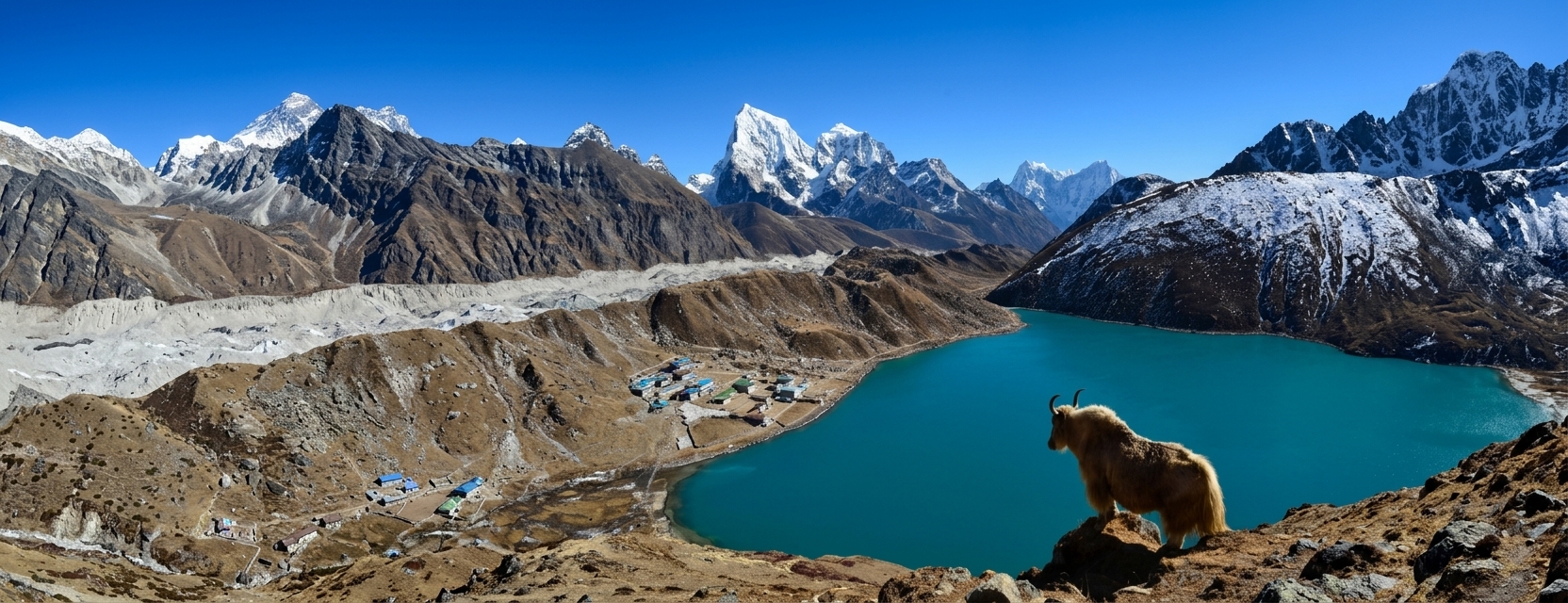
To adjust your body to the changed altitude, you have an acclimatization day at Namche Bazaar on the third day. On the acclimatization day, you’ll have time to explore Namche Bazaar. On this day, you’ll explore a small village, Khumjung (3780m), via Syangboche Airport (3720m) and Everest View Hotel (3550m). During the Khumjung village exploration, you’ll explore the different monasteries there, including Hillary School, which Sir Edmund Hillary built. Khumjung offers a breathtaking view of Mount Everest, Ama Dablam, Lhotse, Lhotse Shar, and Mount Nuptse. Besides beautiful mountain views, you’ll get a stunning view of the Tengboche Peak and Gokyo range from Khumjung village. After a beautiful exploration day, you’ll descend towards Namche and stay overnight there.

Accommodation

Hotel

Day 04

Trek to Tengboche (3867m)

Max Altitude

0m

Duration

5 hrs

Transport

On foot

Meals

Breakfast, Lunch, and Dinner Included

After acclimatization day at Namche Bazaar, your next destination is Tengboche. By the time you ascend from Namche Bazaar, you’ll get the views of Ama Dablam, Lhotse Shar, Taboche, and Kangtega. The trail involves distinct landscapes, including a blue pine forest and stone steps. Before reaching Tengboche, you’ll pass through several villages, including Kyangjuma, Chatyang Kharka, and Phunki Tenga. We’ll have lunch at Phunki Tenga. We must hike and switch back up the trail to Tengboche monastery via Rhododendron and pine forest. Similarly, we’ll have a chance to see wild animals along the way. The overall journey takes five hours. In Tengboche, there is a prominent Buddhist monastery. Every evening and morning worship, you may explore in the evening. Overnight at Tengboche.

Accommodation

Hotel

Day 05

Trek to Pheriche (4240m)

Max Altitude

0m

Duration

5 hrs

Transport

On foot

Meals

Breakfast, Lunch, and Dinner Included

In the early morning, you’ll have a sunrise view of the Everest range, Ama Dablam, and Taboche Peak. Have breakfast and continue the trek to Periche. Moving close to Island Peak, you’ll start trekking towards Periche, leaving Tengboche. The Periche trek takes you through rhododendron forests, and you’ll cross Imja Khola. You can see Musk, Deer, Monal, and Blue Sheep during the trek. Before reaching Pheriche, you’ll pass through charming Sherpa villages: Deboche, Pangboche, and Somare. Have lunch at Somare and continue to Periche. It takes 4-5 hours to get Periche. Overnight at Periche.

Accommodation

Hotel

Day 06

Trek to Lobuche (4930m)

Max Altitude

0m

Duration

6 hrs

Transport

On foot

Meals

Breakfast, Lunch, and Dinner Included

The trek to Lobuche starts by heading towards the Khumbu glacier. Leaving Pheriche, you can see a closer Himalayan view, Glaciers, and lakes. We suggest hiking up slowly and drinking plenty of clean water. In the first part, you’ll walk through Yak’s freezing meadows and the second part via glaciers. You’ll get to Dugla (Thokla) at an elevation of 4620m after gradually ascending for 2 to 3 hours. Similarly, within 45 minutes from Dugla, you’ll pass a Thokla pass, and after half an hour from there, you’ll reach Lobuche. Upon reaching Lobuche, you’ll have a warm breakfast at Periche and Lunch at Thokla. Overnight at Lobuche.

Accommodation

Hotel

Day 07

Trek to Gorakshep (5140m)

Max Altitude

0m

Duration

7 hrs

Transport

On foot

Meals

Breakfast, Lunch, and Dinner Included

You’ll start climbing up towards Gorakshep after breakfast at Lobuche. Upon reaching Gorakshep, Khumbu Glacier will surround you. After trekking for a few hours from Lobuche, you’ll cross Lobuche Pass and then go to Gorakshep. After three hours of trekking, you’ll get some rest and leave your bag at the hotel. You’ll continue to Everest Base Camp (5364m) exploration. Reaching Everest Base Camp is moderate yet rewarding, with the stunning view of the mountains. Having a wonderful time at EBC exploration, you’ll be back to Gorak Shep for an overnight. It takes 7 hours from Lobuche to Base Camp, EBC, and back to Gorakshep. However, it would be best to have warm clothes, a drinking water bottle, a power bar, and sunglasses.

Accommodation

Hotel

Day 08

Trek to Dingboche (4410m)

Max Altitude

0m

Duration

6 hrs

Transport

On foot

Meals

Breakfast, Lunch, and Dinner Included

Early in the morning, you’ll head towards Kalapathar(5550m) without your bag and with your headlamp. By reaching Kalapathar, you’ll trek for about 2 hours and get a 360-degree sunrise view from the top of the Kalapathar, as Kalapathar is known for its stunning viewpoint. Kalapathar is one of the highest points on Everest trekking. Furthermore, you’ll get an eye-catching view of the Everest region, including Mount Everest. Once you explore the stunning viewpoint of Kalapathar, you’ll return to Gorakshep, have breakfast, and descend toward Dingboche for an overnight stay. It takes around 6 hours in total.

Accommodation

Hotel

Day 09

Trek to Chhukung (4730m)

Max Altitude

0m

Duration

5 hrs

Transport

On foot

Meals

Breakfast, Lunch, and Dinner Included

The trail towards Chukkung from Dingboche is a beautiful journey via the Khumbu glacier. Upon reaching it, you’ll be surrounded by breathtaking views of Ama Dablam and Island Peak. Chhukung is the last village before you reach your destination. It is a warm and sunny village, and it takes 4 hours to reach Dingboche. We’ll have lunch and camp at the same place at Chhukung. Overnight at Chhukung.

Accommodation

Hotel

Day 10

Trek to Island Peak Base camp (5070m)

Max Altitude

0m

Duration

6 hrs

Transport

On foot

Meals

Breakfast, Lunch, and Dinner Included

You start trekking towards your destination, Island Peak Base Camp. Today’s journey is adventurous yet rewarding. The trail towards Island Peak Base Camp from Chhukung takes you through beautiful Imja Valley. As you ascend and pass through rocky terrain, you’ll be surrounded by Mount Ama Dablam and Mount Lhotse. It takes 4 hours to reach Island Peak Base Camp from Chhukung village. Upon reaching Island Peak Base Camp, we need to settle the tented camp, and our cook will prepare food. After lunch, you’ll go for basic climbing training with a guide, rope, ice axe, and more climbing gear. As soon as training is finished, you’ll return to camp, have an earlier dinner, and sleep earlier.

Accommodation

Hotel

Day 11

Summit the Island peak (6189m) and base camp over night

Max Altitude

0m

Duration

10 hrs

Transport

On foot

Meals

Breakfast, Lunch, and Dinner Included

Early in the morning, at 3 am, you’ll start hiking towards the Island Peak summit with your climbing equipment. Before reaching the summit, you’ll get to the high camp(5640m) and ascend towards the summit. The trail to the summit is generally rocky and icy. Therefore, you need equipment, including ropes and ice axes. Although the trek to the summit is challenging, you’ll be surrounded by stunning peaks after reaching the summit of Island Peak. The breathtaking views from the summit include Mount Makalu, Ama Dablam, Nuptse, Lhotse, Lhotse Shar, and Baruntse. After a successful Summit of Island Peak, you’ll return to Island Base Camp for an overnight stay. The duration of the walk depends upon any situation faced during the trek.

Accommodation

Hotel

Day 12

Trek to Tengboche (3867m)

Max Altitude

0m

Duration

6 hrs

Transport

On foot

Meals

Breakfast, Lunch, and Dinner Included

You’ll pack your bag for the returning journey after successfully climbing the Island Peak Base Camp and Summit. During the Island Base Camp to Tengboche journey, the trek includes descending through diverse landscapes and high-altitude terrain to the rhododendron forest of the Khumbu region.

Accommodation

Hotel

Day 13

Trek to Manjo (2835m)

Max Altitude

0m

Duration

6 hrs

Transport

On foot

Meals

Breakfast, Lunch, and Dinner Included

Visiting the monasteries of Tengboche, you descend towards Monjo. Until you reach Monjo, you’ll pass through Phunki Tenga, Namche Bazaar, and Larja Dobhan. The trek from Tengboche to Manjo allows you to experience the greenery. Overnight at the guest house.

Accommodation

Hotel

Day 14

Trek to Lukla (2840m)

Max Altitude

0m

Duration

0.75 hrs

Transport

Flight

Meals

Breakfast, Lunch, and Dinner Included

On the final trek on the Island peak, you’ll descend towards Lukla from Manjo. The hike from Manjo to Lukla takes you through the lower valleys of the Everest Region. The trail takes you through Dudh Koshi River, passing dense forest, a settlement of sherpas and a suspension bridge. Overnight at the Resort.

Accommodation

Hotel

Day 15

Fly to Kathmandu

Max Altitude

0m

Duration

0.75 hrs

Transport

Flight

Meals

Breakfast Included

With incredible views of the Everest region and landscapes, you’ll fly back to Kathmandu from Lukla Airport within 45 minutes of the flight. Upon reaching Kathmandu, we’ll pick you up at the domestic Airport and drop you off at your hotel by car. You can rest and explore the nearby areas. The trip is Over.

Accommodation

Hotel

  • Kathmandu-Lukla-Kathmandu flight tickets.
  • Three times a Day (Breakfast, Lunch, and Dinner)
  • Guide.
  • Per person, one trekking/climbing map.
  • Climbing gear
  • What is excluded in this trek package?

    What's Excluded

    • Travel insurance.
    • Tips and Donation
    • Sightseeing entry fees in the City
    • Climbing booths & Gloves
    • Gears and equipment .
    Facebook4.9
    Google5.0
    Trustpilot5.0

    0.0

    0 reviews