Newsletter

Subscribe To Our Newsletter

Quick Links

  • About Us
  • Why Boundless Adventure
  • Company Documents
  • Banking Details
  • Customize Trip
  • Contact Us
  • Volunteering in Nepal

Top 5 Treks

  • Annapurna Base Camp Trek
  • Everest Base Camp Helicopter Tour
  • Everest Base Camp Trek
  • Manaslu Circuit Trek
  • Upper Mustang Jeep Tour
  • Langtang Valley Trekking
  • Upper Mustang Trek

Useful Links

  • Travel Blog
  • Trekking Routes Map
  • Testimonials
  • Privacy Policy
  • Terms of Conditions
  • Compare Itineraries

Nepal (Head Office)

Business: +977 14701884|+977 1 4701885
Mobile: +977 9851033819
info@boundlessadventure.com

Thamel Kathmandu, Nepal

P.O. Box No. 11670

Australia

+61 426 378 149 (WhatsApp)sales@boundlessadventure.com

Japan

+81 80 4107 0813 (WhatsApp)boundlesstrek@gmail.com
Nepal Tourism Board, TAAN, NMA, and KEEP certification marksAccepted payment methods: American Express, Mastercard, Visa, UnionPay, and Google Pay

© Boundless Adventure Pvt. Ltd. 2026 All content, including photos, is owned by Boundless Adventure. Unauthorized use is prohibited.

Nepal Govt. Regd. No: 88177/068/069 | Tourism Regd. No: 1509 | Since 1992

Contact
+977 9851033819Plan with us
HomeNepalEverest Three High Passes Trekking
OverviewItineraryIncludesExcludesCostMapGearKnow before you goReviewsFAQs

Everest Three High Passes Trekking

0.00 reviews
14:08
The Everest Three High Passes trek combines the classical route to EBC with the remote Gokyo Valley and a thrilling crossing of three high passes: Kongma La Pass, Cho-La Pass, and Renjo-La Pass. Perfect for adventure lovers seeking breathtaking Himalayan views and the warm hospitality of the Sherpa. Everest Three High Passes: Essential Updates Mandatory guide: Solo trekking is allowed, but a licensed guide is still required for the Everest Three High Passes Trek Lukla flights via Ramechhap: During peak seasons, flights operate from Ramechhap, requiring a 4–5 hour drive from Kathmandu (often with early morning departures). Digital E-TIMS system: TIMS has been replaced by a mandatory digital E-TIMS registration through a registered agency. Permits required: Sagarmatha National Park permit (NPR 3,000) and Khumbu Pasang Lhamu Rural Municipality permit (NPR 3,000) are both compulsory. Insurance & new fees: Travel insurance must cover helicopter evacuation up to 6,000m, and an additional environmental (waste management) fee applies.
Destination
Nepal
Duration
20 days
Difficulty
Adventurous
Activity
Trekking
Max Altitude
5555
Group Size
1
Accommodation
Hotel | Resort
Meals
Breakfast, Lunch & Dinner
Transport
Flight
Start & End Point
Kathmandu
Best Seasons
Mar-June, Sep-Dec

Trip Highlights

  • Panoramic Himalayas: Witness stunning panoramic views of the tallest peaks, including Everest, Lhotse, Ama Dablam, Makalu, and surrounding peaks throughout the trek in the Everest region.
  • Diverse Landscapes: Walk through a variety of landscapes, from terraced fields to rocky mountain terrain and mountain trails, and pass glacial valleys; each section of the trail is diverse and showcases the unique beauty of the Khumbu region.
  • Unique Flora and Fauna: Throughout the trek, trekkers encounter the region's distinctive flora and fauna. Trekking through rhododendron forests and alpine meadows, spotting unique wildlife, this trek offers adventure and thrill.
  • Sagarmatha National Park: A UNESCO World Heritage Site, the park is a conservation area where trekkers spot rare wildlife and diverse flora and fauna.

Everest Three High Passes Trekking Overview

Witness the spectacular views of the tallest peak of the Khumbu region. The highlight of the trek is three high passes: Kongma La, Cho La, and Renjo La.

These passes offer majestic vistas of the Himalayas, including Makalu (8,481 m), Lhotse (8,516 m), Ama Dablam (6,812 m), Cholatse (6,440 m), Nuptse (7,861 m), Pumo Ri, and Mt. Everest (8,848.86 m), as well as surrounding peaks.

Reaching a maximum altitude of 5,535 m at the summit of Kongma La, the views of the Himalayas and glacial valleys from the top are so magnificent, and you feel a great sense of achievement.

The journey takes you through the Sagarmatha National Park, following the trail through the Khumbu region. This trek is the perfect combination of adventure and scenic views of the Himalayas.

Walk through dense forest trails, explore the diverse landscape, visit several charming Sherpa villages, and experience the warm hospitality of the Khumbu region.

With proper preparation and experience in high-altitude trekking, adventurers can complete this physically demanding trek. It is highly recommended to trek with an experienced guide and porters, who can provide guidance and assistance in case of any difficulties during the journey.

The Everest Three High Passes Trek promises an extraordinary adventure filled with stunning landscapes, cultural immersion, and the thrill of conquering high-altitude passes. Join us for the adventure journey to the Everest Three High Passes and make unforgettable life memories!

Why Choose the Everest Three High Passes Trek? 

The Everest Three High Passes Trek is the best choice for trekkers seeking a lifetime experience in the Himalayas. As a trek, the Everest Three High Passes, Kongma-La, Cho-La, and Renjo-La, offer exhilarating vistas of the mountains, such as Mount Everest, Lhotse, Makalu, Ama Dablam, and Nuptse, each pass offering a vantage point that highlights the scenic beauty of this amazing region.

Beyond the stunning Himalayan views, you experience ever-changing terrain, green valleys, agricultural areas, challenging mountain paths, and glacial lakes, which add variety to this adventure. Every day brings a new perspective of adventure and thrill, combined with physical challenge.

Also, you get the opportunity to engage with the distinctive culture of the Sherpa community through interactions with people in the settlements of Namche Bazaar and Tengboche, and to explore historic monasteries such as Tengboche Monastery. Immerse yourself in a friendly culture; the Sherpa community makes the trip even more enjoyable, as trekkers feel they belong through the warm reception of the Sherpa people.

Although rated as challenging, the trip is quite feasible with proper preparation, allowing trekkers to learn from experienced mountaineers/experts, making it the most appropriate trip for the adventure-seeking individual who wishes to discover unvisited trails and the destination's famous views.

Ultimately, the Everest Three Passes Trek perfectly combines natural beauty, cultural immersion, and the warm hospitality of the local Sherpa people, therefore making it one of the best and most rewarding treks in the Everest region for those seeking a holistic and enriching adventure.

Book your trip today!

Viewpoints on the Everest Three Passes

Every spot on the Everest Three High Pass Trek offers an incredible panorama of the Himalayas, hills, and snow-covered glacier valleys. Every spot offers a different but distinct view of nature. You have several stops where you can take in the breathtaking panorama of the Himalayas.

Namche

This is a market town and an ideal place to acclimatize during a trek in the Everest region. Located at an elevation of 3,440m, this place is referred to as the gateway to the Everest region. It offers excellent views of the beautiful snow-capped Himalayas, with mountains like Ama Dablam standing tall at 6,812m.

Trekking routes acquaint trekkers with the place and its surroundings. Besides, one can take a short hike to the Everest View Hotel, which offers superb views of Mount Everest and nearby peaks, including Ama Dablam (6,812 m), Lhotse (8,516 m), Thamserku (6,608 m), Khangtega, and Everest (8,848.86 m).

Kongma-La Pass

Kongma-La Pass is one of the high passes in the Everest region of Nepal. This pass offers breathtaking panoramic views of the Himalayas, including Makalu (8,481 m), Lhotse (8,516 m), Ama Dablam (6,812 m), Cholatse (6,440 m), Nuptse (7,861 m), Lhotse (8,516 m), Pumo Ri, Mt. Everest (8,848.86 m), and surrounding peaks. Reaching a maximum altitude of 5,535 m at the summit of Kongma La. The pass features stunning glacial landscapes and rugged terrain, with views of glaciers and icefalls.

Chukkung Ri

Chukkung Ri stands at 5,546m and is located close to the village of Chukkung, providing an alternate route to Kalapatthar. Both are less crowded and offer serene trekking routes.

The views of Mount Everest are not visible from the top of the Chukung Ri. Meanwhile, views of Makalu (8,481 m), Lhotse (8,516 m), Ama Dablam (6,812 m), Imja Tse (6,165 m), and Nuptse (7,861 m) can be seen from the top of Chukung Ri. Simultaneously, peaks including Cholaste (6,440 m), Tawache Peak (6,495 m), Kantega Peak (6,782 m), Thamserku (6,608 m), and Baruntse (7,162 m) can also be seen.

Kalapathar

A popular viewpoint on the Everest trek near Gorakshep offers panoramic views of Everest and the surrounding peaks. Almost all trekkers hike to Kalapatthar in the morning to witness the golden sunrise over the snow-capped peak, which is breathtaking.

Trekkers can witness top-to-bottom views of the world's tallest peak, Mt. Everest and other surrounding peaks, including Nuptse (7,861 m), Changtse (7,543 m), Ama Dablam (6,812 m), Thamserku (6,608 m), Kangtega (6,782 m), Taboche (6,495 m), and Lobuche (4,940 m). The 360° views of these Himalayas make Kalapatthar one of the best spots in the Everest region. Perfect place for photographers and adventure seekers.

Cho-La Pass

Cho La Pass, at 5,420 m, is one of the high passes trekkers must cross on the Everest Three Passes trek, connecting the Gokyo Valley to the Everest Base Camp route. This viewpoint offers breathtaking views of the snow-capped Himalayas and Khumbu Glacier. The Cho-La Pass is another stunning viewpoint you'll encounter on the Everest Three Passes trek.

As you get to the top, you'll be welcomed by the views of Gokyo, Cho Oyu  (8,188 m), Cholatse (6,440 m), Gyazumba (one of the longest glaciers), and other stunning snow-capped mountains.

Gokyo Ri

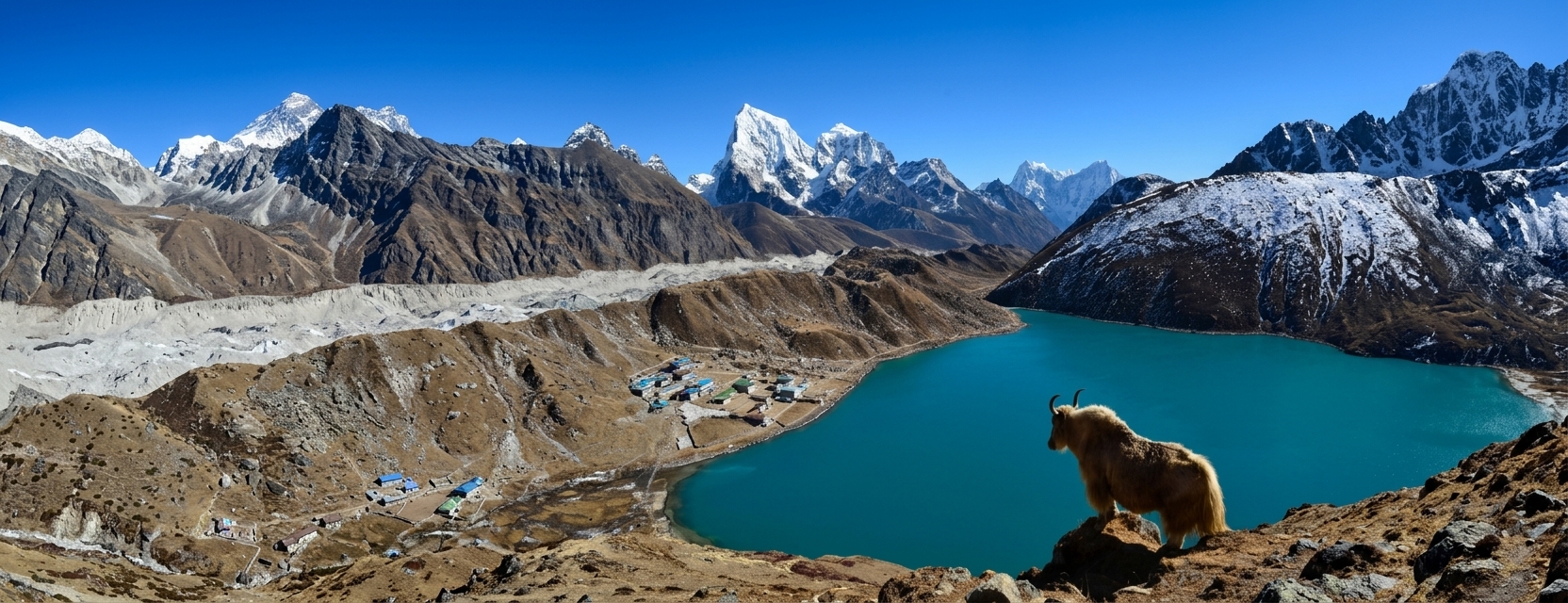
Gokyo Ri is a popular viewpoint located near the Gokyo Lakes, known for its stunning vistas. Located at 5,357 m, Gokyo Ri, also named Gokyo Peak, is an ideal point for trekkers to enjoy the stunning views of the Himalayas and surrounding glacial lakes and valleys in the Everest region. The Gokyo Ri is another stunning viewpoint you'll encounter on the Everest Three Passes trek.

Views of Gokyo Lakes, Mount Everest (8,848.86 m), Lhotse (8,516 m), Cho Oyu (8,188 m), Makalu (8,481 m), and other surrounding peaks are fabulous from the peak of the Gokyo Ri. Among all the mountains apparent from the Gokyo Ri, Mount Cho Oyu is closer. Also, trekkers can witness the views of the Ngozumpa Glacier during the trek in this region.

Renjo-La Pass

The Renjo-La Pass, another pass on the Everest High Pass trek, is situated at 5,388 m and connects the Gokyo Valley with the Thame Valley, offering spectacular views of the surrounding mountains. Renjo-La is one of the high passes of the Everest Three High Pass trek.

From the pass, trekkers can see Mount Everest (8,848.86 m), Lhotse (8,516 m), Cho Oyu (8,188 m), Makalu (8,481 m), and the Gokyo Lakes, providing one of the most scenic overlooks in the region. Crossing Renjo La is a significant achievement and adds to the overall adventure of the trek.

Acclimatization Days During the Trek

Acclimatization is essential when trekking in high-altitude regions. The Everest Three High Passes trek is very difficult to challenging and requires good physical stamina and preparation.

The itinerary must be carefully crafted with acclimatization days. There are 3 acclimatization days..

Namche-First Acclimatization

The first acclimatization day is in Namche, a trading hub of the Everest region. On this day, you explore the Namche Bazaar and nearby places, connect with the locals more, and rest. You go for a short hike to the Everest View Hotel, a famous viewpoint offering snow-capped mountain vistas, including Mount Everest, Ama Dablam, Lhotse, Lhotse Shar, Nuptse, and many unnamed peaks.

Or you can spend your whole day resting in your room and walking around.

Dingboche-Second Acclimatization

The second acclimatization day is in Dingboche. Explore the nearby areas and take a short hike to Nangkar Tshang.  Nangkar Tshang is one of the best viewpoints on the Everest Three Pass journey, offering spectacular views of the surrounding mountains, including Makalu, Lhotse, Lhotse Shar, Cho Oyu, the Gokyo range, Island Peak, Imja Tsho Lake, and Ama Dablam, as well as glaciers.

Gokyo-Third Acclimatization

The third acclimatization day is in Gokyo. The beauty of Ama Dablam is spectacular, and you'll get it from Gokyo. You spend this day exploring Gokyo Ri. You'll witness the sunrise over the fantastic vistas of the mountains, including Makalu, Cho-Oyu, and Everest.

Cultural Exploration during Acclimatization

During these acclimatization days, you have the opportunity to explore nearby areas, interact with locals, and learn about their culture and daily livelihoods. Engaging with the Sherpa community enriches the trekking experience, providing insights into their traditions and way of life.

This cultural immersion, combined with the region's stunning natural beauty, makes the acclimatization days an integral part of the Everest Three Passes Trek.

Incorporating acclimatization days in Namche, Dingboche, and Gokyo Valley is crucial for a successful and enjoyable trekking experience in the Everest region. These days, they not only aid in altitude adjustment but also provide opportunities for exploration and cultural interaction, enhancing the overall adventure of the trek.


Day-to-Day Short Itinerary

Day 01Pick up from International Airport1,400m~0.33 hrs
Day 02Fly to Lukla and Trek to Phakding2,860m~0.75 hrs
Day 03Trek to Namche Bazaar, 3440m3,440m~5 hrs
Day 04

What is included in this trek package?

What's Included

  • Airport picks up and drops by private car/van/bus.
  • A complete board package trip with meals three times daily (Breakfast, lunch, and dinner) and accommodations during the trek.
  • Round trip of Kathmandu –Ramechhap- Lukla – Kathmandu flight tickets for all of you.
  • Sagarmatha National Park permits and TIMS permits.
  • Ground transportation from your hotel to the airport and hotel will be provided at the end of the trek.
  • Experienced English-speaking Guide.

Cost

Group Price Breakdown

Group SizePrice Per Person
1 person$2,210
2 - 4 people$1,180
5 - 7 people$1,856
8 - 10 people$1,800
11 - 14 people$1,750
15 - 30 people$1,690
View Map
STARTKathmandu1,400m
DAY 2Lukla2,860m
DAY 3Namche Bazaar3,440m
DAY 4Namche Bazaar3,440m

Know Before You Go

  • Panoramic Himalayas

During the Everest Three High Passes Trek, you will witness the panoramic views of the Himalayas throughout your trek. Witness the world's tallest peak, Mt. Everest, along with other famous peaks in the Everest region, including Ama Dablam, Lhotse, Nuptse, and Cho Oyu. Each viewpoint along the trail offers a different angle to see these beautiful mountains, making it a perfect place for photographers.

  • Kongma-La Pass

Situated at 5,535 m, this high pass is one of the three main passes on the trek. The Kongma-La Pass offers stunning panoramic views of the Himalayas, including Makalu (8,481 m), Lhotse (8,516 m), Ama Dablam (6,812 m), Cholatse (6,440 m), Nuptse (7,861 m), Lhotse (8,516 m), Pumo Ri, Mt. Everest (8,848.86 m), and some glacial valleys. Crossing this pass is difficult, but the views from the top make your journey memorable.

  • Cho-La Pass

Another high pass of the Everest region among the high passes and a gateway between Gokyo Valley and the Everest Base Camp route. The way uphill consists of rock, steep, snow-covered, depending on the season, nothing less daunting than early spring or late autumn.

Staffed at the top, the trekkers get fantastic views of the Khumbu glacier and the peaks around it. The descent opens into the scenic Gokyo Valley, where trekkers can take in the tranquil beauty of the glacial lakes nestled below.

  • Renjo-La Pass

Renjo-La Pass is one of the Everest Three High Passes and is less frequented than the other two. From the pass, trekkers can see Mount Everest (8,848.86 m), Lhotse (8,516 m), Cho Oyu (8,188 m), Makalu (8,481 m), and the Gokyo Lakes. The pass is often less crowded, allowing trekkers to enjoy the landscape's serene beauty. From the top, the panoramic views are awe-inspiring, making the experience rewarding for visitors.

  • Gokyo Valley

Gokyo Valley is a popular acclimatization destination for the Everest Three High Passes trek in the Everest region. The Gokyo Valley features a series of turquoise glacial lakes, some of the highest in the world. The valley is surrounded by towering peaks, including Cho Oyu and Makalu, creating a stunning backdrop.

The Gokyo Lakes, notably Gokyo Lake, Thonak Lake, and Ngozumpa Lake, are not only beautiful but also hold spiritual significance for the local people. Trekkers often spend time exploring the valley, taking in the breathtaking scenery, and enjoying the tranquillity of the area.

  • Gokyo Ri

It's one of the most popular routes for the Everest Three High Passes, offering fantastic views of the Himalayan Ranges. It's an easy hike from Gokyo that leads to the summit, making the climb accessible to all.

From the summit, trekkers can take in panoramic views of Everest, Lhotse, and other peaks, along with the Gokyo Lakes below. The sunrise over the mountains from the top of Gokyo Ri offers one of the most spectacular views, with the golden rays illuminating the peaks.

  • Sagarmatha National Park

Sagarmatha National Park is a UNESCO World Heritage Site and a popular destination in the Everest region. The park is known for its unique biodiversity and dramatic landscapes, including deep valleys, glaciers, and towering peaks.

It is home to rare wildlife, including the snow leopard, red panda, and various pheasant species. The park also features diverse flora, including rhododendron forests and alpine meadows. Trekkers can experience the natural beauty and ecological significance of this protected area while exploring its trails.

  • Diverse Landscapes

The trek shows a variety of landscapes of the Everest region. Beginning in the lower land and traversing three high passes, this trekking route offers panoramic views of the region.

Moving from one geographical land to another, that is, from the lower land of Khumbu to the high pass and valleys, varies in a way that each pass of this journey offers a different experience.

  • Ancient Monasteries

Along the trek, trekkers will encounter several ancient monasteries that reflect the Sherpa people's rich Buddhist culture. Notable among these are the Thame Gompa and Tengboche monasteries, which are magnets in the Khumbu region, as different disciples of the Lord Buddha built them.

Tengboche Monastery is a trekking destination with strong spiritual significance, offering beautiful views of Ama Dablam and serving as a religious center for the surrounding community. One can also join a prayer ceremony and witness its culture and architecture.

The Everest Three High Passes Trek is challenging and strenuous in the Everest region. The trek involves significant altitude gains, reaching over 5,500 meters (18,000 feet) at passes such as Kongma-La, Cho-La, and Renjo-La. The risk of altitude sickness increases at higher elevations, requiring trekkers to acclimatize properly and be aware of the symptoms.

Trekkers need to walk approximately 6-8 hours per day to reach each stop. The trails feature ascents, descents, and steep climbs. The trekking trails are rocky, steep, uneven, and sometimes slippery, making them difficult to traverse.

If you are a highly experienced trekker, you can complete this trek with proper preparation, and hiring a professional guide is a must.

Safety Measures

The Everest Three High Passes trek is challenging in the Everest region. As you reach up to 5,500 m above, you may feel some discomfort in breathing, nausea, vomiting, or anything that creates difficulty. To overcome altitude sickness, one must follow some safety measures.

  • Proper acclimatization is a must. To overcome altitude sickness during the trekking days in the Everest region, you must stop at Namche, Dingboche, and Gokyo to acclimatize yourself to the increasing altitudes.

  • Hydration is essential. You must drink 3-4 liters of water while trekking in the high-altitude terrain. Hydrating yourself helps maintain energy levels, so you do not experience difficulties on trekking days.

  • Always listen to your body while trekking. If you experience any discomfort or difficulty during the trek, your body will signal. Understand your sign and stop if anything occurs. Listening to your body helps trekkers maintain energy and avoid serious problems.

  • Trekking with an experienced guide also makes you safe from anything that arises during the trek in the Everest region. The guide knows the trail conditions and is well-versed in altitude-related issues and how to mitigate them, so always plan your trek with a guide.

  • Prepare your body and brain before trekking in the Everest region. Participate in cardiovascular exercise, practice yoga, and go for a short hike before trekking in Nepal's high-altitude region. This preparation helps trekkers trek smoothly in high-altitude areas and keeps your body comfortable as you ascend.

  • Always carry a first aid kit in your bag. In an emergency, these medicines will help you maintain your risk level.

  • Carry essential gear in your backpack so you can use the right tools at the right time.

  • Regularly monitor weather conditions, as they can change rapidly in the mountains. Be prepared to adjust your plans if necessary.

Trekking in the Everest region during the right season offers some of the most incredible views of the Himalayas, lush forests, and glacial valleys, which look postcard-perfect. Crossing Everest's Three High Passes in the right season allows trekkers to witness the remarkable beauty of the Himalayas, glacial valleys, and the surrounding nature.

Generally, spring (March-May) and autumn (September-November) seasons are considered the best seasons for trekking in the Everest region.

Spring (March-May)

The spring season is the best season for trekking in the Everest Three High Passes. Spring offers mild temperatures and comfortable weather for long days walking in the Everest region. Daytime temperatures can range from 10°C to 20°C (50°F to 68°F) at lower elevations, while nights can be cooler. The weather is stable, with clear skies and a very low chance of rain, providing excellent visibility of the Himalayas.

This season is also marked by blooming rhododendrons and other wildflowers, adding vibrant colours to the landscape and enhancing the scenic beauty. Spring is a popular time for trekkers, resulting in a busier trail. However, the lively atmosphere and shared experiences with fellow trekkers can be enjoyable.

Autumn (September-November)

Autumn is an ideal time for trekking in Nepal. This season provides crystal-clear visibility of the Himalayas, surrounding hills, and valleys. Daytime temperatures typically range from 10°C to 15°C (50°F to 59°F) at lower altitudes, cooling down at night. The weather is stable and crisp, making it an ideal season for trekking in the Everest Three High Passes. Visibility is often at its best during this season.

Autumn is also a busy season for trekking and travel in Nepal. The postcard-perfect views of the surroundings catch trekkers' eyes at every point of the trek. During this season, trekkers can also participate in Nepal's major festivals, including Dashain, Tihar, and Chhat.

Not Considered Season

Winter (December-February)

Winter trekking is generally not recommended due to harsh weather conditions, heavy snowfall, and frigid temperatures, which can make the trails dangerous and inaccessible.

Monsoon (June-August)

The monsoon season brings heavy rainfall, resulting in slippery trails, potential landslides, and reduced visibility. This season is also characterized by increased humidity and the risk of altitude sickness.

You'll have meals and spend your nights in a local teahouse throughout your trekking days in the Everest region. As you ascend on your trek, accommodations and food become limited and basic, but the comfort you'll receive is outstanding.

As you trek above Dingboche, you spend the night in a local teahouse that is basic yet comfortable. You'll have a small, cozy bedroom, and the bathrooms are shared. There is availability of hot showers, laundry services, and internet access. Although you spend the night in a small teahouse, the warm hospitality of the local Sherpa makes your day relaxed.

You'll get a simple, basic food, including egg, Tibetan bread, chapati, tea, hot soups, and many other available foods for breakfast and for lunch and dinner, or you'll get dal bhat, a traditional Nepali meal, momo, thukpa, vegetable soup, noodles, fried rice, chow mein, pasta, or any other available items. You'll eat vegetarian food along the trail.

In lower elevation and city areas like Kathmandu and Namche, you'll spend a night in a private room attached to a bathroom, and the hotels provide all modern amenities. Also, you'll get a variety of food options. There is availability of authentic Nepali and international cuisine. You can enjoy anything you want. Also, go for some street food in Nepal.

Although the food options and accommodation facilities vary from place to place, what you get in common is the warm hospitality of the Nepali people. Nepali hospitality is widely recognized among travellers and is a significant asset for us.

When trekking in the Everest Three High Passes, obtaining the necessary permits is essential. Here are the permits required for the trek to the Everest Three High Passes:

  • Sagarmatha National Park Entry Permit

  • Khumbu Rural Municipality Entry Permit

  • Trekker's Information Management System

These permits can be obtained from the Nepal Tourism Board office in Kathmandu, or we can arrange them for you if you provide your photos and other required documents.

Travel insurance is one of the most important steps to take when trekking the Everest Three High Pass. You may encounter difficulties during trekking days in Nepal's high-altitude region; your travel insurance can be a lifesaver.

In an emergency, your travel insurance helps minimize expenses. Your travel insurance must cover emergency helicopter evacuation, medical coverage, loss/theft of baggage or goods, and flight delays or cancellations.

We recommend securing coverage with a reputable, trusted insurance company that provides comprehensive coverage for your trekking adventure. Then read the agreement and sign it. Please review the services they offer so that, in the event of an incident, your insurance covers all expenses.

If you are an adventure enthusiast and an experienced trekker, then this Everest Three High Pass is perfect for you. This trek is difficult to challenging and requires extensive knowledge of strenuous trekking and strong experience trekking in high-altitude regions.

For beginners, this trek is challenging. Before planning a trek of the Everest Three High Passes, trekkers should consider factors such as daily altitude gain, weather conditions in the high-altitude region, and what they need to prepare for the trek.

The trek starts with a scenic flight to Lukla, then treks to Phakding, Namche, Tengboche, Dingboche, Chhukung, Lobuche via Kongma-La Pass, Gorakshep to EBC and Kalapatthar, Dzongla, Thangnang via Cho-La Pass, Gokyo, and explores Gokyo Ri, Lumde via Renjo-La Pass, then returns to Lukla via Thame, and Monjo.

The three high passes, Kongma-La Pass, Cho-La Pass, and Renjo-La Pass, are the highlights and best viewpoints of this trek. Acclimatization days are included at several altitudes, such as Namche, Dingboche, and Gokyo, where you can stop to explore the area and give your body time to acclimate.

Each point along the trek offers stunning views of the Himalayas, including Ama Dablam (6,812 m), Lhotse (8,516 m), Thamserku (6,608 m), Khangtega, and Everest (8,848.86 m). Many other peaks are visible on clear days, so plan your trek for spring or autumn.

Passing through several local villages offers trekkers opportunities to experience the diverse culture and warm hospitality of the Sherpa community. Trekkers can interact with local people and learn about Sherpa mountain-climbing stories.

Although this trek offers excellent visibility of the Himalayas and a strong opportunity for cultural immersion, it requires good physical stamina and mental strength. With the help of an experienced guide, porters, and proper acclimatization, trekkers can complete the Everest Three High Pass trek.

Guides and porters are essential when trekking in the Everest region. For Three High Pass, it's crucial to hike with a highly experienced guide and porters. They help in every situation that occurs during trekking days.

A professional guide and porters enhance your trekking journey. Local guides know the trail and region, and they enable trekkers to interact with locals and learn about the Sherpa community's unique culture and traditions.

Guides know about the trail conditions and weather of the Everest region, so they always take you through the safe trekking trails and prepare you for the changing weather and temperature during the Everest Three High Pass Trek.

Porters are essential on the Everest High Pass trek, as they carry your heavy backpacks and allow you to enjoy the scenery. They work in coordination with the guides so you can trek peacefully and enjoy the adventure in the Everest region. They ensure the trekking process proceeds smoothly.

Trekking with an experienced guide and porters enhances your experience on the Everest Three High Pass. They ensure your safety and allow you to enjoy nature without disturbance. Boundless Adventure is always ready to strengthen your trek in the Everest region.

Boundless Adventure is a well-regarded travel agency in Nepal, specializing in trekking and expeditions in the Himalayan region. We provide an experienced guide and porters to make your trekking days easier and more comfortable.

We also offer a flexible trekking itinerary with acclimatization days in the high-altitude region. Our staff will arrange all required documents. If you have any questions about the trek or trekking days, please contact our team. They will respond to all your queries ASAP.

We offer reasonable pricing and keep our prices transparent. You pay the same amount shown on our website. What you see when you check out our site is exactly what you will pay. At Boundless Adventure, you can enjoy your trek without stressing about anything.

Join with us and let's make memories for a lifetime.

Packing the right gear for the Everest Three High Passes Trek is essential. Here is the list of items:

Clothing

  • Waterproof and windproof jacket and pants.

  • Fleece Jackets

  • A down jacket

  • Thermal underwear (top and bottom)

  • Hiking trousers

  • Hiking shirts

  • Warm hat

  • Sun hat

  • A pair of gloves

Footwear

  • Five pairs of socks

  • Sturdy hiking boots

  • Comfortable walking shoes

Backpack

  • 40-50 liter backpack

  • Rain cover for backpack

  • Sleeping bag (rated for 0°C to -20°C)

Personal Hygiene

  • Toiletries (toothbrush, toothpaste, wet wipes, hand sanitizer, etc.)

  • Quick-drying towel

  • Sunscreen (SPF + 30 to 50)

  • Insect repellent

  • Personal medications

Miscellaneous

  • Headlamp or flashlight (with extra batteries)

  • Trekking poles

  • Water bottles or hydration system

  • Sunglasses (with UV protection)

  • Camera or smartphone (with extra batteries/charging cable)

  • Trekking map

  • First-aid kit

  • Crampons

  • Snacks and energy bars

  • Cash (for tips and purchases along the way)

Everest Three High Passes Trekking Trip Reviews

100+ Happy Trekkers

Explorations that last a lifetime.

Tripadvisor5.0

Start Booking

1

$2,210

Per pax

Total$2,210

Quick help?

Expert Advice

General Information FAQsTrekking Condition FAQsBooking and Cancellation FAQsGuide and Porters FAQsPermit and Travel Insurance FAQsCost and Visa FAQsFood and Accommodation FAQsPacking and Preparation FAQsCultural Consideration FAQs

FAQs For Everest Three High Passes Trekking

General Information FAQs

The Everest Three High Passes Trek is one of Nepal's most challenging and adventurous treks. It crosses three high mountain passes—Kongma La (5,535 m), Cho La (5,420 m), and Renjo La (5,388 m)—while also visiting Everest Base Camp, the Gokyo Lakes, and major viewpoints like Kala Patthar and Gokyo Ri.

The trek begins with a scenic flight from Kathmandu to Lukla and concludes in Lukla before returning to Kathmandu.

The highest point of the trek is Kala Patthar at 5,545 meters, while the highest pass is Kongma La Pass at 5,535 meters.

No, this trek is not recommended for beginners. It is best suited for experienced trekkers with good physical fitness and prior high-altitude trekking experience.

The Everest Three Passes Trek is among the destinations in the Everest region that do not require a guide. Hence, it is possible to trek solo, but it is advisable to hire a guide for safety.

Flights may be delayed or cancelled due to weather, which can change anytime at higher elevations. At such times, you have no choice but to wait for the weather to clear.

Trekking Condition FAQs

The trek is moderate in difficulty, with challenging sections above 4,000 meters. Trekkers should be prepared for rocky, uneven trails, especially as they approach higher elevations.

The Everest Three Passes trek is challenging and strenuous. Although there are no technical sections, trekkers must have good physical fitness, stamina, and endurance. They must hike on steep, rough trails and cross high mountain passes above 5,000 meters.

Acclimatization days are included in the itinerary, particularly in Namche, Dingboche, and Gokyo. Staying hydrated, ascending slowly, and being aware of altitude sickness symptoms are crucial for a safe trekking experience.

Yes, there is a high risk of altitude sickness above 3,500 m. Ascend slowly and take time to rest during the trek.

It is one of the most challenging treks that Glacier offers to hardcore trekkers and adventure seekers. The journey is a complete circuit of the Everest Valley, traversing the treacherous passes of Renjo La, Cho La, and Kongma La before reaching Everest Base Camp.

The average walking time on the Everest Three Passes Trek is 4 to 5 hours per day. However, walking hours may vary by destination. It also depends on your walking speed.

If you trek in spring and autumn, the weather is ideal. Clear, crisp, and warm weather makes trekking comfortable.

Yes, the rest days are included in the itinerary. You'll stop in Namche and Gokyo for acclimatization.

In the event of a health issue, you descend to a lower elevation, and in an emergency, a helicopter evacuation will be conducted.

Booking and Cancellation FAQs

You can book the trek by contacting Boundless Adventure through our website or via WhatsApp at +977 9851033819. We will guide you through the booking process.

Our cancellation policy outlines the refund terms based on when you cancel your booking. Please check our website for detailed information regarding cancellations.

Last-minute bookings are possible, but they may incur additional costs and limit your preparation time. It is advisable to plan your trek.

It is recommended to book your trek at least 2-3 months in advance, especially during peak trekking seasons (spring and autumn), to ensure availability and secure the best accommodations.

Date changes may be possible depending on availability. Communicate with the agency and confirm your dates.

Guide and Porters FAQs

Yes, you'll have an experienced guide who will assist you during your trek in the Everest region.

Porters carry heavy backpacks and equipment, alleviating the physical burden on trekkers and allowing you to focus on enjoying the journey.

Boundless Adventure employs trained, experienced guides and porters who are familiar with the trails and conditions in the Everest region.

Yes, tipping a guide is recommended.

Yes, they have sound knowledge about the first aid kit. In case of an emergency, they use it.

Typically, one guide is assigned to a group of 4-8 trekkers to ensure personalized attention and safety.

They speak different languages. Nepali, English, Hindi, Spanish, Chinese, French, and many more languages based on their knowledge.

Yes, guides are available to answer questions and provide support throughout the trek.

Permit and Travel Insurance FAQs

You will need the Sagarmatha National Park Entry Permit, Khumbu Rural Municipality Permit, and Trekker's Information Management System (TIMS) Permit.

Your trekking agency can arrange all necessary permits for you, or you can obtain them from the Nepal Tourism Board office in Kathmandu.

Yes, comprehensive travel insurance is highly recommended. It should cover high-altitude trekking and emergency evacuation.

Ensure your insurance covers trip cancellation, medical emergencies, and helicopter evacuation.

While possible, it's not advisable given the risks of high-altitude trekking.

Cost and Visa FAQs

Yes, most travellers require a visa to enter Nepal. You can obtain a visa on arrival at Kathmandu's airport or apply for an e-visa online before your trip.

To apply for a visa to Nepal: On Arrival: Fill out the visa application form at the airport, provide a passport-sized photo, and pay the visa fee in cash. E-Visa: Visit the official Nepalese government website to apply for an e-visa. You will need to upload a passport-sized photo and pay the visa fee online.

Yes, your passport should be valid for at least six months beyond your intended date of entry into Nepal.

Yes, you can extend your visa at the Department of Immigration in Kathmandu or Pokhara. Extensions are subject to approval and may incur additional fees.

Yes, a group discount is available for the Everest Three High Passes Trek. Contact your travel agency to confirm the group size and applicable discount.

Advanced booking is recommended for trekking. During peak season, it's very difficult to find a trekking package on short notice.

Food and Accommodation FAQs

Expect a variety of food options, including traditional Nepali dishes and international cuisine, such as rice, lentils, and vegetables.

Accommodation consists of local teahouses that offer basic but comfortable lodging. Private rooms are available in lower elevations.

Most oeahouses offer Western food options, but as you move higher, availability declines. In the lower elevations, you can enjoy a variety of Western food options.

Yes, most teahouses cater to dietary preferences, including vegetarian and vegan options.

Yes, teahouses offer snacks such as chocolate, biscuits, and other items you can purchase and enjoy.

Electricity is available in lower elevations but may be limited in higher areas. Charging devices may incur a small fee.

Bathrooms are typically shared and may be squat-based in teahouses, especially at higher altitudes.

Laundry services are available at some teahouses in lower villages, but they are limited. At higher altitudes, it's best to bring quick-drying clothes and do basic hand-washing yourself.

Wi-Fi is available in most villages, but speeds are low. Mobile network coverage is limited above Namche.

Packing and Preparation FAQs

You should pack moisture-wicking shirts, thermal underwear, a warm fleece or down jacket, a waterproof and windproof jacket and pants, trekking pants, a sun hat, warm gloves, and several pairs of socks (preferably wool or synthetic).

It is essential to have sturdy trekking boots that provide good ankle support and traction. Additionally, pack camp shoes or comfortable slippers for use at teahouses.

Yes, a high-quality sleeping bag rated for cold conditions is recommended, as accommodations at higher altitudes may not provide adequate bedding.

Essential gear includes a backpack (30-50 liters), trekking poles, a headlamp or flashlight, a first aid kit, and a water bottle. You may also want to carry a quick-drying towel and snacks.

Yes, it's important to pack sunscreen, sunglasses, and lip balm to protect against sun exposure at high altitudes. A camera or smartphone for photos is also recommended, along with extra batteries or a portable charger.

Avoid bringing unnecessary heavy items, such as large amounts of clothing or valuables. Focus on lightweight, multi-purpose gear to keep your pack manageable.

Cultural Consideration FAQs

Greet locals with "Namaste," dress modestly, and ask permission before taking photos of people or sacred places.

Yes, tipping is customary in Nepal. It's a way to show appreciation for their hard work and support.

Familiarize yourself with local customs, such as removing shoes before entering homes and monasteries.

Be respectful, friendly, and polite. Engage with locals but be mindful of their privacy and customs.

Yes, if your trek coincides with local festivals, it's a great opportunity to experience Sherpa culture and traditions.

Let's Plan Your Trip Together

Tell us what you're looking for, and we'll help you shape a journey around it.

Plan with us
  • Everest Base Camp: Reaching Everest Base Camp is every trekker's dream, and standing in front of the world's Tallest peak is the kind of big achievement any trekker wants to gain.
  • Khumbu Glacier: Walk next to the Khumbu Glacier, the greatest one in the area. The glacier's size, the images it creates, and the scars it bears all contribute to the beauty of the trek and underscore the power of nature.
  • Kalapatthar: Kalapatthar, a lookout point from where people can watch the Everest and other lofty mountains around with their optical senses. The dawn at Kalapatthar is a remarkable sight.
  • Kongma-La Pass: The Kongma-La Pass, which offers stunning views of Makalu and Lhotse, is where trekkers' endurance is tested; yet the breathtaking views from here make the trek a highlight and a rewarding experience.
  • Cho-La Pass: Traverse the Cho-La Pass, which connects the Gokyo Valley to the Everest Base Camp route. The views from this pass are stunning, showcasing the beauty of the Khumbu region.
  • Renjo-La Pass: Complete the trek by crossing the Renjo-La Pass. This less-travelled pass offers breathtaking panoramas of Everest, Lhotse, and the surrounding peaks, providing a unique perspective of the Himalayas.
  • Adventure and Thrilling: The trek is physically demanding and adventurous, offering a thrilling experience for trekkers. Navigating high-altitude passes and rugged terrain creates a sense of accomplishment and excitement.
  • Gokyo Lake: Visit the stunning Gokyo Lakes, a series of beautiful turquoise glacial lakes that are among the highest in the world. The vibrant colours and serene surroundings make this a highlight of the trek.
  • Cultural Immersion: Explore the Sherpa people's rich culture. Interact with locals in villages like Namche Bazaar and Tengboche, learn about their traditions, and experience their warm hospitality throughout the trek.
  • Acclimatization at Namche
    3,440m
    ~5 hrs
    Day 05Trek to Tengboche, 3860m3,860m~5 hrs
    Day 06Trek to Dingboche4,410m~4 hrs
    Day 07Acclimatization at Dingboche.4,410m~5 hrs
    Day 08Trek to Chhukung4,730m~4 hrs
    Day 09Trek to Lobuche via Kongma- La pass 5535 meters4,940m~8 hrs
    Day 10Trek to Base Camp and Gorakshep5,364m~8 hrs
    Day 11Kalapathar and trek to Dzongla5,545m~8 hrs
    Day 12Trek to Thangnang 4700m via Cho-la pass4,700m~8 hrs
    Day 13Trek to Gokyo, 5,357m4,790m~4 hrs
    Day 14Explore at Gokyo Ri and overnight5,357m~4 hrs
    Day 15Trek to Lumde via Renjo-La pass4,636m~8 hrs
    Day 16Trek to Thame3,800m~5 hrs
    Day 17Trek to Monjo, 2835m.2,835m~4 hrs
    Day 18Trek to Lukla2,860m~4 hrs
    Day 19Fly to Kathmandu.1,400m~0.75 hrs
    Day 20Back to suite Home.1,400m~0.33 hrs

    Lukla Flight Information

    During peak trekking months (March, April, May, October, and November), flights to Lukla often depart from Ramechhap (Manthali) instead of Kathmandu because of airport traffic. In this case, you'll need to leave Kathmandu around 12:30 a.m. for a five-hour drive to catch your flight from Ramechhap on the trek departure date. Outside of peak seasons, flights usually operate directly from Kathmandu. Flights between Kathmandu and Lukla can be delayed due to weather, so adding at least two extra days to your trip is a good idea to avoid missing your international flight home.

    Note

    We recommend you arrive at Kathmandu by three pm at least one day before the trek departure date for last-minute preparations.

    Detailed Itinerary

    The Everest High Passes Trek itinerary, designed by Boundless Adventures, is professionally crafted. We have curated this itinerary to ensure proper acclimatization and rest days. The itinerary's schedule provides sufficient rest and trekking. Furthermore, a buffer day for the trek helps in case of flight delays due to weather uncertainties.

    This 20-day itinerary is crafted to provide a wholesome experience of the Sagarmatha region. It includes your arrival and departure dates, as well as the trekking days in the Everest region. If you have any queries about the standard itinerary, email us. We also custom-created a 3-Passes Trekking itinerary per the client's requirement.

    Day 01

    Pick up from International Airport

    Kathmandu

    Max Altitude

    1,400m

    Duration

    0.33 hrs

    Transport

    Private vehicle

    Meals

    Meals Not Included

    Nepal is a small country and has a small airport. However, depending on the group size, we will pick you up at the international airport and drop you off at the Hotel by car, van, or bus. It would help if you could provide details of your flight arrival. Note: You know what? Local SIM cards and money exchange services are available at Tribhuvan International Airport.

    Accommodation

    Hotel

    Day 02

    Fly to Lukla and Trek to Phakding

    Lukla

    Max Altitude

    2,860m

    Duration

    0.75 hrs

    Transport

    Flight

    Meals

    Day 03

    Trek to Namche Bazaar, 3440m

    Namche Bazaar

    Max Altitude

    3,440m

    Duration

    5 hrs

    Transport

    On foot

    Meals

    Breakfast, Lunch, and Dinner Included

    Day 04

    Acclimatization at Namche

    Namche Bazaar

    Max Altitude

    3,440m

    Duration

    5 hrs

    Transport

    On foot

    Meals

    Breakfast, Lunch, and Dinner Included

    Day 05

    Trek to Tengboche, 3860m

    Tengboche

    Max Altitude

    3,860m

    Duration

    5 hrs

    Transport

    On foot

    Meals

    Breakfast, Lunch, and Dinner Included

    Day 06

    Trek to Dingboche

    Dingboche

    Max Altitude

    4,410m

    Duration

    4 hrs

    Transport

    On foot

    Meals

    Breakfast, Lunch, and Dinner Included

    Day 07

    Acclimatization at Dingboche.

    Dingboche

    Max Altitude

    4,410m

    Duration

    5 hrs

    Transport

    On foot

    Meals

    Breakfast, Lunch, and Dinner Included

    Day 08

    Trek to Chhukung

    Chukhung

    Max Altitude

    4,730m

    Duration

    4 hrs

    Transport

    On foot

    Meals

    Breakfast, Lunch, and Dinner Included

    Day 09

    Trek to Lobuche via Kongma- La pass 5535 meters

    Lobuche

    Max Altitude

    4,940m

    Duration

    8 hrs

    Transport

    On foot

    Meals

    Breakfast, Lunch, and Dinner Included

    Day 10

    Trek to Base Camp and Gorakshep

    Everest Base Camp

    Max Altitude

    5,364m

    Duration

    8 hrs

    Transport

    On foot

    Meals

    Breakfast, Lunch, and Dinner Included

    Day 11

    Kalapathar and trek to Dzongla

    Kala Patthar

    Max Altitude

    5,545m

    Duration

    8 hrs

    Transport

    On foot

    Meals

    Breakfast, Lunch, and Dinner Included

    Day 12

    Trek to Thangnang 4700m via Cho-la pass

    Thangnag

    Max Altitude

    4,700m

    Duration

    8 hrs

    Transport

    On foot

    Meals

    Breakfast, Lunch, and Dinner Included

    Day 13

    Trek to Gokyo, 5,357m

    Gokyo

    Max Altitude

    4,790m

    Duration

    4 hrs

    Transport

    On foot

    Meals

    Breakfast, Lunch, and Dinner Included

    Day 14

    Explore at Gokyo Ri and overnight

    Gokyo Ri

    Max Altitude

    5,357m

    Duration

    4 hrs

    Transport

    On foot

    Meals

    Breakfast, Lunch, and Dinner Included

    Day 15

    Trek to Lumde via Renjo-La pass

    Lungdhen

    Max Altitude

    4,636m

    Duration

    8 hrs

    Transport

    On foot

    Meals

    Breakfast, Lunch, and Dinner Included

    Day 16

    Trek to Thame

    Thame

    Max Altitude

    3,800m

    Duration

    5 hrs

    Transport

    On foot

    Meals

    Breakfast, Lunch, and Dinner Included

    Day 17

    Trek to Monjo, 2835m.

    Monjo

    Max Altitude

    2,835m

    Duration

    4 hrs

    Transport

    On foot

    Meals

    Breakfast, Lunch, and Dinner Included

    Day 18

    Trek to Lukla

    Lukla

    Max Altitude

    2,860m

    Duration

    4 hrs

    Transport

    On foot

    Meals

    Breakfast, Lunch, and Dinner Included

    Day 19

    Fly to Kathmandu.

    Kathmandu

    Max Altitude

    1,400m

    Duration

    0.75 hrs

    Transport

    Flight

    Meals

    Breakfast Included

    Day 20

    Back to suite Home.

    Kathmandu

    Max Altitude

    1,400m

    Duration

    0.33 hrs

    Transport

    Private vehicle

    Meals

    Breakfast Included

    Weather near Kala Patthar

    -1°C

    Updated 3 hr ago

    Today

    -1° -1°

    0 mm

    Tomorrow

    2° -4°

    0.5 mm

    Sun

    1°

  • Food, accommodation, salary, insurance, and equipment for all trekking staff.
  • Per person, one trekking map
  • Domestic Airport departure tax.
  • Down jackets (Returnable )
  • Sleeping bag (Returnable )
  • Duffel bag
  • What is excluded in this trek package?

    What's Excluded

    • Your travel Insurance.
    • Hot Shower during the trekking.
    • Hotel and meals in Kathmandu.
    • The rest of the expenses not mentioned in the price include the following.
    DAY 5Tengboche3,860m
    DAY 6Dingboche4,410m
    DAY 7Dingboche4,410m
    DAY 8Chukhung4,730m
    DAY 9Lobuche4,940m
    DAY 10Everest Base Camp5,364m
    DAY 11Kala Patthar5,545m
    DAY 12Thangnag4,700m
    DAY 13Gokyo4,790m
    DAY 14Gokyo Ri5,357m
    DAY 15Lungdhen4,636m
    DAY 16Thame3,800m
    DAY 17Monjo2,835m
    DAY 18Lukla2,860m
    DAY 19Kathmandu1,400m
    DAY 20Kathmandu1,400m

    Altitude Profile

    Altitude in: |
    Kathmandu1,400mLukla2,860mNamche Bazaar3,440mNamche Bazaar3,440mTengboche3,860mDingboche4,410mDingboche4,410mChukhung4,730mLobuche4,940mEverest Base Camp5,364mKala Patthar5,545mThangnag4,700mGokyo4,790mGokyo Ri5,357mLungdhen4,636mThame3,800mMonjo2,835mLukla2,860mKathmandu1,400mKathmandu1,400mPhakding2,610mGorak Shep5,164mDzongla4,830m
    Day 1Day 2Day 3Day 4Day 5Day 6Day 7Day 8Day 9Day 10Day 11Day 12Day 13Day 14Day 15Day 16Day 17Day 18Day 19Day 20Day 2Day 10Day 11
    Facebook4.9
    Google5.0
    Trustpilot5.0

    0.0

    0 reviews

    Breakfast, Lunch, and Dinner Included

    The second day of the Everest Three Pass begins with a scenic flight from Tribhuvan Domestic Airport in Kathmandu to Lukla Airport, the gateway to the Everest region . The flight typically departs in the morning to avoid adverse weather, so you should be ready early. The flight time is provided the day before the journey starts. After breakfast, you'll be picked up from your Hotel and dropped off at the airport. After fulfilling all the formalities at the airport, your flight takes off. The flight takes you over Langtang, Shisha Pangma, and the Mahalangur Himalayan range, offering a bird's-eye view. A 45-minute flight will land you at Lukla Airport. Have lunch in Lukla at an elevation of 2840m before starting your trek to Phakding. After departing Lukla, continue toward a suspension bridge and stone wall, then reach Chheplung village. After passing Chheplung, you'll cross a suspension bridge over Chheplung Khola and get to Thodi Koshigoan, where you'll view Kusum Kangguru. Ghat and Chhuthawa are the other villages you'll get before reaching Phakding at an elevation of 2610m. The journey from Lukla to Phakding takes approximately 3 hours, with dinner and overnight at the Phakding Tea House.

    Accommodation

    Hotel

    After a pleasant night at Phakding, you'll have a hearty breakfast at the tea house with the fresh air of the Everest region. As per the itinerary of Boundless Adventure, the second day takes you to Namche Bazaar. Along with a view of Kongde Ri, you'll move north from Phakding via the bank of the Dudh Koshi River and pass a suspension bridge. Walking through the rhododendron forest and waterfalls and crossing suspension bridges twice, you'll get to Monjo. A short walk from Monjo takes you to Jorsale, the entrance gate to Sagarmatha National Park. At Jorsale, you must present your permit to proceed; be prepared with all required permits. After checking in from the Sagarmatha National Park gate, you'll move forward from Jorsale and reach Larja Dobhan. As you pass the Larija Bridge, you'll see the iconic Mount Everest for the first time, encouraging you to continue walking. A 5-hour trek from Phakding leads to Namche Bazaar at an altitude of 3440m. Lunch at Jorsale, dinner, and overnight stay at Hotel Namche Bazaar.

    Accommodation

    Hotel

    The risk of altitude-related issues generally increases above 3000 m, so you must be careful, as you have already reached 3440 m. Day three is set apart to allow your body to adapt to the changing temperature. On this acclimatization day, you'll explore the nearby areas, connect more with the locals, and rest. On the acclimatization day in Namche Bazaar, you'll visit Khumjhung, a small village home to Buddhist residents, near Syangboche Airport and the Everest View Hotel. On the acclimatization day, you'll visit the Khumjung Hillary School, which Sir Edmund Hillary built. On the visit, you'll be pleased by the snow-capped mountains, including Mount Everest, Ama Dablam, Lhotse, Lhotse Shar, Nuptse, and many unnamed mountain peaks. After a beautiful exploration day, you'll return to Namche Bazaar and recharge your body for the upcoming journey. You can visit the local people and get involved in their daily activities—dinner and an overnight stay in Namche Bazar.

    Accommodation

    Hotel

    After a pleasant acclimatization day in Namche Bazar, you'll set foot in Tengboche, a village famous for its largest monastery in the Khumbu region. With a morning meal, you'll trek through the beautiful settlements of the Sherpa people to get to Tengboche. With a companion of mountain views, including Ama Dablam, Lhotse Shar, Taboche, Kangtega, and Thamserku, you'll get to your resting point, where you'll have lunch, Phungi Thanga. After a warm lunch at Phungi Thanga, trek through a switchback trail via pine and rhododendron forest. While walking through pine and rhododendron forests, you may also see beautiful wildlife, including musk deer, Himalayan Tahr, and pheasants. A five to six-hour trek from Namche Bazaar takes you to Tengboche, at an elevation of 3860m. Dinner and overnight stay at Tengboche.

    Accommodation

    Hotel

    Early in the morning, with breakfast at Tengboche’s tea house, you’ll have lunch and visit the area’s monasteries and Tengboche monastery. You may get involved in the worshipping activities there, and after that, you’ll extend your journey towards Dingboche. The trek from Tengboche to Dingboche takes you through alpine landscapes, rhododendron forests, and Sherpa villages. A short walk from Tengboche takes you to Deboche; walking further from Deboche, Musk, Deer, Monal, and Blue Sheep may come to see. Passing the suspension bridge from Deboche, you’ll get to Shomara, a resting point and lunch camp. After lunch at Shomara, you’ll reach your day’s destination, Dingboche. Crossing a stream over Imja Khola, you’ll get to Dingboche at an elevation of 4410m. Glaciers, including Churu Glacier, Duwo Glacier, Ama Dablam Glacier, and mountains, including Mount Amphu Lapcha, Pumo Ri, and other surrounding peaks, can be seen upon reaching Dingboche. Dinner and overnight at Dingboche.

    Accommodation

    Hotel

    Acclimatization is a necessary aspect of trekking at the highest point. To ensure your safety and make your body comfortable with the changed temperature, we have included the sixth day as a day on Dingboche. On this day, you’ll get to an even higher elevation than Dingboche; you’ll trek up to a height of 5616m at Nangkar Tshang. After breakfast at Dingboche’s tea house, you’ll move towards NangkarTshang with a packed lunch and a water bottle. As you trek up to 5616m, you need to be adequately hydrated to reduce the risk of altitude-related issues. NangkarTshang is one of the best viewpoints on the Everest Three Pass journey, providing a spectral view of the surrounding mountains and glaciers. The major scenery seen from NangkarTshang is the view of Mount Makalu, Lhotse, Lhotse Shar, Lake of Ama Dablam, Cho Oyu, Gokyo range, Island Peak, Imja Tsho Lake and the nearest view of Ama Dablam. After pleasing your eyes with the panoramic views seen from Nangkat Tshang, you’ll be at your tea house in Dingboche overnight and have dinner there.

    Accommodation

    Hotel

    As usual, you’ll have breakfast and move to your next destination; day seven leads you to Chukkung. The trek from Dingboche to Chhukung is one of the most beautiful parts of the journey in Everest Three Pass, involving gentle ascending. The trail to Chhukung from Dingboche takes you through alpine landscapes, yak pastures, rocky terrain, and a spectacular view of Island Peak. Throughout the journey from Dingboche to Chhukung, you’ll gain approximately 400m distance, as Chhukung is located at an altitude of 4730m above sea level. The distance from Dingboche to Chhukung is 7km, and it takes approximately 3-4 hours to reach the destination. As the trek is short, you can get there early at your tea houses, visit the nearby areas, and engage with locals after having lunch at Chhukung—dinner and overnight at Chhukung’s tea house.

    Accommodation

    Hotel

    On the ninth day, you’ll pass through your first pass on the journey of Everest Three passes, Kongma La pass. Early in the morning, with a headlamp and packed lunch, you’ll start trekking for your first pass on the trek. The journey from Chhukung to Kongma La-Pass is adventurous, with a steep descent. Before getting to Kongma La Pass, you’ll walk through rocky and probably snowy terrain. During the trek, you must be physically and mentally fit to avoid altitude sickness problems. Within 5 hours of trekking from Chhukung, you’ll reach the top of Kongma La-Pass at 5535 meters from sea level. Getting on the top of Kongma La Pass provides a sense of accomplishment when you get the eye-catching view of Mount Ama Dablam, Lhotse, Lhotse Shar, Neptune, Pumo Ri, and stunning Khumbu Glacier. From Kongma La Pass, you’ll see the gorgeous view of the highest mountain in the world, Mount Everest, much closer. You’ll enjoy your packed lunch at the top of Kongma La Pass while appreciating the views of the surrounding landscapes. After exploring the area and relaxing your eyes with beautiful scenery, you’ll descend to Lobuche. Three hours of trek from Kongma La Pass takes you to Lobuche village, which lies in the shadow of the high mountains at an elevation of 4910m. Dinner and overnight at Lobuche.

    Accommodation

    Hotel

    On the 10th day, you will visit Everest base camp, a well-known trekking destination. After finishing your breakfast at Lobuche, you will head towards Gorakshep, at an elevation of 5140m. The distance from Lobuche to Gorakshep is km, and it takes approximately 3-4 hours to reach. The trail from Everest Base Camp to Gorak Shep is a rocky path with a stunning view of Khumbu Glacier and surrounding peaks. You’ll have lunch after getting to Gorakshep, and after an hour’s rest, you’ll go for Everest Base Camp exploration. Along the way to Everest Base Camp, you’ll get a close view of the Khumbu Icefall, which provides stunning scenery while you walk. From the top of Everest Base Camp, one can see views of Ama Dablam, Imja Tse (Island peak), Everest, Pumori, and many other surrounding mountains. However, Mount Everest’s view can’t be seen due to blockages from other mountains. After taking photos at the Everest Base Camp top and appreciating the area’s beauty, you’ll be back at Gorakshep for Dinner and an overnight stay.

    Accommodation

    Hotel

    Early morning, you’ll set off for Kalapathar, 5550m above sea level. Kalapathar is another stunning viewpoint on the journey to Everest Three Pass. From Kalapathhar, you can get a spectacular view of the mountains, including Mount Everest, which can’t be seen from the Everest Base Camp. Kalapathar is also famous for providing stunning sunrise views. 360-degree views of Everest, Nuptse, Pumo Ri, and Changtse, along with other surrounding mountains, can be seen from the top of Kalapatthar. After appreciating the view from one of the best viewpoints in the Everest region, you’ll be back at your tea house in Gorakshep for lunch. It takes 2 hours to get to the top of Kalapatthar and Half an hour to get back to Ghorakshep. After lunch at Gorakshep, you’ll head towards Dzongla at an elevation of 4830m. The trek from Gorakshep to Dzongla combines some parts: challenging terrain and stunning Himalayan scenery. On the way to Dzongla, you’ll pass through Lobuche Pass, a high-altitude pass providing panoramic views of surrounding peaks, including Ama Dablam Pass and Cho La Pass. It takes 5 hours to get to Dzongla from Gorakshep. Lunch at Lobuche, Dinner, and overnight stay at Dzongla.

    Accommodation

    Luxury Lodge

    Early in the morning, with a headlamp and packed lunch, you’ll head towards your second pass on the Everest Three Pass journey, Cho La Pass. As you have already passed the Kongma La Pass, remember that Cho La Pass is a little more challenging due to the icy trail. The journey is memorable due to the combination of adventure and awe-inspiring mountain views. You’ll experience the thrill of passing high passes while surrounded by the majestic peaks of the Everest region. A five-hour trek from Dzongla takes you to the top of Cho La Pass, at an elevation of 5368m. As you get on the top, you’ll be welcomed by the views of Gokyo, Cho Ouy, Cholatse, Gyazumba (one of the longest glaciers), and other stunning snow-capped mountains. You’ll descend towards Thangnang from Chola top, but the journey is not easy. It involves the risk of falling rocks, a slippery path, and a problematic icy crossing. A three-hour trek from Cho La Pass takes you to Thangnang, at an elevation of 4700m. Overnight and dinner are at the Sam tea house of Thangnang.

    Accommodation

    Hotel

    After crossing a second pass on the Everest Three Pass trekking journey, you’ll now set for Gokyo at an elevation of 4790m. Early in the morning, with a warm breakfast, you’ll make way for Gokyo. The distance from Thangnang to Gokyo is short, with 4km generally taking 3-4 hours. No lodges and tea houses are on the Thang Nang trail to Gokyo, so you need packed food for energy during trekking hours and a bottle of water to stay hydrated. Upon reaching Gokyo, you’ll be surrounded by the peacefulness of Gokyo Valley. Your lunch will be at Gokyo’s tea house. The view of the mount Ama Dablam is spectacular, and you’ll get it from Gokyo. You can visit the lakes near Gokyo, including Dudh Pokhari and Gokyo Lakes I, II, and III. Your accommodation will be a tea house opposite Gokyo Lake, where you’ll have dinner.

    Accommodation

    Hotel

    Gokyo Ri is the best viewpoint of Gokyo, which is close to the Gokyo Lake at an elevation of 5,357m. You have an exploration day at Gokyo Ri on the fourteenth day of the trekking journey of Everest Three Passes. After a morning meal, you’ll head towards Gokyo Ri. The exploration day usually starts early with a climb to Gokyo Ri to see the sunrise over the fantastic views of the mountains. Mount Makalu, Cho-Oyu, and Mount Everest are the peaks you’ll get a closer view of from Gokyo Ri. Mount Everest, glowing in the morning sun, is the best view from the Gokyo Ri early in the morning. Within 4 hours, you can visit and return to Gokyo, so you’ll have a short hiking trail on this day. After returning to your tea house in Gokyo, you’ll have lunch, and at the remaining time, you can visit the Gokyo IV and Gokyo V, which are a little far from Gokyo village. Dinner and overnight at Gokyo.

    Accommodation

    Hotel

    After enjoying the views from different areas of the Everest region, including Cho La Pass, Kongma-La Pass, Everest Base Camp, Kalapathar, and Gokyo Ri, it turns out to enjoy the view from Renjo La Pass. After breakfast at Gokyo, you’ll go for a final pass on the trekking journey of Everest Three Pass, with a packed lunch. The trek from Gokyo to Renjo La Pass is adventurous but offers pretty views of Nepal’s Everest region. We will take you on a four-hour trek from Gokyo to Renjo La Pass. Getting to the top of Renjo La Pass, at an elevation of 5360m, provides a spectacular view of Mount Everest, Makalu, Cho Oyu, and other surrounding peaks. The best part of getting to the top of Renjo La Pass is the view of the Everest Himalayan range and the Rolwaling range of the Everest region. As you have passed all the passes, including Renjo La Pass, Cho La Pass, and Kongma La Pass, you’ll descend to Lumde with a feeling of pride. The trail from Renjo La Pass to Lumde is a descent. The descent can be steep at certain sections, so you need to be careful where you step. The journey from Renjo La Pass to Lungden is exciting and allows you to see different landscapes and cultures in the Everest region as you go down from a high mountain pass. The 3 hours of trek takes you to Lumde. Dinner and overnight and Lumde.

    Accommodation

    Hotel

    The descent journey begins as you get on the Lumde, and another descend destination you’ll get is Thame, at an elevation of 3800m. With a warm breakfast at Lumde, you’ll descend towards Thame. The trail passes through rhododendron forests, juniper trees, and alpine meadows alongside the bank of Bhote Koshi Nadi. The most beautiful settlements of the sherpas you’ll pass through to get to Thame are Marlung, Tarango, Hungmo, and Thameteng. The distance from Lumde to Thame is around 10 km, taking 5 hours. Thame is famous for its ancient monastery, the Thame Gompa. The monastery is essential for culture and spirituality, providing a glimpse of the area’s rich Buddhist history— lunch at Taranga, overnight, and dinner at Thame.

    Accommodation

    Luxury Lodge

    Early in the morning, you’ll have breakfast at a tea house in Thame and then set foot for Monjo at an elevation of 2835m. The distance from Thame to Monjo is approximately 18km, and it goes down through Sherpa village and dense forests. Along the trail, you’ll pass through the towns of Thamo, Phurte, Gangla, Namche Bazaar, and Larja Dobhan. At Namche Bazaar, you’ll stop for a lunch break for about an hour. During the trek, you’ll see and visit different Buddhist mani walls adorned with prayer walls, creating a spiritually rich atmosphere. The path goes down to the Bhote Koshi Nadi and crosses suspension bridges over the river, making the journey more exciting. Five hours of trek, including lunch break, takes you to Monjo. Dinner and accommodation at Monjo.

    Accommodation

    Hotel

    With a morning breakfast at Monjo, you’ll check out from the Sagarmatha National Park by registering and completing the necessary formalities before continuing your descent towards Lukla. Day seventeen is your final trekking day in the Everest region and at the Everest Three Pass journey. The trail from Monjo to Lukla is about 8 km long. It goes downhill through beautiful rhododendron forests, Phakding, Ghat, and Chheplung villages, and it is next to the Dudh Koshi River. The trek lets you learn about different cultures by talking to locals and experiencing the Sherpa people’s warm hospitality at various stop points. Views of distant mountains, including Kongde Ri, Kusum Kangguru, and varying mani walls, will accompany you throughout the journey. You’ll have lunch with the rat in the village of Phakding or the town of Chheplung. The trek from Monjo to Lukla takes 5 hours. Dinner and overnight are at Lukla.

    Accommodation

    Hotel

    The journey of Everest Three Pass ends with a scenic flight from Lukla Airport to Kathmandu after breakfast at Lukla. Flights to Lukla probably take place early in the morning, so you must be prepared early. You’ll be staying near Lukla airport. 5-minute walk to Lukla airport . You’ll fly towards Kathmandu from Lukla airport with all the memories in your heart. The 45-minute flight takes you to Kathmandu domestic airport. After landing at Kathmandu Domestic Airport, you’ll be dropped off at your hotel. As you land at Kathmandu airport early, you’ll have enough time to visit nearby areas where you’re staying (probably Thamel). You can even go shopping—dinner and overnight at Kathmandu’s hotel.

    Accommodation

    Accommodation

    Yes, Have a warm breakfast in the Hotel in Kathmandu and check out the hotel from Kathmandu by car/van. Our airport representative will drop you off at the Tribhuvan international airport of Kathmandu. Note: If your flight is late at night or afternoon, let us know because the hotel check-out time is Noon. Wish you have a pleasant journey ahead. Please let us know your feedback on the trekking and what you have done.

    Accommodation

    null

    -8°
    0 mm

    Mon

    1° -5°

    0.8 mm

    Tue

    2° -5°

    0.9 mm

    Wed

    1° -2°

    2.4 mm

    Thu

    0° -3°

    3.6 mm

    Fri

    1° -3°

    0.1 mm

    Sat

    2° -6°

    3.1 mm
    95% humidity 5 km/hWeather data from MET Norway

    Mountain weather can change quickly. Follow your guide and local safety advice.