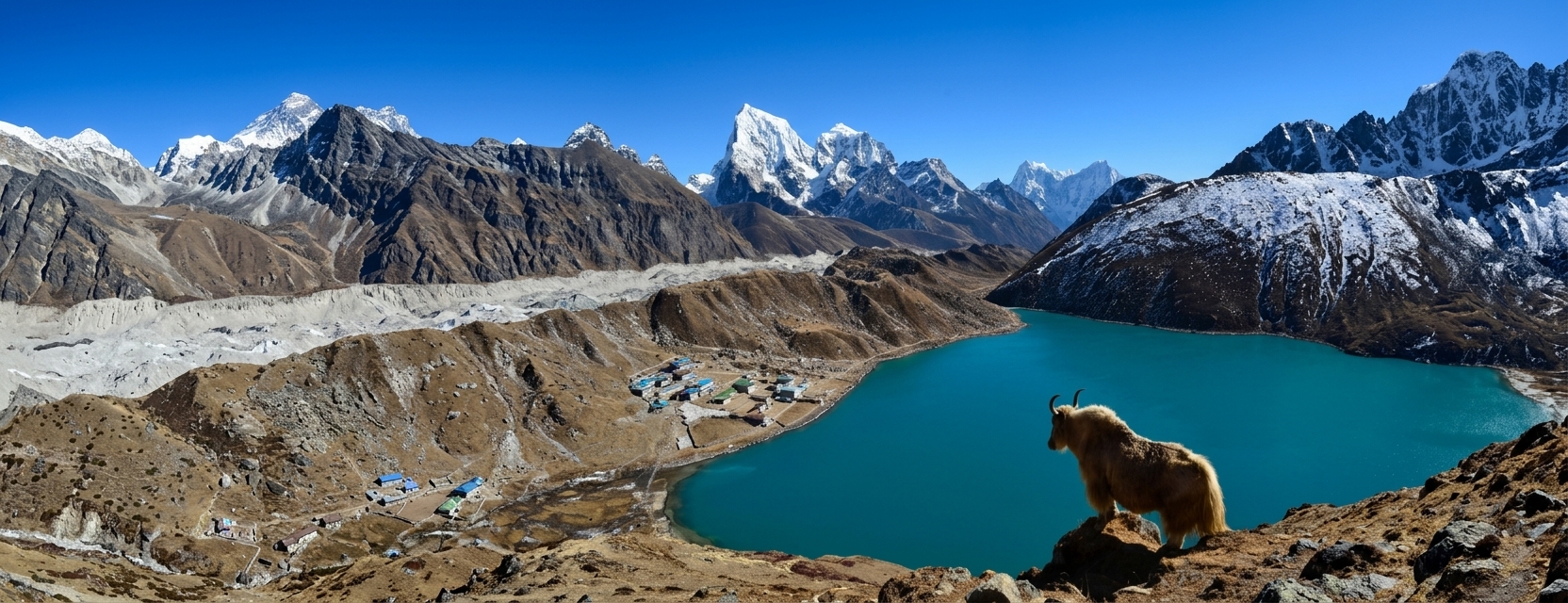
The 9-Day Everest Panorama Trek is all you want for your holiday. This trek offers panoramic views of the Himalayas from the Everest View Hotel, warm Sherpa hospitality, and the diverse landscapes of the Khumbu region. Beginner to experienced trekkers can join this trek and enjoy a Himalayan adventure.
Destination
Nepal
Duration
9 days
Difficulty
Easy
Activity
Trekking
Max Altitude
3867
Group Size
1
Accommodation
Hotel and Lodge
Meals
Breakfast, Lunch & Dinner
Transport
Flight
Trip Highlights
Stunning Mountain Views: Witness breathtaking Himalayan views, including Everest, Ama Dablam, Lhotse, and many other surrounding peaks.
Thrilling Flight to Lukla: Enjoy a scenic flight to Lukla, which offers stunning aerial views of the Himalayas, green hills, and valleys.
Tengboche Monastery: Explore the ancient monastery in Tengboche, which is the largest in the Khumbu region.
Cultural Immersion: Interact with local Sherpas to learn about their unique culture and traditions, and explore the village.
Scenic Trails: Walk through picturesque trails that wind through valleys, along rivers, and past terraced fields, offering a varied trekking experience.
Everest Panorama Trekking Overview
The Everest Panorama Trek, also known as the Everest View Trek, is a short, scenic trek in the Everest region. This trek is designed for those who want to experience the magnificent beauty of the Everest region without long days of walking on the trail.
The Everest Panorama Trek is a perfect combination of trekking and sightseeing, offering views of Everest along with other breathtaking peaks like Ama Dablam, Lhotse, and Thamserku. It leads you into nature and local communities, giving you a rich experience of unique cultures.
Enjoying a thrilling flight to Lukla, the gateway to the Everest region. As you navigate through charming Sherpa villages, such as Namche Bazaar and Tengboche, you are immersed in the local culture and hospitality. The trek reaches approximately 3,800 meters (12,467 feet) at Tengboche, offering panoramic views of iconic mountains such as Mount Everest, Lhotse, Thamserku, and Ama Dablam.
The trail features a mix of well-maintained paths and rugged terrain, making it suitable for trekkers with moderate fitness levels.
Beyond acclimatization opportunities, stunning flora, and the option to visit ancient monasteries, the Everest Panorama Trek is not just a physical challenge that strains trekkers; it is also a spiritual journey.
Boundless Adventure will craft an itinerary based on your requirements and provide an experienced guide, accommodations, trekking gear, and all required paperwork for your trek.
Everest Panorama Trekking Cost
The cost of the Everest Panorama Trek varies based on several factors, including trip length and desired level of luxury.
At Boundless Adventure, your trekking cost includes permits, accommodation, meals, transportation, and returnable trekking equipment.
Choosing luxury services or extending your trek will incur additional expenses. We also provide guide and porter services for an extra charge. Our itineraries can be customized to fit your preferences.
For a flexible itinerary and an accurate cost estimate for the Everest Panorama Trek, please get in touch with us via WhatsApp at +977 9851033819.
Why Choose the Everest Panorama Trek?
Moderate Difficulty
The Everest Panorama trek is considered moderately difficult. The trek reaches an elevation of around 3,800 meters (12,467 feet) at Tengboche, which is lower than the elevation on the Everest Base Camp trek—walking on the well-maintained path of the Everest. This trek doesn't require technical climbing skills, making it suitable for a wider range of trekkers. Walking for 4-6 hours daily on the peaceful trail offers stunning views of the Himalayas, including Ama Dablam and Everest.
Shorter Duration
The trek requires 4-6 hours of daily trekking for 9-12 days in the Everest region. Compared to the Everest Base Camp trek, the Everest Panorama trek is shorter and offers stunning views of the snow-capped Himalayas. This trek is a perfect option for those who seek short trekking days in the Everest region.
Breathtaking Himalayan Vista
The Everest Panorama trek offers one of the most stunning views of the World's highest peaks, including Everest, Ama Dablam, Lhotse, and some other surrounding peaks. Trekking through green forest trails and along glacial rivers, with stops at local Sherpa communities, this trek offers a great experience.
Cultural Experience
Trekking through local Sherpa communities in the Everest region offers trekkers rich cultural experiences. Immerse yourself in the local Sherpa culture, traditions, and hospitality. On the trail, you'll encounter mani walls, prayer flags fluttering in the wind, and ancient monasteries such as Tengboche Monastery that reflect the cultural and spiritual beliefs of the local people.
Family Friendly
This trek is considered short and easy compared to the Everest Base Camp trek, making it suitable for families to explore this region. The trail is comfortable, and trekkers don't require any technical climbing skills. Families can trek in this region and enjoy the magnificent views of the Himalayas.
Diverse Flora and Fauna
Walking through Sagarmatha National Park allows trekkers to experience and observe the unique flora and fauna of the Everest region. Trekkers can spot unique wildlife such as the Himalayan thar, yak, musk deer, bears, red panda, and other rare species. In Spring, the colorful rhododendron and other wildflowers make the trail vibrant.
Lower Cost
The Everest Panorama Trek costs less than the Everest Base Camp trek because it is shorter. A shorter duration means lower logistical costs, making it more cost-effective and suitable for budget-conscious travelers.
Photography Opportunities
The stunning landscapes and breathtaking views of the Himalayas in the Everest region are ideal for photography enthusiasts. Golden sunrises and sunsets over the white, snow-capped Himalayas are breathtaking. During clear weather, the views catch every trekker's eye and stun them.
Acclimatization
The trek features a gradual ascent, which supports acclimatization and reduces the risk of altitude sickness. Trekkers can enjoy the journey without the extreme altitude challenges faced in longer treks.
Day-to-Day Short Itinerary
Day 01Kathmandu Arrival (1380 Meters)1,400m~0.25 hrs
Day 02Fly to Lukla by plane and trek to Phakding (2652 Meters)2,860m~0.75 hrs
Day 03Trek to Namche Bazaar (3440 Meters).3,440m~5 hrs
What is included in this trek package?
What's Included
We provide pickup and drop-off for private cars, vans, or buses.
Three meals a day (breakfast, lunch, and dinner) during the trek.
A cup of tea or coffee with every meal.
Accommodations during the trek.
experienced and English-speaking Guide
Food, accommodation, salary, equipment, and insurance for the guide and Porter.
The flight to Lukla is one of the most thrilling and adventurous flights in the Everest region. This flight offers one of the best aerial views of the Himalayas, featuring lush green hills and stunning valleys. The flight takes off from Kathmandu's domestic airport. Early-morning flights to Lukla offer spectacular views of majestic peaks and lush valleys, allowing you to see some of the world's highest mountains from the air.
The approach to Lukla Airport (Tenzing-Hillary Airport) is particularly thrilling due to its challenging landing conditions: a short runway nestled in the mountainous terrain that adds an adrenaline rush to your journey. Weather conditions may affect the flight, so plan the itinerary carefully.
This flight not only marks the beginning of your trekking adventure but also offers insights into the lifestyles of the people living in the mountainous regions, showcasing terraced fields, small villages, and river valleys below.
The Everest Panorama Trek won't reach elevations above 4,000 meters, but proper acclimatization is essential for physical safety. As you reach 2500 m, the risk of altitude sickness may occur, which requires good physical strength.
We have an acclimatization day upon arrival in Namche Bazaar. Today, you explore Namche and the surrounding areas and rest your body. The acclimatization day is more than just adapting to the changing temperature; it is also a unique opportunity to enjoy the beauty of the Everest region.
Additionally, the acclimatization day allows you to interact more effectively with residents.
The Everest Panorama Trek is generally considered moderate in difficulty, making it accessible to a wide range of trekkers. The trail is well-maintained, and trekking on an uneven and rocky path leads you to the scenic place of Everest.
The Trek reaches an elevation of around 3,800 meters (12,467 feet) at Tengboche, which is lower than the elevation on the Everest Base Camp trek. This altitude helps reduce the risk of altitude sickness, but some acclimatization is still necessary. The Trek typically lasts 9-10 days, and you'll walk 4-6 hours per day, depending on the itinerary. You'll need some physical and mental strength.
Weather conditions in the Everest region can be unpredictable, with potential rain, snow, and temperature fluctuations. Trekkers should be prepared for changing weather and pack accordingly.
Overall, the Everest Panorama Trek offers a rewarding experience for trekkers seeking stunning views and cultural immersion without the extreme challenges of higher-altitude treks. With proper preparation and a positive mindset, trekkers of varying skill levels can complete this adventure.
The best seasons for trekking in the Everest region are spring (March-May) and autumn (September-November). Both of these seasons offer stunning views of Everest and the surrounding peaks.
Spring (March-May)
The spring season is best for trekking in Nepal. During this season, most trekkers prefer to trek in the Everest region. The weather during this season is stable with moderate temperatures. Daytime temperatures can range from 10°C to 20°C (50°F to 68°F) at lower elevations. The hills and trails are colourful after the rhododendron and other wildflowers bloom. The clear sky offers excellent visibility of the Himalayas, enhancing the trekking experience.
Autumn (September-November)
The most popular and busiest season for trekking in the Everest region, autumn offers crystal-clear views of the Himalayas. This season offers postcard-perfect views. Autumn offers clear skies and mild temperatures, with daytime highs ranging from 10°C to 15°C (50°F to 59°F). Nights can be chilly, especially at higher altitudes. During this season, local festivals such as Dashain and Tihar take place, allowing trekkers to experience Nepalese culture and traditions.
Others Season
Winter (December to February)
While trekking is possible during winter, it can be quite cold, with snow and icy conditions making trails more challenging. This season is less popular due to harsh weather.
Monsoon (June to August)
The monsoon season brings heavy rainfall, which can lead to slippery trails, landslides, and poor visibility. This is generally not recommended for trekking.
Eating healthy and sleeping in a comfortable bed are essential during the Everest Panorama Trek. In the city/lower areas, the food and accommodation are good and comfortable. You'll have a variety of food options, including authentic Nepali dishes and international cuisine, so that you can enjoy every bite. For bedding, you'll get a private room with an attached bathroom (options) and all modern amenities.
As you trek farther toward Lukla and Namche, the food and accommodations become basic yet comfortable. You may try authentic Sherpa dishes, including Thenduk, Rilduk, Thukpa, Momo, and various hot soups.
The food items you'll get in the Everest Panorama Trek are as follows, according to the menu.
Traditional Nepali Meals.
Tibetean Bread
Hot Soups
Momo
Noodles
Chowmein
Pizza
Coffee/ Tea
Vegetable
Seasonal fruits and many other available items
Whether you stay in a 3-star Hotel or in local teahouses, you'll be eating warm and freshly cooked food and experience the warm and loving hospitality of Nepalese people.
For trekking in the Everest region, trekkers must obtain the following permits, but they are included in the packages.
Sagarmatha National Park Entry Permit
Khumbu Rural Municipality Permit
Trekker's Information Management System Permit (TIMS)
All of these permits can be obtained from the Nepal Tourism Board office in Kathmandu. Allow your trekking agency to arrange all the required permits and other paperwork.
Carrying all the necessary gear in the 9-day Everest Panorama Trek is essential. Here's a list of essential items to pack for the 9-day Everest Panorama Trek:
The Everest Panorama Trek is in Nepal's Everest region. The trek is in the Solukhumbu district and surpasses Sagarmatha National Park. It is a short trek that takes you around the Khumbu region and doesn't involve high-altitude trekking, including at EBC.
Every trekking destination, including the Panorama Trek in the Everest region, begins in Lukla. You'll take a flight from Kathmandu's domestic airport to Lukla Airport in the Solukhumbu district.
The highest place you'll get on the Everest Panorama trek is Tengboche, lying at an elevation of 3860 m (12660 ft) above sea level.
Yes, to start the Everest Panorama trek, trekkers must fly from Kathmandu to Lukla. The trek is only possible after reaching Lukla Airport. The 45-minute flight from Kathmandu to Lukla offers an aerial view of Nepal's distinctive landscape.
Yes, the Everest Panorama trek is one of the most convenient and easiest ways to see Mount Everest without involving hiking through high-altitude terrain. We designed the Everest Panorama trekking package for those seeking to experience the Everest region and want to see Mount Everest, with less physical demand.
The Everest View Trek is the same as the Everest Panorama Trek, which is a short route in the Everest region. The trek is suitable for those with limited time. It is also ideal for trekkers who can't reach higher elevations but want to see Mount Everest.
The Everest View Trek is located in the Khumbu region, near the Tibetan border. The trek passes through Sagarmatha National Park and lies within the Pasang Lhamu Village Development Committee.
Yes, the close view of Mount Everest is visible on the Panorama Trek. The Everest Panorama Trek is popular because it offers views of Mount Everest with minimal physical demands.
Of course, Panorama Trek is indeed a family-friendly trekking package. As the trek doesn't reach higher elevations than other trekking destinations, including EBC, family members with a general fitness level and comfortable with moderate trekking can join.
Trekking Difficulty FAQs
The trek can be moderate to challenging, depending on trail conditions and altitude.
Trekkers usually spend 6 to 8 hours on the trail each day.
Yes, the Everest Panorama Trek is suitable for beginners too. Good experience and trekking skills are beneficial before the trek.
Yes, altitude sickness is common due to the trek's elevation gain, but proper acclimatization reduces the risk.
If you experience symptoms of altitude sickness, it's essential to descend to a lower altitude and seek medical attention if necessary.
No, you do not require technical climbing skills. You will walk along a high-altitude, rugged yet comfortable trail that is quite challenging for beginners.
Travel and Logistics FAQs
Porters can be hired in Lukla or Kathmandu through local trekking agencies.
A porter typically carries 25–30 kg per person, depending on the arrangement.
Yes, hiring a guide or porter is mandatory when trekking in the Everest region. They help you carry your baggage, navigate the area, communicate with locals, and respond in an emergency.
They assist with navigation, communication, safety, and emergencies. They ensure your safety and assist as needed during the trekking days.
Most licensed trekking guides in Nepal are fluent in English, and some also speak Spanish, French, German, Chinese, or Japanese, depending on their experience and training.
Yes, reputable agencies provide full insurance for the guide and porters.
10–15 kg per passenger (varies by airline and season; excess baggage may incur additional charges).
Flights are often cancelled due to weather. It's recommended to allow extra days in Kathmandu or Ramechhap to account for potential delays.
Cost FAQs
The cost of the Everest Panorama trek ranges from US$900 to US$ 1,180, depending on group size. Furthermore, the cost varies based on factors such as the trek duration, included services, and any luxury services you prefer.
In general, your cost covers accommodation, permits, a guide, airfare from Kathmandu to Lukla and back, and some returnable gear and equipment.
Generally, the cost of a one-way flight to Lukla ranges from USD 290 to USD 310, depending on your nationality (excluding Indian nationals). However, Boundless Adventure arranges your round-trip flight to Lukla, and the cost is included in your trekking package; you won't be charged extra.
Daily Trekking Details FAQs
Typically, hike 10 to 15 kilometres daily, approximately 6 to 9 miles. Trekking would require 5 to 8 hours, depending on the itinerary and terrain.
Solo trekking is allowed, but it's generally better to have a friend accompany you or hire a guide. It gets tough sometimes, but two heads are sometimes better than one when the issues of the trek become too overwhelming.
Solo travel is possible, but it is preferable to have a locally employed guide or porter for safety, guidance, and support. Most trekkers prefer a guide because it adds significant value to the experience, particularly through cultural and geographical insights.
Permits and Travel Insurance FAQs
You need to carry the following permits. TIMS card, or Trekking Information Management System Sagarmatha National Park permit Khumbu Pasang Lhamu Rural Municipality Entrance Permit These are normally obtained in Kathmandu, though sometimes at the park entrance.
Yes, if you want a stress-free trek, your travel agency will arrange permits for you. Submit your passport and photos to the agency, and they will handle the process for you.
Booking and Cancellation Process FAQs
You can book the trek through a trekking agency like Boundless Adventure, either online or upon arrival in Nepal.
It is recommended to book your trek at least 2-3 months in advance, especially during peak trekking seasons (spring and autumn), to ensure availability and secure the best accommodations.
Date changes may be possible depending on availability. Communicate with the agency and confirm your dates.
Cancellation policies vary by agency and season. Charges may apply depending on how close the cancellation is to the departure date.
Yes, last-minute reservations are accepted, but it's advisable to book in advance during peak seasons.
Visa Procedure FAQs
Yes, most travellers require a visa to enter Nepal. You can obtain a visa on arrival at Kathmandu's airport or apply for an e-visa online before your trip.
To apply for a visa to Nepal: On Arrival: Fill out the visa application form at the airport, provide a passport-sized photo, and pay the visa fee in cash. E-Visa: Visit the official Nepalese government website to apply for an e-visa. You will need to upload a passport-sized photo and pay the visa fee online.
Yes, your passport should be valid for at least six months beyond your intended date of entry into Nepal.
Yes, you can extend your visa at the Department of Immigration in Kathmandu or Pokhara. Extensions are subject to approval and may incur additional fees.
Food and Accommodation FAQs
Meals served in teahouses include dal bhat, other typical Nepali dishes, and Western options such as pasta and soups. Most of these vegetarian meals would have been available, so please eat well.
No, you can expect basic food on the trek. But in city areas like Kathmandu, you can get a broad range of continental food options. Namche Bazaar also offers them, but in a limited range.
Yes, you can find vegan options while trekking, but they will be very limited. You need to provide advance notice to secure better food options.
Accommodations along the route are primarily teahouses offering basic room service; bathroom facilities are shared. A few charge extra for hot showers, and a few even have Wi-Fi access.
Most teahouses along the trek route have WI-FI, at least in larger villages like Namche Bazaar. But perhaps it may not be great, may not be as fast as one would like, and will certainly cost.
Cultural Consideration FAQs
Respect local customs, dress modestly, and ask permission before taking photos of people. Always greet locals with a smile.
Learn a few basic phrases in Nepali, be polite, and show appreciation for their culture and traditions.
Always ask for permission before taking photographs, especially in religious or culturally sensitive areas.
Yes, festivals such as Mani Rimdu (October/November) at Tengboche Monastery are celebrated and offer cultural insights. You can also witness Dashain, a major festival in Nepal, if you travel from September to November.
Preparation and Packing FAQs
Essential items include trekking boots, warm clothing, a sleeping bag, a water purification system, and a first aid kit.
Yes, it is recommended to bring a sleeping bag for added comfort, especially during colder nights.
Good-quality trekking boots, trekking poles, warm layers, a waterproof jacket, and a hat are essential.
ATMs are not available along the route, so you must carry cash. Most local shops along the trail may not offer mobile banking payment services.
Yes, we will issue a certificate to recognize your remarkable dedication to completing the Everest Panorama Trek.
Let's Plan Your Trip Together
Tell us what you're looking for, and we'll help you shape a journey around it.
Diverse Flora and Fauna: Trekking through Sagarmatha National Park features dense rhododendron forests and a variety of wildlife, including Himalayan pheasants and numerous bird species.
Less Crowded Paths: Enjoy a more serene trek with fewer crowds than the Everest Base Camp route.
Acclimatization Opportunities: Gradual ascent allows for proper acclimatization, making the trek suitable for a wider range of trekkers.
Day 04
Acclimatization to Everest viewpoint, Khumjung monastery and return to the Namche Bazaar
3,800m
~3 hrs
Day 05Trek to Tengboche (3860 Meters )3,860m~5 hrs
Day 06Return to Namche Bazaar.3,440m~5 hrs
Day 07Trek to Lukla, (2860 Meters)2,860m~6 hrs
Day 08Fly back to Kathmandu by plane1,400m~0.75 hrs
Day 09Departure to the international Airport by vehicles.1,400m~0.25 hrs
Lukla Flight Information
During peak trekking months (March, April, May, October, and November), flights to Lukla often depart from Ramechhap (Manthali) instead of Kathmandu because of airport traffic. In this case, you'll need to leave Kathmandu around 12:30 a.m. for a five-hour drive to catch your flight from Ramechhap on the trek departure date. Outside of peak seasons, flights usually operate directly from Kathmandu. Flights between Kathmandu and Lukla can be delayed due to weather, so adding at least two extra days to your trip is a good idea to avoid missing your international flight home.
Note
We recommend you arrive at Kathmandu by three pm at least one day before the trek departure date for last-minute preparations.
Detailed Itinerary
Everest Panorama Trekking is renowned for it's Everest family trekking and Everest view trekking. Everyone can complete it quickly, even while trekking with family and children.
However, the trek starts from Lukla Airport in Khumbu and continues to Phakding overnight. We'll continue to Namche Bazaar the following day via the Jorsalle check post and the Dudh Koshi River.
Three thousand eight hundred meters is the highest place for trekking; you can travel with your children and senior citizens. However, we can customize the Everest Panorama Trekking itinerary to fit your holiday. You may have checked out the detailed itinerary for the Panorama trip below.
Day 01
Kathmandu Arrival (1380 Meters)
Kathmandu Metropolitan City
Max Altitude
1,400m
Duration
0.25 hrs
Transport
Private vehicle
Meals
Meals Not Included
Welcome to Nepal. A Boundless Adventure company representative receives you at the international airport and transfers you to the Hotel. He will give a brief overview of the programs for the following days. Overnight at the Hotel in Kathmandu. Note: You can obtain a local SIM card and exchange money at the international airport.
Accommodation
Hotel
Day 02
Fly to Lukla by plane and trek to Phakding (2652 Meters)
Drive to the domestic airport early in the morning and fly to Lukla. For the group, the other crew will join from here. The gentle trek begins on the trail that lies above the Dudhkoshi River. On the way, the barley and buckwheat fields can be seen as marvelous, and Phakding can be reached overnight at the lodge.
Accommodation
Hotel
From Phakding, the trail passes Manju and Jorshalle, then switchbacks up to Namche Bazaar through rivers and forest; however, it is in the Sherpa-populated highlands. This takes you through the entrance of Sagarmatha National Park. Namche is a hugely populated town in Khumbu. Overnight at the Hotel.
Accommodation
Hotel
Breakfast, Lunch, and Dinner Included
Acclimation is essential for trekking at higher altitudes. The day begins after breakfast with a visit to Namche Bazaar, Khumjung Monastery, Sagarmatha National Park, and the Everest Viewpoint. It will be the first view of Mount Everest. The spectacular views of MT. Everest, Ama Dablam, Thamserku, and other unnamed peaks welcome you with pleasant smiles. Have Lunch at the Khumjung and return to the Hotel throught the Yak Farm.
Accommodation
Hotel
The trail from Namche looks steep initially, but it becomes gentle as you reach the top of the ridge. The impressive views of Ama Dablam, Lhotse Shar, Taboche, Kangtega, and Thamserku can be explored during the trek. After passing Kyangjuma and Phunki Tenga, Tyangboche is the next overnight stop at the lodge.
Accommodation
Hotel
It's a gentle day to farewell Tyangboche, leaving this spiritual environment after breakfast. It does not matter in the beginning. Quite late. With a gradual trek down from Tyangboche, pass Phunki Tenga, and ultimately to the Namche Bazaar, explore the outstanding landscape, flora, and fauna overnight at the lodge.
Accommodation
Hotel
Breakfast, Lunch, and Dinner Included
On the last day of the foothill journey in the mountains, trek down to Phakding via Manju. After crossing a few suspension bridges, head towards Lukla through the gentle trail and check into the Hotel. Lukla is 2860 m high. Overnight at the Hotel or resort.
Accommodation
Hotel
The flight takes off in the morning. You bid farewell to the inspiring white peaks that have made your trek outstanding. From the airport, transfer to the Hotel and take a rest. The time is for your purpose. You may buy souvenirs for your family and friends. Overnight at the Hotel.
Accommodation
Hotel
Breakfast Included
Our representative will drop you off at the international airport after breakfast on your departure. The latest check-out from Hotel is 12:00 Hours. Thank you for allowing us to serve you. Have a pleasant trip ahead.