Newsletter

Subscribe To Our Newsletter

Quick Links

  • About Us
  • Why Boundless Adventure
  • Company Documents
  • Banking Details
  • Customize Trip
  • Contact Us
  • Volunteering in Nepal

Top 5 Treks

  • Annapurna Base Camp Trek
  • Everest Base Camp Helicopter Tour
  • Everest Base Camp Trek
  • Manaslu Circuit Trek
  • Upper Mustang Jeep Tour
  • Langtang Valley Trekking
  • Upper Mustang Trek

Useful Links

  • Travel Blog
  • Trekking Routes Map
  • Testimonials
  • Privacy Policy
  • Terms of Conditions
  • Compare Itineraries

Nepal (Head Office)

Business: +977 14701884|+977 1 4701885
Mobile: +977 9851033819
info@boundlessadventure.com

Thamel Kathmandu, Nepal

P.O. Box No. 11670

Australia

+61 426 378 149 (WhatsApp)sales@boundlessadventure.com

Japan

+81 80 4107 0813 (WhatsApp)boundlesstrek@gmail.com
Nepal Tourism Board, TAAN, NMA, and KEEP certification marksAccepted payment methods: American Express, Mastercard, Visa, UnionPay, and Google Pay

© Boundless Adventure Pvt. Ltd. 2026 All content, including photos, is owned by Boundless Adventure. Unauthorized use is prohibited.

Nepal Govt. Regd. No: 88177/068/069 | Tourism Regd. No: 1509 | Since 1992

Contact
+977 9851033819Plan with us
HomeNepalEverest Base Camp Trek with Helicopter Return
OverviewItineraryIncludesExcludesCostMapGearKnow before you goReviewsFAQs

Everest Base Camp Trek with Helicopter Return

0.00 reviews
9:24
The Everest Base Camp Trek with Helicopter Return is a 10-day guided trek to Everest Base Camp, including a helicopter return. During this trek, you reach Kala Patthar after Everest Base Camp with a helicopter flight back from Gorakshep to Kathmandu. Everest Base Camp Trek with Helicopter Return is designed for those who want the full Everest trail experience without spending extra days walking back down the same route. You walk through Lukla, Phakding, Namche Bazaar, Tengboche, Dingboche, Lobuche, Gorakshep, Everest Base Camp, and Kala Patthar. Then you return by helicopter from Gorakshep to Kathmandu. The standard itinerary uses a helicopter flight from Gorakshep to Kathmandu. The helicopter usually refuels in Lukla before continuing to Kathmandu. You can also request a lower-cost option from Gorakshep to Lukla, then take a regular flight onward to Kathmandu or Manthali, based on the season and flight operation.
Destination
Nepal
Duration
10 days
Difficulty
Moderate
Activity
Trekking
Max Altitude
5555
Group Size
1
Accommodation
Hotel
Meals
Breakfast, Lunch & Dinner
Transport
Helicopter
Start & End Point
Kathmandu
Best Seasons
Mar-Jun and Sep-Dec

Trip Highlights

  • Everest Base Camp: Standing in front of the world's highest peak, Sagarmatha, is one of the most incredible memories.
  • Sunrise at Kalapatthar: A beautiful viewpoint that offers stunning panoramic golden sunrise views over the white snow-capped Himalayas.
  • Breathtaking Himalayan Views: Witness the Himalayas, including Everest, Ama Dablam, Lhotse, Nuptse, and other surrounding peaks.
  • Sagarmatha National Park: Walking along the scenic trails of the UNESCO World Heritage Site allows trekkers to enjoy the beauty of its flora and fauna, wild animals, and green environment.

Everest Base Camp Trek with Helicopter Return Overview

The Helicopter Return from Everest Base Camp trek combines the classic walking route to Everest Base Camp with a faster helicopter return from the high Himalayas.

You start with a flight to Lukla. Then you trek through Sherpa villages, forests, suspension bridges, monasteries, glacial valleys, and high-altitude settlements.

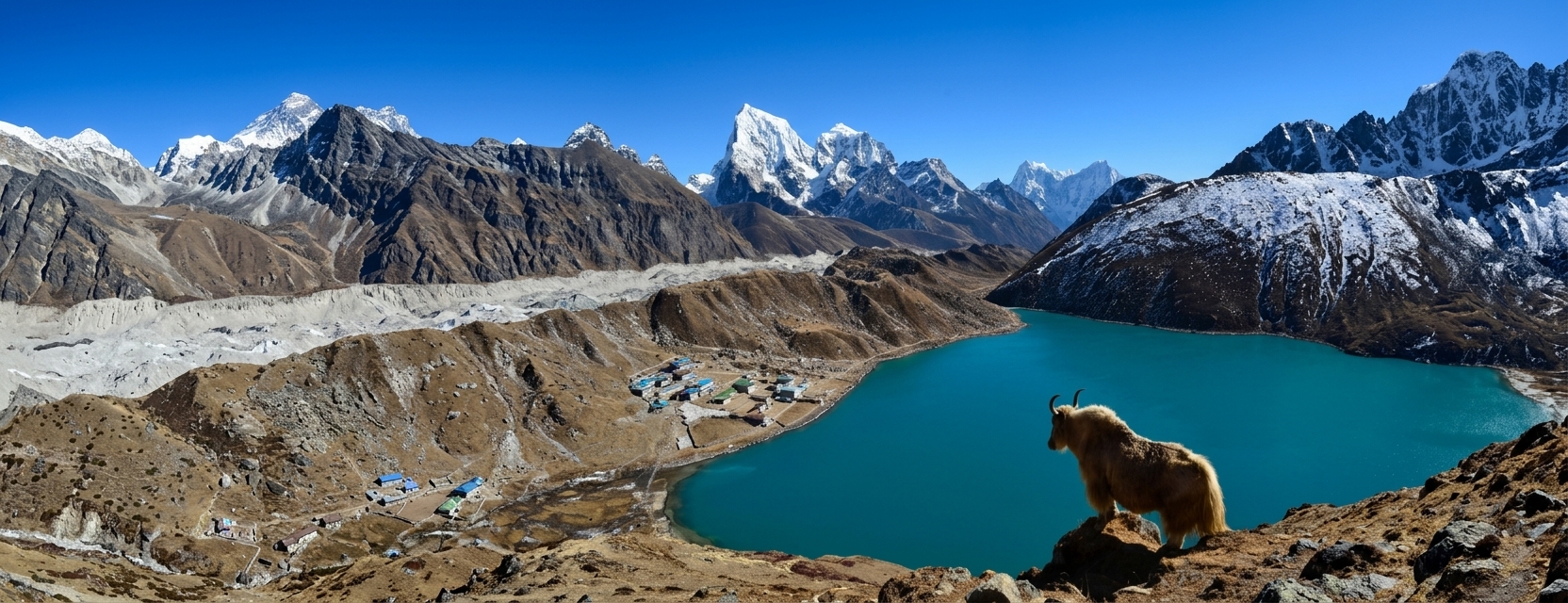
You reach Everest Base Camp and sleep at Gorakshep. Early the next morning, you hike to Kala Patthar for close views of Everest, Lhotse, Nuptse, Pumori, and the Khumbu Glacier.

After Kala Patthar, your guide takes you to the helicopter take-off point at Gorakshep. The main return route flies from Gorakshep to Kathmandu. The helicopter may stop in Lukla for refueling before continuing to Kathmandu.

What Makes This Trek Different

The normal Everest Base Camp trek takes more days because you walk back down to Lukla after reaching Base Camp. This itinerary shortens the return by using a helicopter after the main trekking goal is complete.

You still walk the real Everest trail. You still visit Namche Bazaar, Tengboche, Dingboche, Lobuche, Everest Base Camp, and Kala Patthar. You only skip the long return walk after Gorakshep.

Who This Trek Is Best For

This trek is best for travelers who:

  • Want to reach Everest Base Camp on foot

  • Want to see the sunrise from Kala Patthar

  • Have limited vacation time

  • Prefer a faster return from high altitude

  • Want a guided trek with daily health checks

  • Want helicopter views of the Khumbu region

  • Prefer a premium finish after days on the trail

This trek is not a shortcut to Base Camp. You still need good fitness, patience, and respect for altitude.

Quick Facts for the EBC Trek with Helicopter Return

The EBC Trek with Helicopter Return gives you the main Everest trail, Kala Patthar views, and a faster helicopter return after reaching Gorakshep.

Trip Fact

Details

Destination

Nepal

Region

Everest Region

Duration

10 Days

Trek Type

Guided trek with helicopter return

Main Return Route

Gorakshep to Kathmandu by helicopter

Alternate Return Option

Gorakshep to Lukla by helicopter, then flight onward

Maximum Altitude

5,555m at Kala Patthar

Trek Difficulty

Moderate to challenging

Daily Walking

Usually 5 to 7 hours on trekking days

Start Point

Kathmandu

Trek Start

Lukla

Trek End

Gorakshep

Final End Point

Kathmandu

Meals During Trek

Breakfast, lunch, and dinner

Accommodation

Hotels and teahouses

Best Seasons

March to May and September to December

Group Size

Minimum 1 person

Route Snapshot

Kathmandu → Lukla → Phakding → Namche Bazaar → Khumjung or Everest View area → Tengboche → Dingboche → Lobuche → Gorakshep → Everest Base Camp → Kala Patthar → Helicopter to Kathmandu

Best For and Not Best For

Best For

Not Best For

Travelers with limited time

Travelers who want the cheapest EBC trek

Trekkers who want to walk to Base Camp

People who want to avoid trekking

Photographers and couples

Travelers without high-altitude insurance

Private groups and families

Travelers with poor fitness preparation

Trekkers who want a faster return

Travelers who cannot handle basic teahouse stays

Everest Base Camp Trek with Helicopter Return Cost and Package Options

The cost of the Everest Base Camp Trek with Helicopter Return depends on the helicopter landing point, group size, season, porter service, room preference, and final package inclusions.

The main itinerary includes a return helicopter flight from Gorakshep to Kathmandu. Boundless Adventure can also quote an alternate option from Gorakshep to Lukla. The Lukla option may reduce helicopter cost, but it still needs an onward flight plan to Kathmandu or Manthali.

Package Option

Return Route

Best For

Main Heli Return Package

Gorakshep to Kathmandu by helicopter

Travelers who want the fastest return after Kala Patthar

Alternate Heli Return Package

Gorakshep to Lukla by helicopter, then flight onward

Travelers who want a lower helicopter cost or a flexible flight plan

Private Custom Package

Gorakshep to Kathmandu or Lukla, based on the quote

Couples, families, photographers, and private groups

Porter Add-On

Porter service during the trek

Travelers who want lighter walking days

Extra Night or Upgrade

Kathmandu Hotel, lodge, or route customization

Travelers with comfort needs

Helicopter Return from Gorakshep to Kathmandu or Lukla

The helicopter return from Gorakshep can be planned to Kathmandu or Lukla, based on your package, budget, weather, seat availability, and helicopter schedule.

The main itinerary flies from Gorakshep to Kathmandu. The helicopter may stop in Lukla to refuel before continuing to Kathmandu. This option saves time and helps you finish the trek with a more comfortable return.

The alternate option flies from Gorakshep to Lukla. From Lukla, you need a regular flight connection onward. The final connection may depend on season, weather, airline schedule, and whether flights operate to Kathmandu or Manthali.

Option

Route

Main Difference

Best For

Main Return

Gorakshep to Kathmandu by helicopter

Fastest finish and fewer moving parts after the trek

Travelers with limited time

Alternate Return

Gorakshep to Lukla by helicopter, then flight onward

Lower helicopter segment, but needs onward flight planning

Travelers comparing cost

Custom Return

Route based on quote and weather

Flexible plan for private groups

Families, couples, photographers

Gorakshep to Kathmandu Helicopter Return

This is the main route for the 10-day itinerary. After Kala Patthar, you return to Gorakshep and reach the helicopter take-off point. The flight to Kathmandu usually takes about 1.5 hours, depending on the weather window. The helicopter may refuel in Lukla.

Choose this option when time matters most. It reduces the long return trek and avoids extra days of walking back to Lukla.

Gorakshep to Lukla Helicopter Return

This option takes you from Gorakshep to Lukla by helicopter. From Lukla, you need a regular flight connection onward. The final connection may depend on season, weather, airline schedule, and whether flights operate to Kathmandu or Manthali.

Choose this option when you want a lower helicopter segment cost and can accept extra flight logistics.

Weather, Seat, and Weight Limits

Helicopter flights in the Everest region depend on weather, visibility, wind, aircraft schedule, and safety clearance. The final flight plan may change if conditions are not safe.

Helicopter seat and weight rules also matter. The operator may split groups or adjust loading based on weather, altitude, and safety requirements.

What Happens During a Helicopter Delay

A delay can happen in the Everest region. Bad weather, wind, cloud, or airport congestion can affect flights.

When this happens, Boundless Adventure will coordinate with the helicopter provider and guide team. The team will update the plan based on safety, availability, and your onward schedule.


 

Day-to-Day Short Itinerary

Day 01Flight to Lukla and Trek to Phakding (2652 Meters)2,840m~0.67 hrs
Day 02Trek to Namche Bazaar (3440 Meters)3,440m~5 hrs
Day 03Explore at the Khumjung Monastery and return to the Namche Bazaar3,790m~5 hrs

What is included in this trek package?

What's Included

  • Pickup and drop-off at international and domestic airports by private car. (options)
  • Three meals a day during the trek (Breakfast, Lunch, and Dinner)
  • Sagarmatha National Park Permits.
  • Pasang Lhamu Rural Municipality entrance permit.
  • Kathmandu to Lukla by plane
  • A professional trekking guide.

Cost

Group Price Breakdown

Group SizePrice Per Person
1 - 5 people$1,340
6 - 9 people$1,280
10 - 15 people$1,210
View Map
STARTLukla2,840m
DAY 2Namche Bazaar3,440m
DAY 3Khumjung3,790m
DAY 4Tengboche3,870m
DAY 5Dingboche4,410m
DAY 6Nangkartshang

Know Before You Go

The Everest Base Camp Trek route helps you understand the walk from Lukla to Everest Base Camp, and the helicopter return from Gorakshep.

This route moves from the lower Dudh Koshi valley to the high Khumbu region. The terrain changes from forest and village trails to rocky alpine paths and glacial moraine. The helicopter return begins after the trek reaches its main goal.

Route Section

Altitude Focus

Route Note

Kathmandu to Lukla

1,400m to 2,840m

Scenic mountain flight

Lukla to Phakding

Lower trail

Easy first trekking day

Phakding to Namche

3,440m

Long climb after park entry

Namche acclimatization

3,440m to a higher viewpoint

Hike high and sleep lower

Namche to Tengboche

Around 3,870m

Monastery and mountain views

Tengboche to Dingboche

Around 4,410m

Higher altitude begins

Dingboche acclimatization

Above 4,410m

Health check and adjustment

Dingboche to Lobuche

Around 4,910m

Glacial valley terrain

Lobuche to Gorakshep and EBC

Around 5,140m and above

Base Camp day

Kala Patthar

5,555m

Highest viewpoint

Gorakshep to Kathmandu

Helicopter return

Main itinerary return

The Everest Base Camp Trek is considered a moderately difficult trekking route in the Everest Region and is suitable for both beginner and experienced trekkers with good physical fitness. 

The trekking trails are rocky, steep, and occasionally muddy, but they are well-maintained and marked, which helps you walk smoothly. On average, you'll walk for 5-7 hours over 5-7 days, which requires good physical endurance and stamina. 

The trek reaches a maximum altitude of approximately 5,364 m at the Everest Base Camp and Kalapatthar ( 5,545m). While this is extremely high compared to other treks in the region, altitude sickness is a concern. 

Proper acclimatization is highly essential. Stop in Namche and Dingboche to rest and acclimatize to the high-altitude weather and temperatures. 

Nutritious food and comfortable bedding are essential during trekking days in high-altitude regions. There are a variety of dining options, and private accommodations are available in the city. You'll get a private room with all modern amenities in the lower elevation or city areas while trekking in the EBC with a Helicopter Return. There are Wi-Fi, hot showers, and electricity for charging your electronic devices. Also, food options are plentiful. You'll get authentic Nepali cuisine along with some international cuisine too. 

As you trek higher toward Tengboche, Dingboche, and Gorak Shep, the food options and accommodation become limited. Staying at a local teahouse and eating there fosters a deeper connection with the local Sherpa people. The local teahouse serves authentic Sherpa dishes like Rilduk, Thenduk, momo, and other warm items that fill your heart. They also serve other food options, such as Tibetan bread, tea, coffee, yak milk, dal bhat, noodles, eggs, chapati, and more. 

For accommodation, you'll be sleeping in a warm, cozy room with a wooden bed, a mattress, a blanket, and a pillow. The accommodation is cozy but comfortable. Bathrooms are shared and squat-based. There are no hot showers or laundry facilities available. During peak season, you'll need to share a room with fellow trekkers, so plan your trek wisely. 

Although the food and accommodation facilities are basic, you'll experience the best hospitality of the Sherpa of Nepal. 

Trekking in the Everest region must be considered during the right season. Choosing the perfect season for trekking is not very hard for trekkers. The weather conditions, visibility, and trail accessibility can vary significantly throughout the year.  

Spring (March-May) and autumn (September-November) are considered the most loved seasons for trekking in the Nepal Himalayas. 

Spring (March-May) 

The Spring season is the best time for trekking to Everest Base Camp. During this season, the temperature is mild and comfortable for trekking in the Everest region trail. The trails are dry and comfortable. 

The temperature is moderate, with daytime highs around 15-20°C (59-68°F) in lower regions and colder at higher altitudes. Generally, during this season, the sky is clear, offering excellent visibility of the Himalayas and surrounding Hills and valleys. 

The trails in Sagarmatha National Park are covered with a variety of wildflowers, and the rhododendron forests are colorful after the bloom. The whole environment is colorful and bright, perfect for photography. Due to clear weather, the visibility of the Himalayas is so clear that you can enjoy the views from a distance. This season is also considered the busiest season for trekking. 

Autumn (September-November) 

Autumn is considered the busiest season for trekking in the Everest and other trekking regions. This season offers crystal-clear views of the Himalayas, Hills, and surrounding valleys. The temperature is comfortable and warm during the day, and nights are cooler as you gain altitude. 

Daytime highs range from 10-15°C (50-59°F) in lower areas, with colder temperatures at higher altitudes. The sky is clear, and the temperature drops as you ascend. 

After the monsoon season, the weather gets clear and crisp. The landscape is lush and green, and the Himalayas are visible in the distance. Most trails are crowded due to the large number of trekkers who choose to trek in the Nepal Himalayas this season. Also, during this season, the Dashain and Tihar, Nepal's biggest festivals, offer trekkers the chance to participate in and enjoy the country's rich culture. 

Monsoon (June-August) 

The monsoon season is the least favorable time for trekking due to heavy rainfall. The temperature is comfortable, but due to heavy rainfall, visibility of the Himalayan ranges is poor, and the risk of landslides is high, making trekking difficult. After rainfall, when the weather clears, this season offers the best views of the Himalayas and green, lush hills. Very few trekkers plan treks during this season. 

Winter (December-February)

The winter season is not recommended for trekking in the Everest region. The weather is harsh, visibility is very low, and all areas are shrouded in fog, with trails blanketed in snow, making walking difficult. The nighttime temperatures often drop below -10°C (14°F). Very few trekkers trek during this season with proper gear and a highly experienced guide. 

For trekking in the Everest region of Nepal, trekkers must obtain 3 permits. They are 

  • Sagarmatha National Park Entry Permit

  • Khumbu Rural Municipality Permit

  • Trekker's Information Management System

All these permits can be obtained from the Nepal Tourism Board office in Kathmandu. If you want stress-free trekking, let your trekking agency, Boundless Adventure, arrange all the permits and paperwork for you. 

Altitude Sickness occurs when you ascend to high altitudes (typically above 2,500 m) too quickly. Altitude sickness, also known as acute mountain sickness (AMS), can affect trekkers at high altitudes, including those on the Everest Base Camp trek (5,364 m). The reduced oxygen levels at higher altitudes can lead to various symptoms.

Symptoms of Altitude Sickness

  • Headache

  • Nausea or vomiting

  • Dizziness or light-headedness

  • Fatigue or weakness

  • Difficulty sleeping

  • Shortness of breath even at rest

  • Confusion or decreased consciousness

  • Persistent cough with pinkish sputum

  • Loss of coordination (ataxia)

Safety Measures

  • Gradual Ascent: Ascend no more than 300-500 meters (1,000-1,600 feet) per day above 3,000 meters (9,800 feet). Include acclimatization at Namche and Dingboche in your itinerary. It helps you adjust to a high-altitude region. 

  • Stay Hydrated: Drink 3-4 liters of water per day to maintain your energy during long trekking days in the Everest region. Avoid consuming alcohol or caffeine products, which can lead to dehydration in your body. 

  • Proper Acclimatization: Acclimatization is crucial when trekking in Nepal's high-altitude regions. If possible, hike to a higher elevation during the day and return to a lower elevation to sleep. Walking slowly and steadily helps your body adapt to high-altitude weather and climate.

  • Listen to Your Body: If you experience dizziness, nausea, vomiting, or a headache, stop and rest for a while. Recognize the symptoms of altitude sickness, and if symptoms worsen, descend quickly to a lower altitude. 

  • Eat Proper Nutrition: Eat high-carbohydrate foods to maintain energy levels and improve oxygen availability. Eat small, frequent meals rather than large ones. Also, always carry snacks in your bag. 

  • Medication: Always carry pain relief tablets and Diamox in your bag. Consult with your doctor before carrying these out. It helps to prevent AMS and headaches or discomfort during trekking days. 

  • Emergency Procedures: If you have difficulty breathing or experience severe altitude sickness, call for a helicopter evacuation. Ensure that your travel insurance covers these expenses. 

Trekking in the Everest region can be done solo or in a group. This all depends on your choice. If you are an experienced trekker and have good knowledge about high-altitude trekking, you can go for a solo trek. But if you are a beginner or a seasonal trekker, we suggest you hire an experienced guide who helps you during trekking days in the Everest region. 

Solo Trek 

Solo trekking in the Everest region is allowed. Solo trekking allows trekkers to set their own pace and customize their itinerary to suit their needs. It enhances the trekking experience by allowing you to connect with nature and enjoy the Himalayan views independently. 

Since this is a solo trek, you save on the cost of a guide and porters, although you will still need to budget for permits and accommodations. If you are an experienced trekker, solo trekking adds adventure and thrill to the journey. Although solo trekking is adventurous and Fun, it has some cons too, such as safety risks, limited knowledge of the region, and limited support during the trek. 

Guided Trek

Guided trekking helps trekkers trek safely in the Everest region, and in emergencies, guides help trekkers recover. Porters carry your heavy gear so you can enjoy nature. An experienced guide knows the region, local flora and fauna, Sherpa culture, and traditions, and helps interact with the locals. Also, they navigate the trail so you can trek safely in the Everest region. 

Guide handles all your permits, accommodations, and food arrangements so that you can trek freely without any stress. It also has cons like high cost, less flexibility, and group dynamics, but guided trekking helps you enjoy the Himalayas in every possible way.  

Choosing between a solo trek and a guided trek depends on your experience level, comfort with high-altitude trekking, and personal preferences.

Last-minute booking for the EBC trek with Helicopter Return is available, but it costs more than regular departure date trip packages. Actually, those who approach us for last-minute bookings may need to pay an additional amount on top of the trip cost listed on our website. 

You can easily book your desired trip on our website, even just a day before it starts. If you find yourself delayed in making your reservation, don't worry; you still have options, and we will do our utmost to ensure your trip is as successful and memorable as any of our regular excursions.

With Boundless Adventure, you can enjoy the thrill of the EBC Trek with Helicopter Return while concluding your journey in comfort and style. Feel free to click the booking button at the last minute; we are always ready and eager to help organize your adventure in Nepal!

When trekking to Everest Base Camp with a Helicopter Return, understanding and respecting local culture and customs is essential to fostering positive interactions with the Sherpa people and other locals. Here are some important cultural etiquette tips to keep in mind:

  • Always greet the locals, say "Namaste," and bow your head. Greet them with a smile and be friendly. 

  • Wear a fully covered dress while trekking through the local Sherpa villages. Especially while travelling to monasteries and temples, cover your body with appropriate clothes and visit. 

  • Ask before clicking photos of the temple, monasteries, and people, too. Be mindful not to intrude on private moments or sacred rituals.

  • Remove your shoes before entering the temple, monastery, or even the local teahouses. Walk clockwise around stupas and prayer wheels. 

  • Always eat food with your right hand. And if a local offers you food, wait for your host to begin eating first. 

  • Familiarize yourself with local customs and practices. For instance, the Sherpa people have unique traditions and beliefs that should be respected.

  • When interacting with locals, smile and use polite language and gestures. 

Carrying the right gear for the 10-Day EBC Trek with Helicopter Return is essential. Here's a list of essential items to pack for the 10-day Everest Base Camp Trek with Helicopter Return:

Clothing

  • Moisture-wicking shirts and thermal underwear

  • Fleece or down jacket for warmth

  • Waterproof and windproof jacket and pants

  • Trekking pants

  • Sun hat

  • Warm gloves

  • Socks (wool or synthetic)

Footwear

  • Trekking boots

  • Camp shoes

  • Comfortable slippers

Gear

  • Backpack (30-50 liters)

  • Sleeping bag

  • Trekking poles

  • Headlamp/flashlight

Personal Items

  • First aid kit

  • Sunscreen

  • Sunglasses

  • Water bottle

  • Snacks

  • Quick-drying towel

  • Camera

  • Cash

  • Charger

  • Travel insurance documents

  • Permits paper

Everest Base Camp Trek with Helicopter Return Trip Reviews

100+ Happy Trekkers

Explorations that last a lifetime.

Tripadvisor5.0

Start Booking

1

$1,340

Per pax

Total$1,340

Quick help?

Expert Advice

General Information FAQsTrekking Difficulty FAQsTrekking Details FAQsBooking and Cancellation Process FAQsTransportation and Flights FAQsGuide and Porters FAQsPermit and Travel Insurance FAQsCost and Visa FAQsFood and Accommodation FAQsPacking Essentials FAQsCultural Consideration FAQs

FAQs For Everest Base Camp Trek with Helicopter Return

General Information FAQs

The best times to trek are during Spring (March-May) and Autumn (September-November), when the weather is mild and visibility is clear.

The trek lasts 10 days, including the trip to Base Camp and the helicopter return to Kathmandu.

While prior trekking experience is beneficial, it is not required. A good level of fitness and preparation is essential.

The package typically includes accommodation, meals, a guide, porters, permits, and a return helicopter flight.

Yes, we offer flexible itineraries that can be customized based on your preferences and requirements.

Everest Base Camp lies in the immediate vicinity of the towering snow-capped mountains and is cold for most of the year. The temperature varies from (Day) -4.8°C to -15.2°C (Night) in winter and from (Day) 22°C to 4°C (Night) in summer.

A Chopper can accommodate up to 5 people. Generally, an Airbus B350 helicopter is used for the flight due to its high-altitude traversing capability above 5000 meters.

Definitely not; your Helicopter cannot fly you to the summit of Mount Everest. The Ministry of Culture, Tourism, and Civil Aviation of Nepal does not permit flying over the mountain.

While it's sometimes possible to request a helicopter from Base Camp on short notice, it's best to include the helicopter leg in your original booking.

Yes, flights are operated by certified pilots in accordance with strict safety regulations. Weather conditions are closely monitored before flying.

Trekking Difficulty FAQs

The trek is considered moderately complex and is suitable for both beginners and experienced trekkers.

The highest point reached is approximately 5,545m at Kalapatthar.

Trekkers typically walk for 5-7 hours each day, depending on the itinerary and pace.

If you experience symptoms, it's vital to rest and hydrate, and to descend to a lower altitude if symptoms worsen.

Yes, acclimatization days are incorporated into the itinerary to help your body adjust to the altitude.

Trekking Details FAQs

The daily itinerary includes trekking between villages, with opportunities to explore local culture and scenery.

The trails are well-maintained but can be rocky, steep, and muddy in some areas.

Yes, there will be plenty of opportunities to rest, take photos, and enjoy the scenery along the way.

Highlights include Tengboche Monastery, Khumbu Glacier, and breathtaking viewpoints such as Kalapatthar.

Weather can vary; expect mild days and cold nights, with rain or snow possible depending on the season.

Booking and Cancellation Process FAQs

You can book the trek through a trekking agency like Boundless Adventure, either online or upon arrival in Nepal.

It is recommended to book your trek at least 2-3 months in advance, especially during peak trekking seasons (Spring and autumn), to ensure availability and secure the best accommodations.

Date changes may be possible depending on availability. Communicate with the agency and confirm your dates.

Cancellation policies vary by agency and season. Charges may apply depending on how close the cancellation is to the departure date.

Transportation and Flights FAQs

You will take a scenic flight from Kathmandu to Lukla, the starting point of the trek.

The helicopter return from Kalapatthar offers stunning aerial views of the Himalayas and is a quick way to return to Kathmandu.

Flights to Lukla may be affected by weather; alternative arrangements will be made if flights are canceled.

The helicopter flight from Kalapatthar to Kathmandu typically takes about 15-20 minutes.

The Helicopter ride from Gorakshep to Kathmandu takes about 1 hour and 30 minutes, heading westbound. If required, your Helicopter will stop in Lukla for refueling or fly directly to Kathmandu Airport.

If your flight is canceled, your trekking agency will assist you in making alternative arrangements, such as rescheduling.

Guide and Porters FAQs

Yes, all our trekking packages include an experienced guide who will assist you throughout the trek.

Yes, porters are available to carry your heavy gear, allowing you to enjoy the trek without the burden of a heavy backpack.

Our guides are trained, experienced, and knowledgeable about the region, ensuring a safe and informative trek.

Typically, one guide is assigned to a group of 4-8 trekkers to ensure personalized attention and safety.

Yes, guides are available to answer questions and provide support throughout the trek.

Permit and Travel Insurance FAQs

You will need the Sagarmatha National Park Entry Permit, Khumbu Rural Municipality Permit, and Trekker's Information Management System (TIMS) Permit.

Your trekking agency can arrange all necessary permits for you, or you can obtain them from the Nepal Tourism Board office in Kathmandu.

Yes, comprehensive travel insurance is highly recommended. It should cover high-altitude trekking and emergency evacuation.

Ensure your insurance covers trip cancellation, medical emergencies, and helicopter evacuation.

While possible, it's not advisable given the risks of high-altitude trekking.

Cost and Visa FAQs

Yes, most travelers require a visa to enter Nepal. You can obtain a visa on arrival at Kathmandu's airport or apply for an e-visa online before your trip.

To apply for a visa to Nepal: On Arrival: Fill out the visa application form at the airport, provide a passport-sized photo, and pay the visa fee in cash. E-Visa: Visit the official Nepalese government website to apply for an e-visa. You will need to upload a passport-sized photo and pay the visa fee online.

Yes, your passport should be valid for at least six months beyond your intended date of entry into Nepal.

Yes, you can extend your visa at the Department of Immigration in Kathmandu or Pokhara. Extensions are subject to approval and may incur additional fees.

The Everest Trek with Helicopter return generally costs $800 to $1,000. This price may vary by season, accommodations, group size, and level of service.

Food and Accommodation FAQs

Expect a variety of food options, including traditional Nepali dishes and international cuisine, such as rice, lentils, and vegetables.

Accommodation consists of local teahouses that offer basic but comfortable lodging. Private rooms are available in lower elevations.

Yes, most teahouses cater to dietary preferences, including vegetarian and vegan options.

Electricity is available at lower elevations but may be limited at higher elevations. Charging devices may incur a small fee.

Bathrooms are typically shared and may be squat-based in teahouses, especially at higher altitudes.

Laundry services are available at some teahouses in lower villages, but they are limited. At higher altitudes, it's best to bring quick-drying clothes and do your own basic hand-washing.

Wi-Fi is available in most villages, but speeds are low. Mobile network coverage is limited above Namche.

Packing Essentials FAQs

You should pack moisture-wicking shirts, thermal underwear, a warm fleece or down jacket, a waterproof and windproof jacket and pants, trekking pants, a sun hat, warm gloves, and several pairs of socks (preferably wool or synthetic).

It is essential to have sturdy trekking boots that provide good ankle support and traction. Additionally, pack camp shoes or comfortable slippers for use at teahouses.

Yes, a high-quality sleeping bag rated for cold conditions is recommended, as accommodations at higher elevations may not provide adequate bedding.

Essential gear includes a backpack (30-50 liters), trekking poles, a headlamp or flashlight, a first aid kit, and a water bottle. You may also want to carry a quick-drying towel and snacks.

Yes, it's important to pack sunscreen, sunglasses, and lip balm to protect against the sun's harmful effects at high altitudes. A camera or smartphone for photos is also recommended, along with extra batteries or a portable charger.

Avoid bringing unnecessary heavy items, such as large amounts of clothing or valuables. Focus on lightweight, multi-purpose gear to keep your pack manageable.

Cultural Consideration FAQs

Greet locals with "Namaste," dress modestly, and ask permission before taking photos of people or sacred places.

Yes, tipping is customary in Nepal. It's a way to show appreciation for their hard work and support.

Familiarize yourself with local customs, such as removing shoes before entering homes and monasteries.

Be respectful, friendly, and polite. Engage with locals but be mindful of their privacy and customs.

Yes, if your trek coincides with local festivals, it's an excellent opportunity to experience the Sherpa culture and traditions.

Let's Plan Your Trip Together

Tell us what you're looking for, and we'll help you shape a journey around it.

Plan with us
  • Khumbu Glacier and Icefall: Enjoy the view of the massive Khumbu Glacier and the dramatic Khumbu Icefall.
  • Tengoche Monastery: One of the largest monasteries in the Khumbu region, it holds great cultural and spiritual significance.
  • Traditional Sherpa Villages: Passing through local Sherpa villages allows trekkers to interact with the locals and learn about their culture and traditions.
  • Cultural Experiences: Trekking through Sherpa villages and visiting monasteries, mani walls, and prayer flags allows trekkers to experience the unique culture of the Everest region.
  • Thrilling Flight to Lukla: Enjoy a scenic, thrilling flight from Kathmandu to Lukla, offering aerial views of the Himalayas, hills, and surrounding valleys.
  • Return flight by Helicopter: Take a ride from Kalapatthar to witness breathtaking panoramic views of Everest and the surrounding Himalayas, then return to Kathmandu.
  • Warm Hospitality: Interact with locals, stay in their homes, learn about their daily lives, and enjoy their authentic cuisine served with love and warmth.
  • Day 04
    Trek to Tengboche Monastery (3870 Meters)
    3,870m
    ~5 hrs
    Day 05Trek to Dingboche (4410 Meters)4,410m~5 hrs
    Day 06Acclimatization Day at Dingboche (4410 Meters)5,083m~4 hrs
    Day 07Trek to Lobuche (4940 Meters)4,940m~5 hrs
    Day 08Trek to Gorakshep 5160 Meters (Evening hike to Kalapathar 5555 Meters)5,364m~3 hrs
    Day 09Trek to Everest Base Camp (5364 Meters) and return to the Gorakshep5,364m~3 hrs
    Day 10Fly to Kathmandu by Helicopter1,400m~1.5 hrs

    Lukla Flight Information

    During peak trekking months (March, April, May, October, and November), flights to Lukla often depart from Ramechhap (Manthali) instead of Kathmandu because of airport traffic. In this case, you'll need to leave Kathmandu around 12:30 a.m. for a five-hour drive to catch your flight from Ramechhap on the trek departure date. Outside of peak seasons, flights usually operate directly from Kathmandu. Flights between Kathmandu and Lukla can be delayed due to weather, so adding at least two extra days to your trip is a good idea to avoid missing your international flight home.

    Note

    We recommend you arrive at Kathmandu by three pm at least one day before the trek departure date for last-minute preparations.

    Detailed Itinerary

    The Chopper return trip from Gorakshep passes through small Sherpa settlements. The elevation ranges from 2840 to 5555 meters. The terrain you will pass through will vary from Subtropical in the lower height to Semi-Arid as you pass Namche Bazaar at 3440 meters.

    We'll start our trek from Kathmandu to Lukla by fixed-wing flight, then continue to EBC. However, will return by helicopter directly to Lukla or Kathmandu. You may choose either Kathmandu or Lukla as your landing point.

    Consult our team of experts, who can craft the Itinerary based on your requirements. This is a standard itinerary for a 10-day trip and may be modified based on your needs.

    Note: If you need an oxygen cylinder, it is very light and comfortable to carry all the way to EBC. It is just a 960 ML Oxygen can. You need to let us know in advance. 

    Day 01

    Flight to Lukla and Trek to Phakding (2652 Meters)

    Lukla

    Max Altitude

    2,840m

    Duration

    0.67 hrs

    Transport

    Flight

    Meals

    Lunch and Dinner

    You will transfer to the domestic terminal for your morning flight to Lukla. It's a 40-minute flight along the Nepalese Himalayan range, heading east to reach Tenzing-Hillary Airport at Lukla, surrounded by towering mountains. The name "Lukla" translates to "place of sheep" in Tibetan, reflecting the area's history as sheep-grazing land. From Lukla, we pass through the small Sherpa settlements of Chhuplung and Ghat and walk along the Dudh Koshi River to reach Phakding, which sits in the Dudh Koshi River Valley. Note: The Khumbu Rural Municipality permit must be shown in Lukla. Breakfast in Lukla; lunch in Thado Koshi. Along the way, a small Sherpa settlement. Views of Kusum Kangkaru (6367m). Night Stopover at Phakding. Lukla -Phakding 3 Hrs. Local villages are explored upon reaching Phakding.

    Accommodation

    Hotel

    Day 02

    Trek to Namche Bazaar (3440 Meters)

    Namche Bazaar

    Max Altitude

    3,440m

    Duration

    5 hrs

    Transport

    On foot

    Meals

    Breakfast, Lunch, and Dinner

    Day 03

    Explore at the Khumjung Monastery and return to the Namche Bazaar

    Khumjung

    Max Altitude

    3,790m

    Duration

    5 hrs

    Transport

    On foot

    Meals

    Breakfast, Lunch, and Dinner

    Day 04

    Trek to Tengboche Monastery (3870 Meters)

    Tengboche

    Max Altitude

    3,870m

    Duration

    5 hrs

    Transport

    On foot

    Meals

    Breakfast, Lunch, and Dinner

    Day 05

    Trek to Dingboche (4410 Meters)

    Dingboche

    Max Altitude

    4,410m

    Duration

    5 hrs

    Transport

    On foot

    Meals

    Breakfast, Lunch, and Dinner

    Day 06

    Acclimatization Day at Dingboche (4410 Meters)

    Nangkartshang

    Max Altitude

    5,083m

    Duration

    4 hrs

    Transport

    On foot

    Meals

    Breakfast, Lunch, and Dinner

    Day 07

    Trek to Lobuche (4940 Meters)

    Lobuche

    Max Altitude

    4,940m

    Duration

    5 hrs

    Transport

    On foot

    Meals

    Breakfast, Lunch, and Dinner

    Day 08

    Trek to Gorakshep 5160 Meters (Evening hike to Kalapathar 5555 Meters)

    Gorak Shep

    Max Altitude

    5,364m

    Duration

    3 hrs

    Transport

    On foot

    Meals

    Breakfast, Lunch, and Dinner

    Day 09

    Trek to Everest Base Camp (5364 Meters) and return to the Gorakshep

    Everest Base Camp

    Max Altitude

    5,364m

    Duration

    3 hrs

    Transport

    On foot

    Meals

    Day 10

    Fly to Kathmandu by Helicopter

    Kathmandu Metropolitan City

    Max Altitude

    1,400m

    Duration

    1.5 hrs

    Transport

    Flight

    Meals

    Breakfast

  • Salary for the guide, insurance, food, and accommodation.
  • Twin-sharing accommodation during the trek
  • Per person, a Trekking map
  • Local government tax
  • Chlorine purifies drinkable water.
  • Sharing a helicopter from Goreakshep to Kathmandu
  • What is excluded in this trek package?

    What's Excluded

    • Hotel and meals in Kathmandu.
    • Hot Shower along the trek.
    • Hot and Cold drinks
    • Hard and soft drinks
    • Tips and donation
    • Anything extra in the list above (e.g., Extra accommodation and beverages)
    5,083m
    DAY 7Lobuche4,940m
    DAY 8Gorak Shep5,364m
    DAY 9Everest Base Camp5,364m
    DAY 10Kathmandu Metropolitan City1,400m

    Altitude Profile

    Altitude in: |
    Lukla2,840mNamche Bazaar3,440mKhumjung3,790mTengboche3,870mDingboche4,410mNangkartshang5,083mLobuche4,940mGorak Shep5,364mEverest Base Camp5,364mKathmandu Metropolitan City1,400mPhakding2,652mNamche Bazaar3,440mDingboche4,410mKala Patthar5,555mGorak Shep5,164mGorak Shep5,164m
    Day 1Day 2Day 3Day 4Day 5Day 6Day 7Day 8Day 9Day 10Day 1Day 3Day 6Day 8Day 8Day 9

    Weather near Kala Patthar

    -1°C

    Updated 3 hr ago

    Today

    -1° -1°

    0 mm

    Tomorrow

    2° -4°

    0.5 mm

    Sun

    1°

    Facebook4.9
    Google5.0
    Trustpilot5.0

    0.0

    0 reviews

    The trail starts easily from Phadking. The first stretch is smooth sailing through the Dudh Koshi River basin. We take a short foot trail to a narrow suspension bridge, then continue to Monjo. Monjo is the entry point for Sagarmatha National Park, and you must show or purchase your National Park Entry permit upon arrival in Jorsalle. You will have lunch at Jorsalle and start the trek's final 3-hour stretch to Namche. During the journey, you will cross the Dudh Koshi River several times. The route from Jorsalle to Namche is a switchback ascent with a steep climb. The trail from Jorsalle to Namche Bazaar is strenuous, with a steep ascent that leaves you gasping for breath. We traverse the famous Hillary Suspension Bridge, an iconic landmark in the area. After 5 hours, you will reach Namche Bazaar, an amphitheater-style Sherpa village that overlooks Mt. Thamserku (6608m). Namche Bazaar is a crossroads for treks in the Everest region, including the Gokyo Lake Trek, the Everest Base Camp Trek, and the Three Passes Trek.

    Accommodation

    Hotel

    Namche is a typical horseshoe-shaped village, resembling a Roman Amphitheatre from centuries ago. As you have now reached an elevation of 3000 meters, it is paramount to acclimatize properly before continuing your trek. Namche Bazaar is a vibrant village and commercial hub with many pubs, confectioneries, souvenir shops, bars, and other entertainment options. After breakfast at the Hotel, we start our day hike towards Syangboche Airport (3780m), one of the highest-operating airports in Nepal. It's a switchback ascent to the Syangboche Airport. From here on, we hike up to the Everest View Hotel, the highest Hotel in the world at an elevation of 3962 meters. The view from the Everest View Hotel is spectacular, with Phortse village visible. It also offers a fantastic view of the Everest panorama. You then descend towards Khumung, another fascinating village in the Everest region, where you will have lunch. Stationed is a terraced slope. Khumjung is famous as the Sherpa village with the most Everest Summiteers. It's been claimed that every house in Khumjung village has at least one person who has summited Everest. Another exciting part of this village is the mysterious-looking skull, said to have belonged to the "Yeti" at Khumjung monastery. Also, a school established by Sir Edmund Hillary decades ago continues to operate today. On your return journey to Namche Bazaar, you will visit the famous Yak Farm and descend to Namche.

    Accommodation

    Hotel

    The first stretch of the trek from Namche Bazaar to Tengboche is smooth sailing, with an occasional ascent through the semi-arid landscape. The trail diverges, with a steep descent from Phunki Tenga to the Dudhkoshi River, until you cross a suspension bridge and begin your climb towards Tengboche. This stretch of the trek is gratifying, as you see the first glimpse of the Everest views upon reaching Tengboche. Tengboche is a small village at the top of a dense rhododendron and juniper forest. It is home to the largest monastery in the Everest region, Tengboche Monastery. To the south of Tengboche sits the prettiest mountain, Mt. Amadablam (6812m), and to the far east, the Everest massif is partially blocked by Mt. Nuptse (7861m) and its neighboring friend, Mt. Lhotse (8516m).

    Accommodation

    Hotel

    After viewing the spectacular Everest panorama from Tengboche, this stretch of the trek brings us another step closer to Everest Base Camp. The trek from Tengboche towards Dingboche first descends through dense birch, fir, juniper, and rhododendron forest until you reach the village of Debouche (3650m). The trail passes through a giant Mani wall from Debouche and gradually ascends towards Pangboche. Before reaching Pangboche, you will cross a bridge over the Imjatse River from the famous trekking peak, Island Peak (6189m). From Pangboche, your route still ascends for 2-3 hours until you reach your overnight stop, Dingboche.

    Accommodation

    Hotel

    On a day hike, you will be guided to a peak near Nangkartshang Peak, but your backpack will be left in Dingboche, making the climb relatively easier. It's a 5-hour round-trip hike to the top of the peak. Nangkartshang Peak offers spectacular views of Mount Amadablam and Mount Makalu. Nangkartshang Peak has two pinnacles: one above 5000 meters and the other below. It takes 3 hours to reach the peak's summit; if you are willing, you may hike to the highest point or descend from the lower peak towards Dingboche. It's a 1-hour descent from the top to reach Dingboche. Stay at Dingboche for the night.

    Accommodation

    Hotel

    The stretch of Dingboche towards Lobuche first heads steeply uphill along a rocky, rugged trail. After 1 hour of ascent through the Himalayan pastureland, you reach Dughlaphedi(4620m), a small settlement of the Sherpas. You will cross a huge glacial moraine before reaching Dughlaphedi. At Dughla, we have a tea break before heading further towards Lobuche. The stretch of Lobuche is a gentle climb for about 45 minutes. As you reach Lobuche, a vast ice wall of Mount Nuptse appears before you. At this elevation, your surroundings will be semi-arid, with alpine vegetation. The area is dry, with only small shrubs growing around it. At Lobuche, you will be accommodated in a teahouse.

    Accommodation

    Hotel

    After breakfast at the Hotel, you will start from Lobuche for Gorak Shep, a short hike of approximately 3-4 hours. However, as you ascend from Lobuche, you will reach 5000 meters in elevation, increasing the likelihood of Acute Mountain Sickness. The first part of the trek is mostly flat, with occasional uphill sections to reach Lobuche Pass. You must be careful when the Yaks walk across the trail for logistics. The Lobuche to Gorakshep section of the trek follows through the massive glacial moraines of Khumbu Glacier. You traverse through narrow paths and rocky glaciers towards Gorakshep. Once you reach Gorak Shep, you will be bestowed with an amphitheater view of the Everest mountain range. You will have lunch at Gorakshep, then prepare for your hike to Kalapathar. The hike from Gorakshep to Kalapatthar begins with a gradual climb. The second stretch of the hike is on a flattened surface. The final stretch, right below the top, is a switch-back ascent with a steep climb. The hike to the top takes 1.5 hours. Kalapatthar is one of the best vantage points for gazing at the Everest Panorama. It is a worthwhile hike to the top for its Sunset and sunrise views. The next phase of the day's adventure is the hike to Kalapathhar. It's a steep uphill climb from Gorakshep to Kalapathhar. The trail first descends to the base of Kalapathhar and then traverses a rocky, uneven route toward the summit. Kalapatthar bestows an enigmatic view of Everest Vista. Descend to Gorakshep for an overnight stay. After a 30-minute stay at the top, we return to Gorakshep for your night stopover.

    Accommodation

    Hotel

    Breakfast, Lunch, and Dinner

    The stretch from Gorakshep to Everest Base Camp traverses a flat surface strewn with huge rock boulders, glacial moraines, and sand. We walk along the debris brought about by the Khumbu Glacier and follow the trail toward the base camp. There are numerous memorials of deceased climbers that you will pass through on this stretch of the trek. The sight of Everest Base Camp is impressive, with its vast glacial landscape. You will step right on the base of Khumbu Glacier, the first step toward the summit of Mt. Everest. After exploring the base camp, we will return to Gorakshep for our overnight stay. After breakfast, gear up warmly, as the trail is windy. There are two different Base Camps. One is the old base camp, and the other is new, but both are close together. Similarly, many tents are set up for climbers (Climbing seasons only). Explore the Icy stretch originating from Khumbu Glacier. Return to Goreakshep overnight after exploring the world's highest Base Camp.

    Accommodation

    Hotel

    After you wake up at your teahouse, an early morning breakfast will be served. Afterward, you will be taken to the take-off point of our Chopper at Gorakshep. The usual duration of the Heli flight from Gorakshep to Kathmandu is 1.5 hours, depending on the weather window. The flight takes a scenic route that follows the narrow gorges of the Khumbu region. On your way to the base camp, you will fly over the small villages, which were your stopovers. Your chopper will refuel in Lukla and then continue your journey to Kathmandu. You will land at Kathmandu Airport before lunch hour and be escorted back to your Hotel by our representative.

    Accommodation

    Accommodation

    -8°
    0 mm

    Mon

    1° -5°

    0.8 mm

    Tue

    2° -5°

    0.9 mm

    Wed

    1° -2°

    2.4 mm

    Thu

    0° -3°

    3.6 mm

    Fri

    1° -3°

    0.1 mm

    Sat

    2° -6°

    3.1 mm
    95% humidity 4 km/hWeather data from MET Norway

    Mountain weather can change quickly. Follow your guide and local safety advice.